


With a legacy of various techniques and crafts, India is home to the timeless art of hand block printing. Different forms of the craft can be found in parts of Rajasthan, Gujarat, Madhya Pradesh, and Andhra Pradesh. Whether it’s Rajasthan’s Dabu prints or Gujarat’s Sodagiri prints, the technique proves to stand the test of time with its distinctive appeal.
Although the recorded origin of block printing can be traced back to Indus Valley Civilization, it is believed that the age-old craft truly flourished under the Mughal patronage in India. Today, India is one of the world’s largest manufacturers and exporters of block-printed fabric. One of the earliest forms of textile printing, hand block spans countries, continents, and generations.
A Glimpse Into The Technique

Image Credit: honestlywtf.com 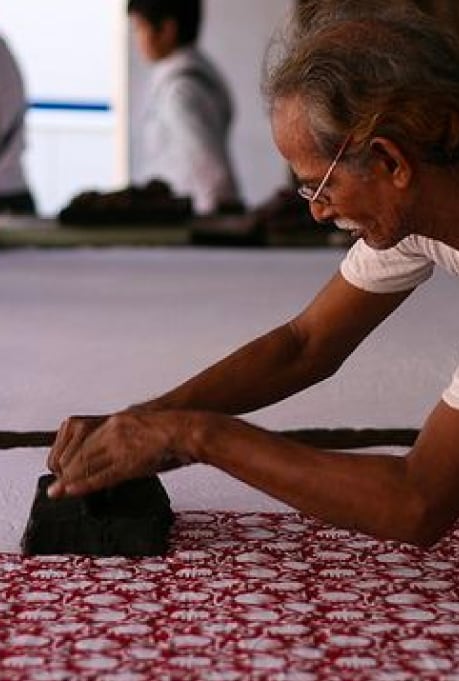
Image Credit: Andy Cheung on Flickr
The labour-intensive art form follows a tedious process. Carving the wooden block itself takes about 10 to 15 days. The process begins with artisans drawing the required pattern on a piece of paper and attaching it to the wooden block before carving. Once they’re done carving the block, it is covered in oil. This is done to soften the wood, which helps in holding the colour during the later stages.
Once the block is ready, the fabric is laid on a table, and the printing process begins. The engraved block is immersed into eco-friendly dyes and pressed hard onto the fabric to create an impression. This is done multiple times to darken the pigment on the patterns. The rustic imperfections of the process add to the beauty of the craft and the final product.
Modernisation Of The Craft
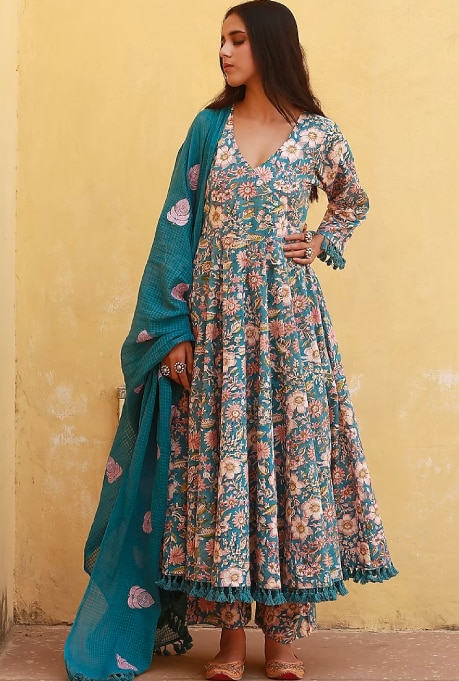
GULABOJAIPUR BY SALONI PANWAR 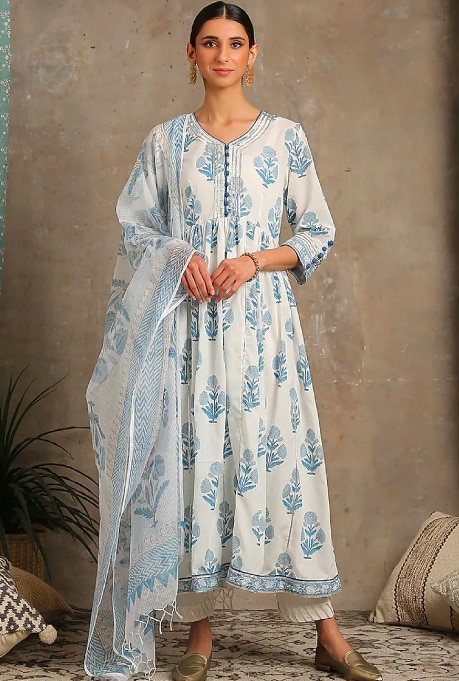
MAISON SHEFALI
Contemporary renditions of block printing act as a mode of reviving the art form. Indian designers add a unique and sustainable flair to their creations with an interplay of rich block prints and modern silhouettes.
Block prints have made their way to the modern woman’s closet through a summer staple– block-printed Kurtas. The art form’s unique charm is also translated into celebratory favourites like Anarkalis & Shararas crafted by leading designer labels.
In addition to clothing, home decor is another segment that keeps the craft alive. Today, bedding, throw pillows and table linens act as a canvas for the heritage technique, making it easy to bring the art form to your space and closet.