


We often think of art as a way of capturing a moment. But for artists who spend decades making it, the process is also about accumulation – of images, memories, places and questions that refuse to disappear. A subject encountered early in life can return years later carrying an entirely different meaning. Perhaps that is why certain artists never really leave their subjects behind; they simply learn to see them differently.
At 80, artist Deepak Shinde carries the same philosophy. After six decades of making art and twelve years since his last presentation, Shinde returned with The Bombay Flora Chronicle, a mixed-media body of work where rivers, animals, myths and imagined worlds converge to ask an old question in new ways: how do we exist alongside the lives that share our world?
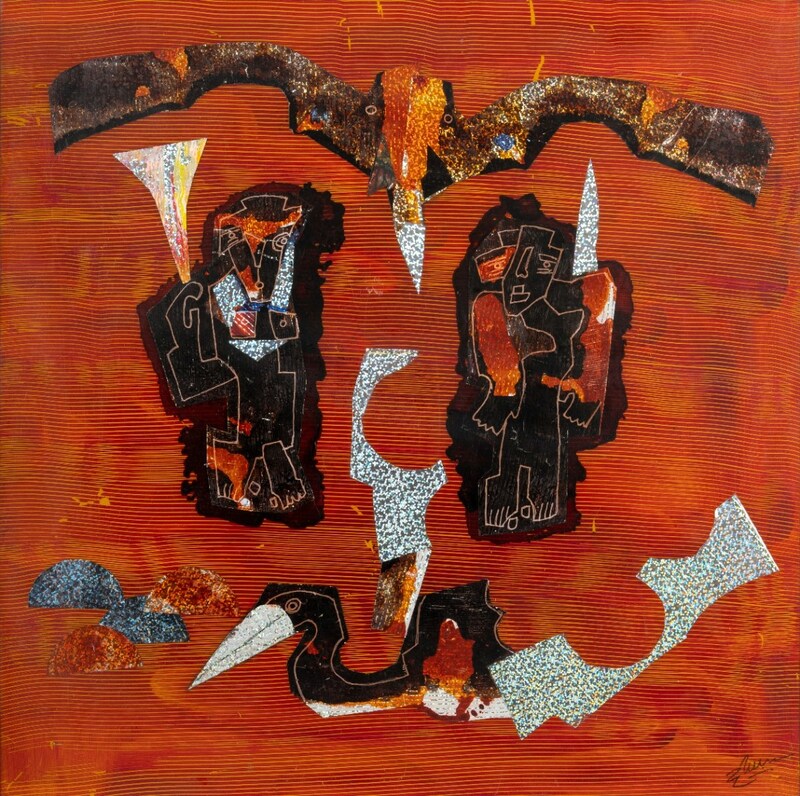
Born in Yavatmal, Maharashtra, his early surroundings offered a close view of a world in which animals, land and human life existed alongside one another. That experience remained subtly present in his work. After training at the Sir J.J. School of Art in Mumbai, Shinde moved through several distinct phases of practice: abstraction in the 1970s, socio-political urban figuration in the 1980s, a more contemplative figurative language in the 1990s, and, over the past two decades, an increasingly sustained engagement with animal allegory.
For Shinde, however, animals are not simply subjects to be painted. They carry a larger purpose. “I have been working for a long time on my series titled Coexistence, where humans and animals exist in harmony. It is a lesson for the human race that we have to live together. There is no escape, and we are all interdependent. So the main motto of animals being the centre of focus is to represent co-existence,” he says.
“When you look at an artwork, it is not just a visual treat or a visual entertainment. It is also visual enlightenment.”
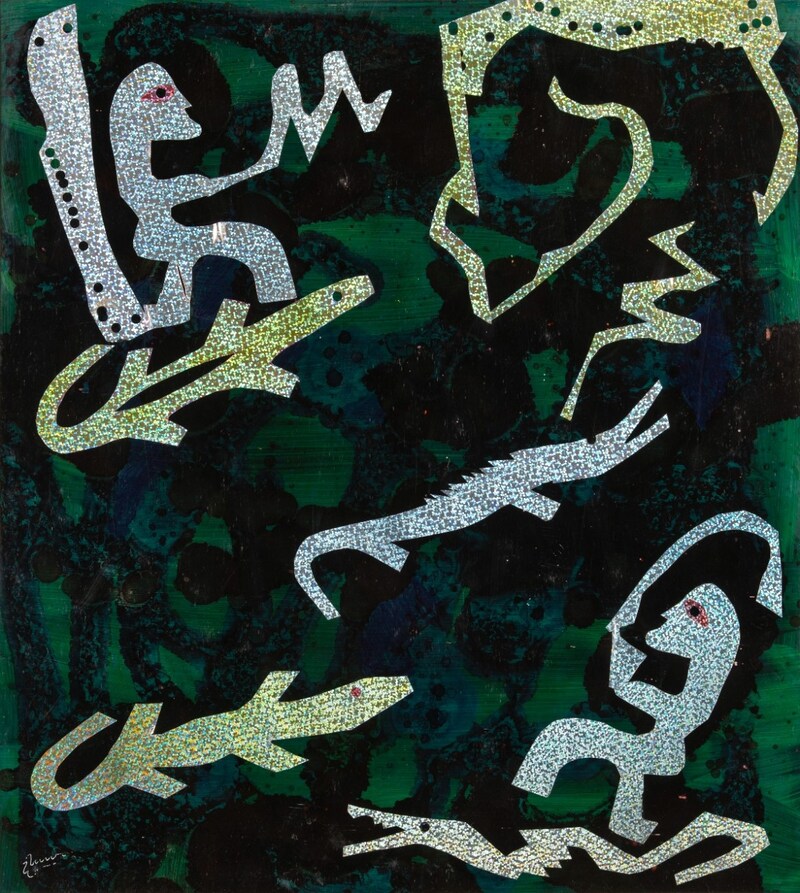
This idea runs through The Bombay Flora Chronicle. Rhinoceroses, flamingos, crocodiles and birds inhabit landscapes that move between the real and the imagined. Rivers become sites of survival and transformation, while mythology exists alongside ecological concerns. Sacred stories sit beside contemporary questions about the natural world. Rather than keeping these ideas apart, Shinde allows them to exist within the same frame.
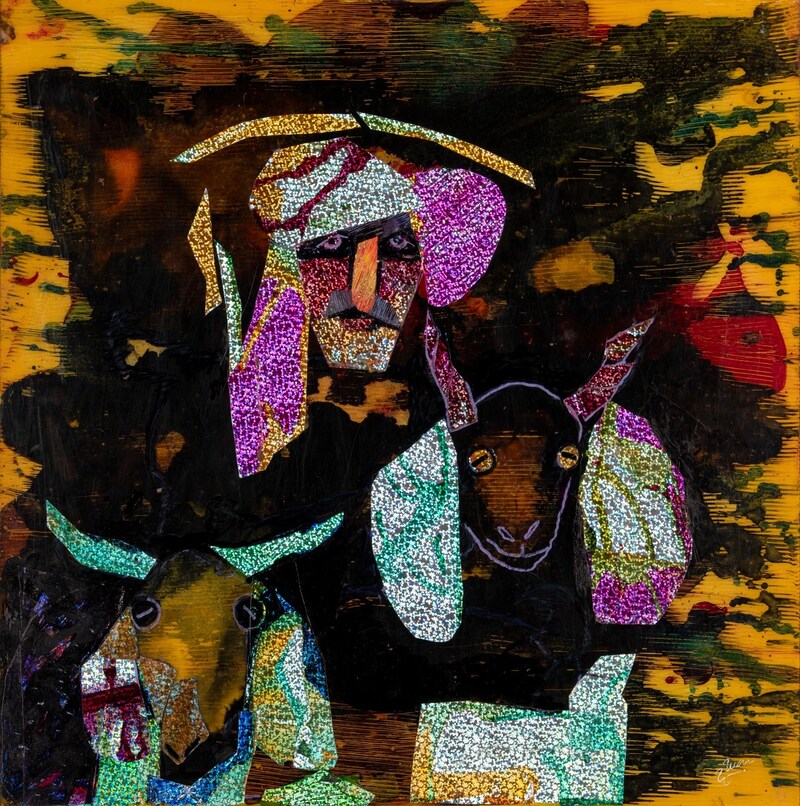
His recent artworks also represent an important shift in his approach to material. Moving away from the conventional canvas, Shinde works on acrylic sheets, using reverse painting techniques with alcohol colours. He incorporates holographic paper, carving it into shapes that catch and reflect light, creating flashes of colour across the surface. The result is a body of work that changes subtly with the way it is viewed – the imagery appearing, shifting and revealing itself through light.
For an artist whose practice has continually evolved, experimentation is not simply a technical exercise. Shinde believes that an artist must be willing to disrupt their own methods. “You need to change or destroy what you have once created,” he explains. For him, repetition without reinvention leaves little room for discovery. A creative person, he believes, must attempt something unfamiliar if they want to offer something new to others.
It is a philosophy that also informs his thoughts on the next generation of artists. While acknowledging the growing interest in conceptual and medium-driven practices, Shinde believes young artists should remain conscious of the ideas behind what they make.
“Today’s young generation is into conceptual art or medium-oriented art. They should focus on making art that also makes sense.”
After six decades, Shinde continues to make room for the unfamiliar – to change, experiment and look again. And perhaps that is the real continuity in his work: not staying with one visual language, but refusing to stop searching for the next one.