


In a city that thrives on reinvention, Bombay Daak feels less like a new opening and more like a return – one that celebrates India’s age-old culture of daaru and chakna. At its helm are Niyati Rao and Sagar Neve, whose approach resists the urge to elevate through excess, choosing instead to refine through memory, context, and instinct.
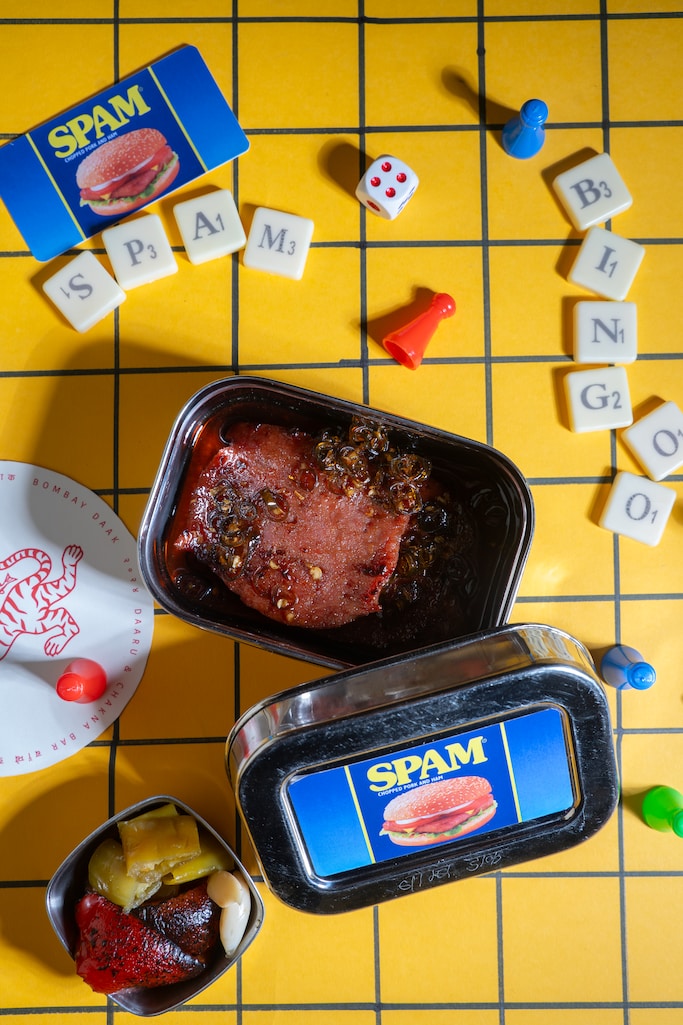
Luncheon Meat (A La Carte)
For Rao, the idea of Bombay Daak did not arrive in a singular, defining moment. It emerged gradually, shaped by years of observing India’s hyper-local snacking cultures. “It really began with memory rather than a single moment,” she reflects. From peanuts tossed together at neighbourhood bars to family recipes that never make it past the kitchen, chakna has always been deeply personal, almost intimate. Yet, despite its ubiquity, it has rarely been given the same intellectual or creative consideration as more formal cuisines. “There’s an honesty to that food that felt largely absent from more formal dining spaces,” shares Rao. Bombay Daak challenges that imbalance.
The ambition, however, was not just to document but to reframe. Rao points to Spain’s tapas culture – how something inherently local was expanded into a global language without losing its identity. “Why wouldn’t we?” she asks. “I wanted to make people see how cool daaru and chakna are, and how international they could be.” What Bombay Daak sets out to do, then, is deceptively simple: take the nostalgic ritual of “daaru ke saath kuch chakhna” and treat it with the same rigour and thought as any other cuisine.
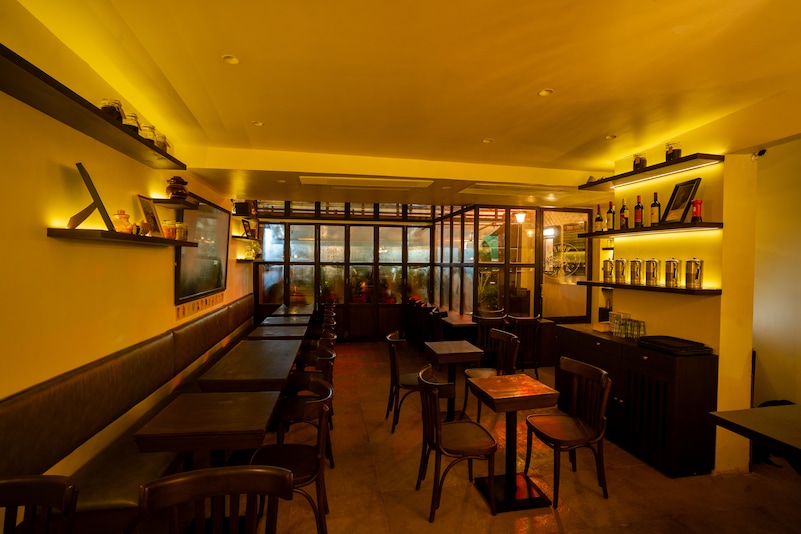
While grounded in research, her process also leans towards listening. In building the menu, Rao and her team spoke to over 200 people across cities, communities, and age groups. “My laundrywala, rickshawalas, friends – just people from different walks of life,” she says. These conversations became a way of accessing time, tracing how food habits evolve and endure. “The only way we could time travel in the world of chakna was by talking to different age groups.”
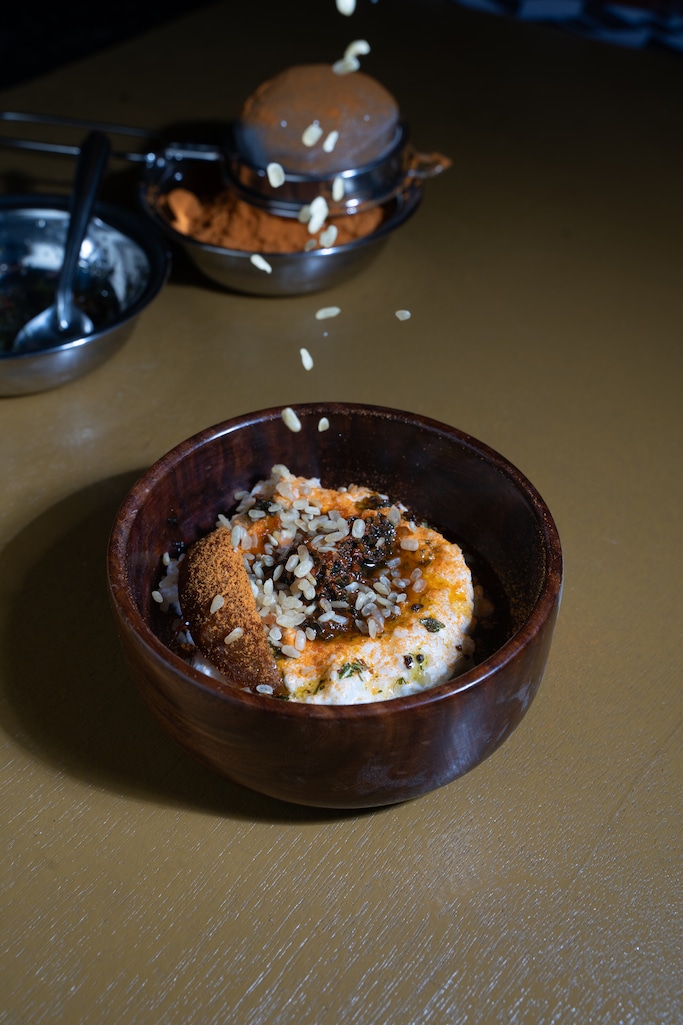
Curd Rice (A La Carte)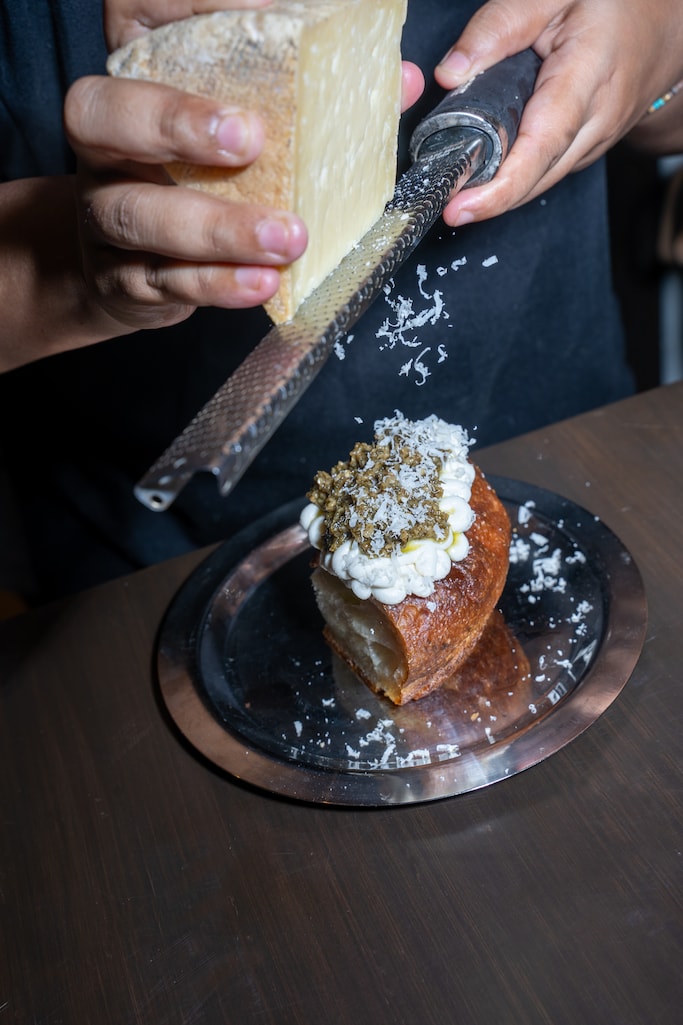
Maska Bread
Yet, when these stories translate onto the plate, they resist overcomplication. The dishes may be new, even unfamiliar in form, but their emotional core remains intact. “The technique may evolve, but the emotional anchor stays,” she explains, emphasising that storytelling – how a dish is presented, described, and shared – is just as critical as flavour.
“The idea of authenticity is overrated”
This perspective also informs her stance on authenticity, a term she approaches with caution. For Rao, Indian food has always been rooted in improvisation – shaped by immediacy, availability, and instinct. She recalls her mother creating a dish of chicken reduced in a sweet-spicy rasam sauce for unexpected guests – an act of invention rather than tradition. “Is it authentic? Not really. Is it Indian? Surely.”
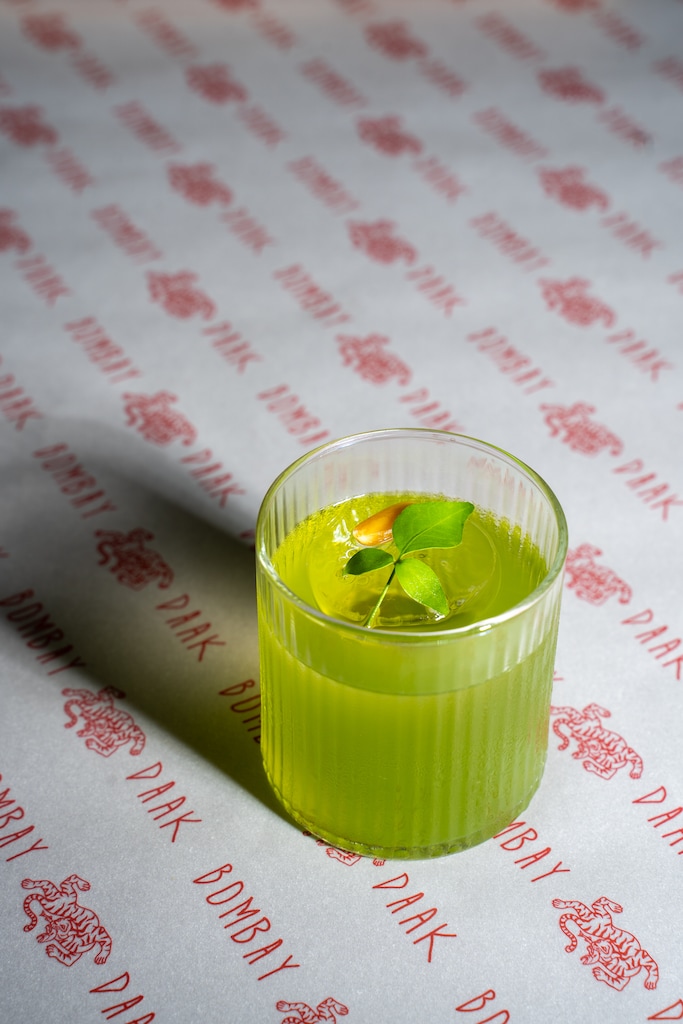
Cocktail: Lallantop (A La Carte)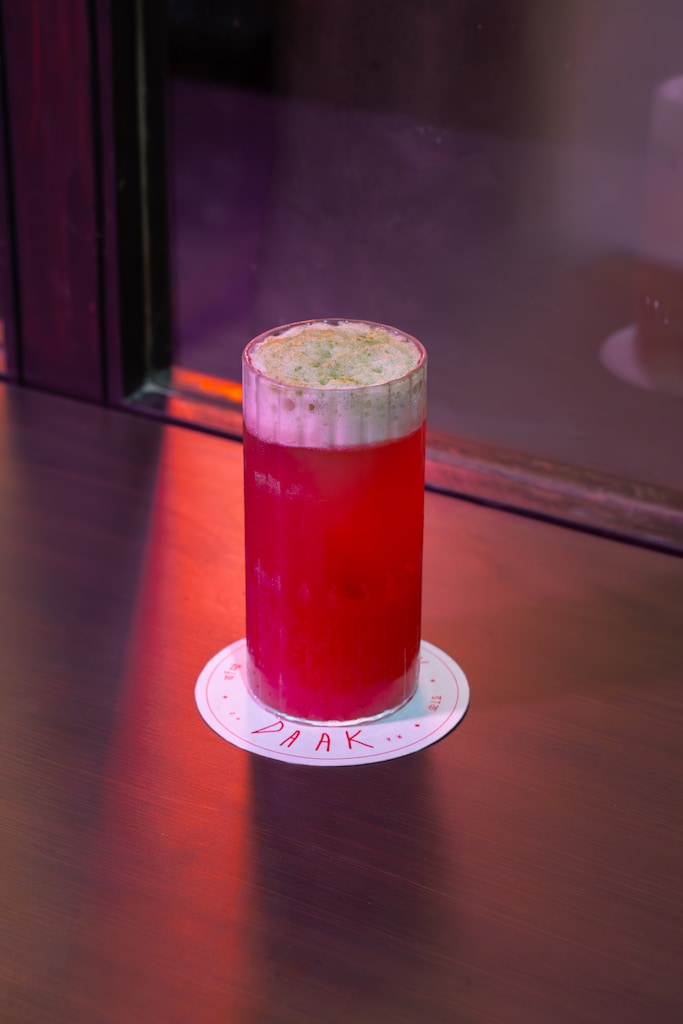
Cocktail: Pahadi (A La Carte)
That act of innovation is prominent at Bombay Daak through dishes and drinks that embrace familiarity while sharpening their appeal. “With something like a Wai Wai-inspired dish, the goal isn’t to disguise it, but to celebrate its familiarity while improving texture, balance, and depth. I’m very careful not to strip away the instinctive joy of its familiar version. If it stops feeling like something you’d want to eat with a drink in a relaxed setting, then we’ve gone too far,” she notes.
Chakna, by design, exists to enhance the drinking experience, but here it holds its own. “It’s always a strong supporting ally to the drinks,” Rao explains. Pairings are intuitive, shaped as much by narrative as by flavour – whether it’s the sharpness that cuts through a spirit or a regional reference like eating pickle alongside toddy in Kerala. The dialogue extends behind the scenes as well. Food and cocktails are in constant conversation, with one influencing the other. “Sometimes a dish inspires a cocktail, sometimes it’s the other way around,” she says. This collaborative approach ensures that the menu remains fluid, evolving with every exchange between kitchen and bar.
“It’s about understanding what makes a dish craveable in the first place and then amplifying that.”
Through innovative yet nostalgia-laced daaru & chakna culture, what Bombay Daak ultimately proposes is a shift in perspective. It challenges the long-held notion that Indian bar culture must mirror Western formats to be considered relevant. Instead, it reclaims an unapologetically Indian way of eating and drinking – one that is informal, shared, and rooted in recipes found at small bars or backyards across the country– and presents it with a flavour uniquely its own. “I love when Indians feel proud of something that was once seen as cringey or overlooked. Hopefully, Bombay Daak’s process encourages more spaces to look inward and explore what Indian bar culture can be, rather than relying on borrowed formats,” Rao admits.
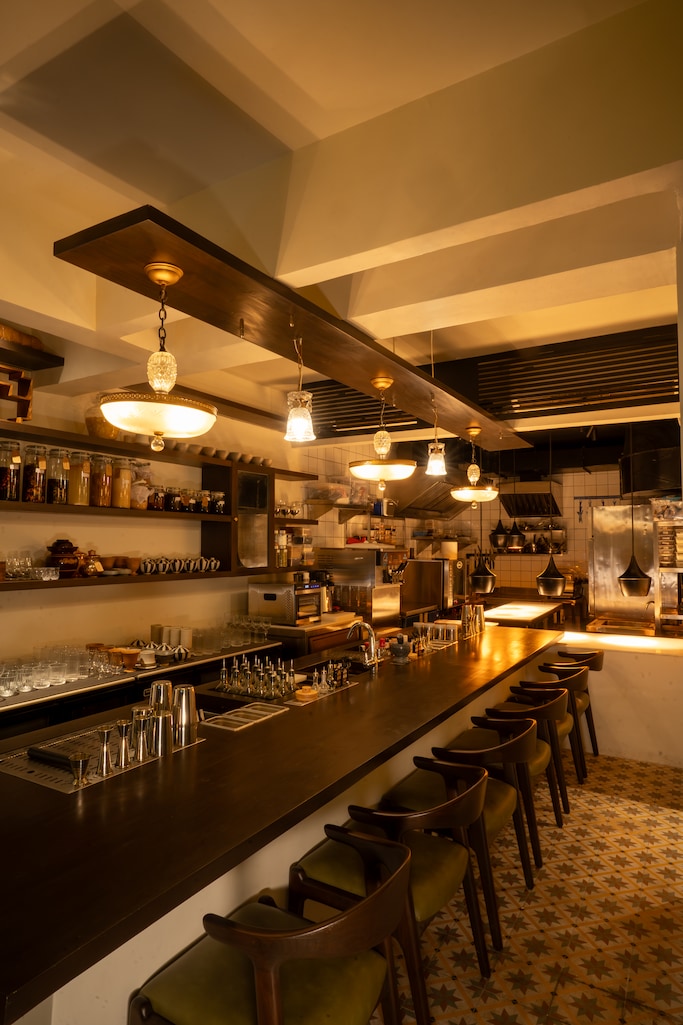
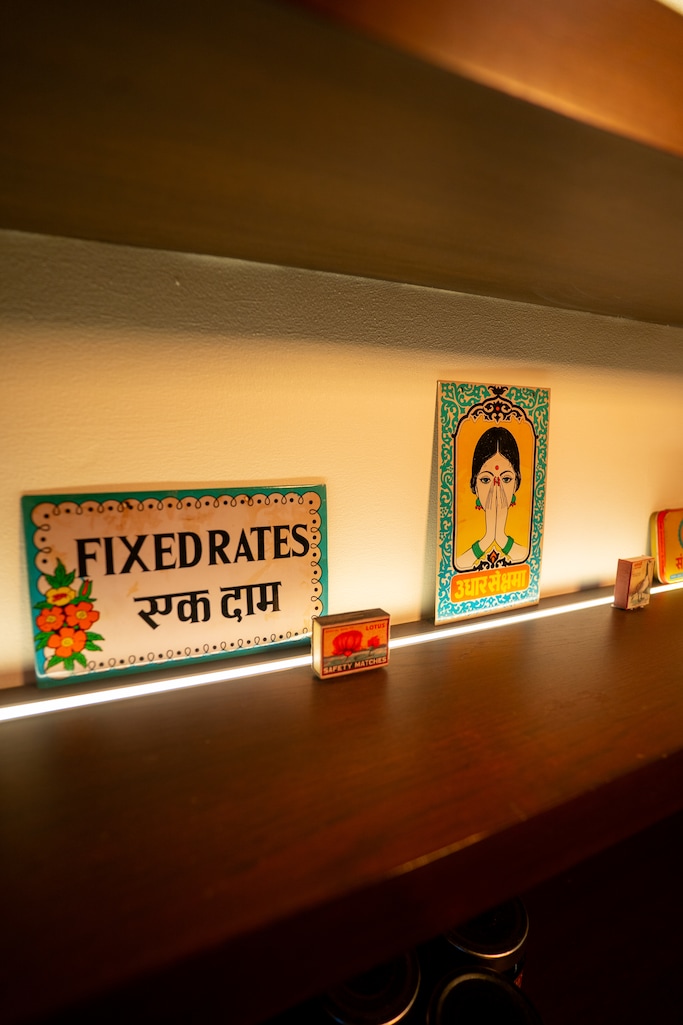
Chef Niyati Rao’s Bombay Daak is, at its core, a celebration of a collective memory that has long existed without validation. Shaping and reshaping a new vocabulary for the Indian dining space, this space is where nostalgia, nuance, and the nation’s love for a good time coexist without translation.
Image Courtesy: Nikhil Vaidya