


Ritika Mirchandani’s showcase at Lakmé Fashion Week 2026 emerged as a meeting point of softness and structure. At its heart, Confluence explored the many contrasts that shape our everyday lives – bringing opposing elements into dialogue rather than conflict.
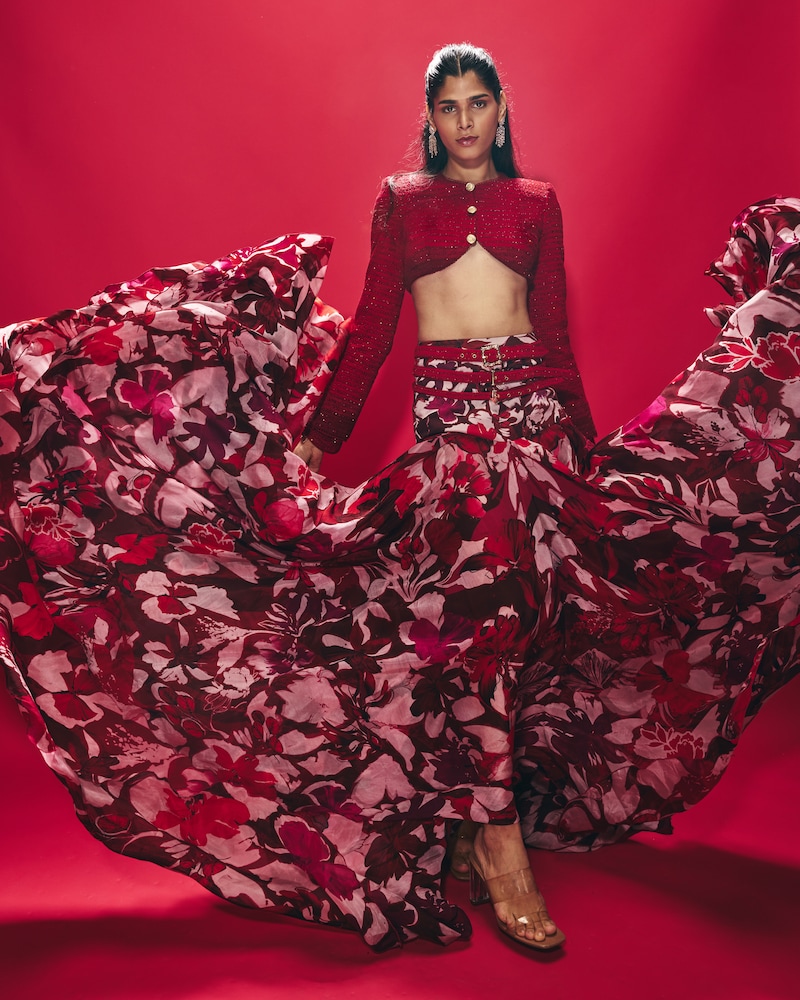
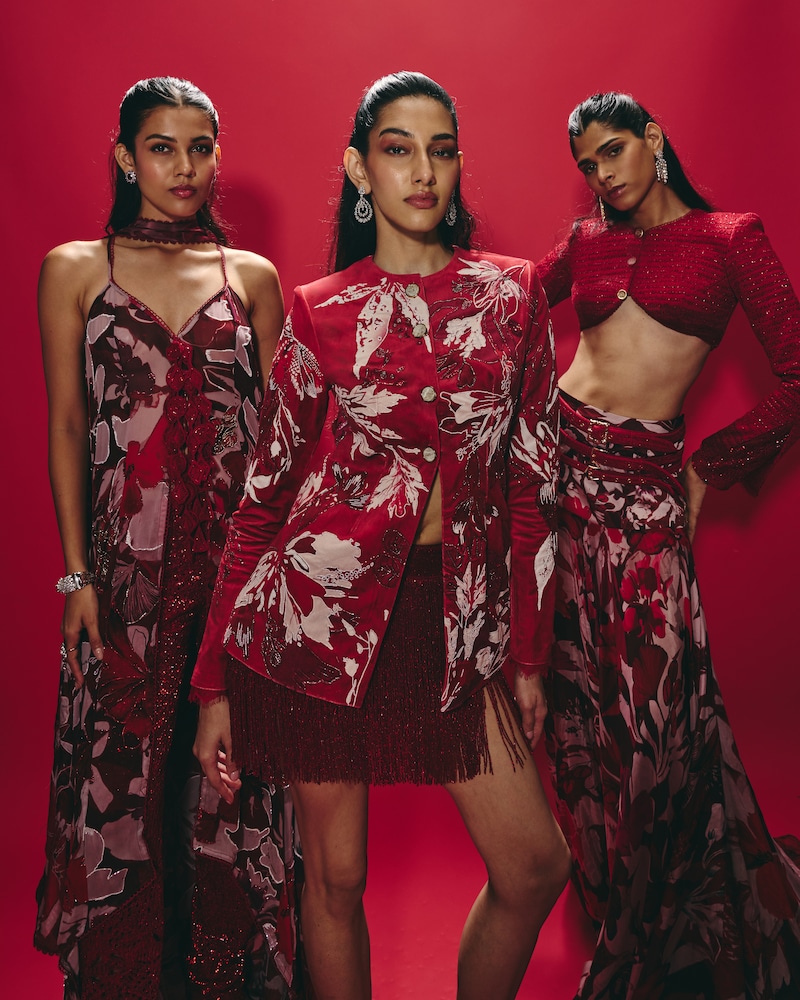
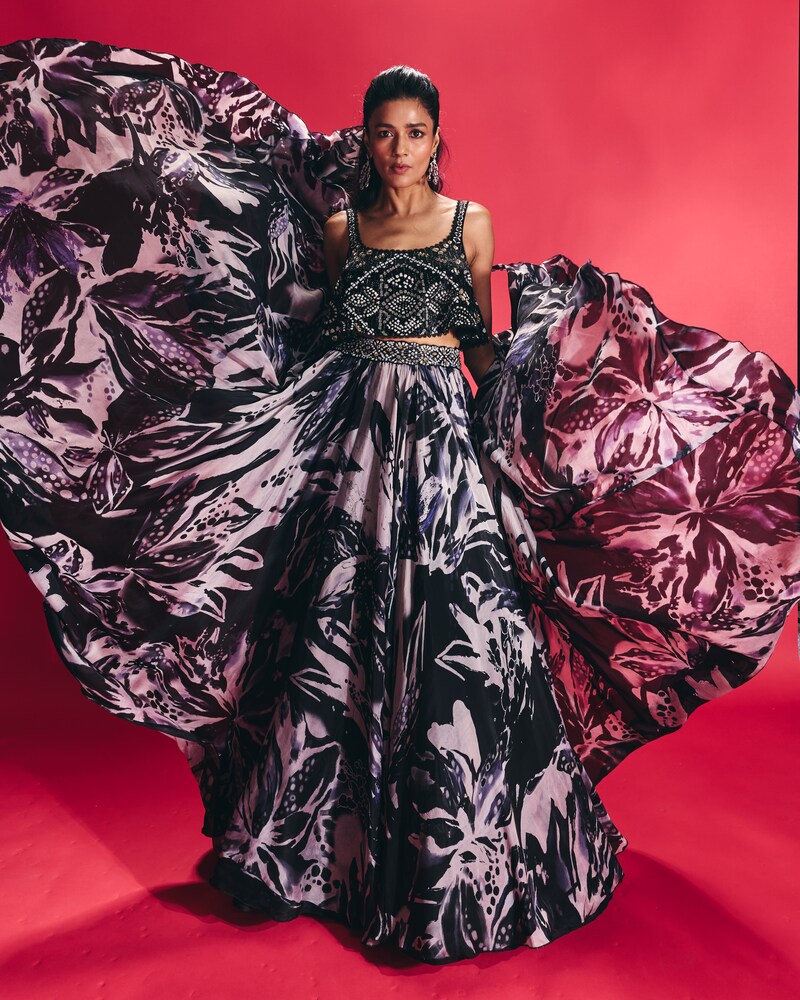
Fluid silhouettes, playful prints, and craft-driven accents formed the DNA of the designer’s latest offering, where elements were set against each other yet allowed to coexist with ease. This interplay unfolded through the seamless merging of geometric patterns with florals, as well as structured forms softened by movement and drape.
Rather than feeling contradictory, these juxtapositions lent the collection a sense of balance – one that felt both intuitive and considered. We spoke to the creative maven herself to get a peek into what went into bringing this collection to life.
FL: “Confluence” explores the meeting point of contrasts. What was the starting point that anchored the collection?
RM: I kept returning to the idea that contrast doesn’t have to be resolved. It can coexist. Instead of choosing one direction, I wanted to hold both and see what happens when they’re allowed to exist together with clarity.
FL: Florals and geometric prints appear within the same looks. What made you decide on merging them rather than keeping them distinct?
RM: Keeping them separate felt predictable. The challenge was in making them work together without one overpowering the other. Florals bring softness and irregularity, while geometry brings order and discipline. When they come together, they create tension and that tension adds depth to the garment.
FL: The silhouettes feel controlled despite the fluidity. Was there a moment where you chose restraint over drama?
RM: Constantly. Restraint was a conscious decision throughout the collection. With prints and surface already carrying so much energy, the silhouette had to hold it together. It’s easy to push drama, but much harder to know when to step back. That balance is what keeps the garment wearable and considered.
FL: You’ve spoken about building garments layer by layer – could you elaborate upon what that process looks like in practice?
RM: It starts with the base – the silhouette and proportion. Then we introduce surface, whether through print or embroidery. Each layer is tested against the other. Scale, placement, density – nothing is added all at once. It’s a gradual build to maintain the balance. The idea is to make it feel complete without feeling overworked.
FL: Having balanced these opposing elements, does Confluence feel like a resolution or the start of a new disruption?
RM: It feels like a shift. Not a resolution, because the questions don’t end here. If anything, it opens up more possibilities. It changes how we approach contrast going forward. Not as something to solve, but as something to keep exploring.