


There’s a particular kind of fashion moment that stops being about clothes and starts being about craft as spectacle. Devi: The Eternal Muse was that moment. A model walks out looking like a South Indian goddess, carved and come to life. Not dressed as a sculpture. Actually, convincingly, looking like a carved stone comes to life.
The Ancient Blueprint Behind Devi
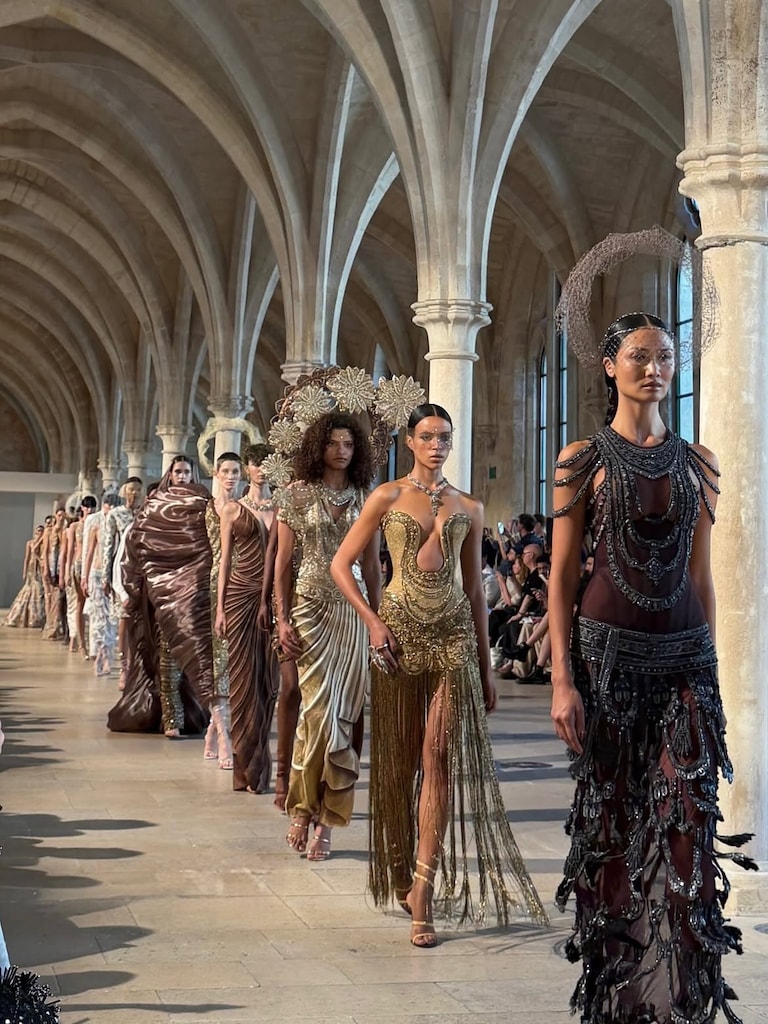
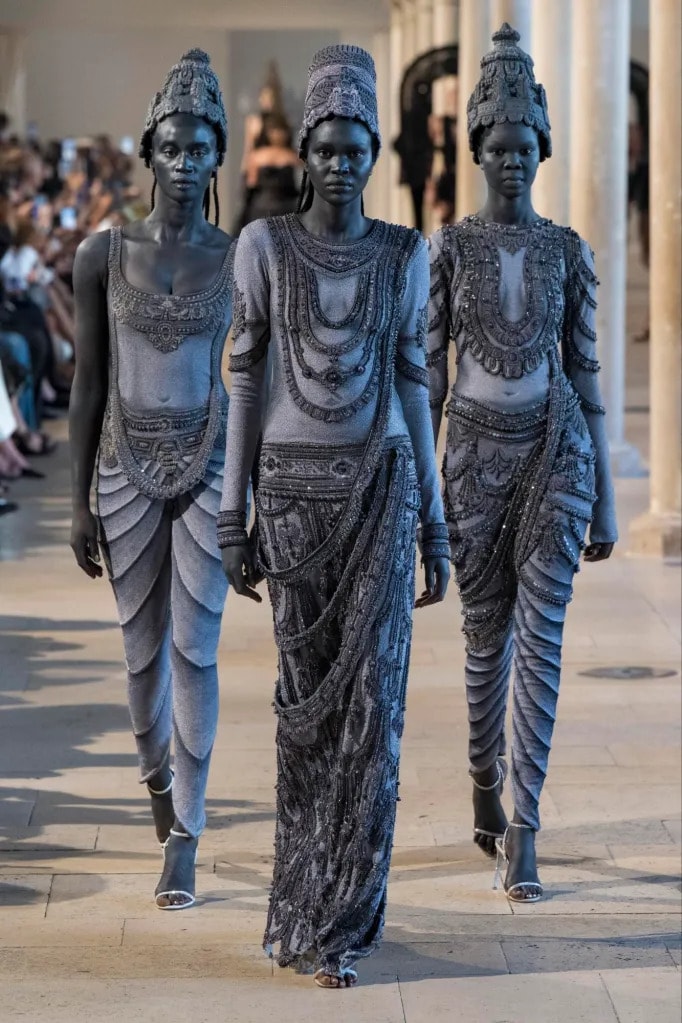
The whole collection is built around one question. What if embroidery could stop looking like embroidery and start looking like weathered stone? Mishra called it the most India-inspired collection he’s ever made, and instead of quoting heritage decoratively the way couture usually does, he tried to rebuild the actual texture of ancient carved stone in thread.
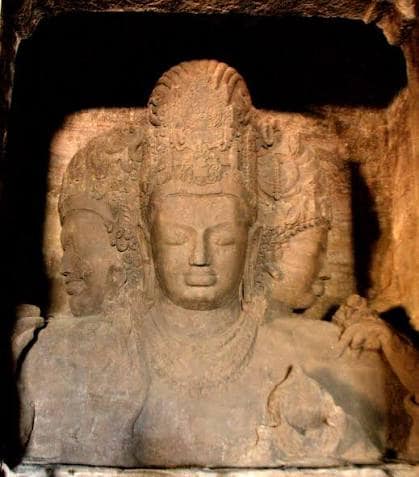
The references were anything but abstract. Mishra looked to the Ajanta Caves in Maharashtra, carved as early as the second century BCE, a 12th-century stone sculpture of a dancer, and Karnataka’s Tarakeshwara Temple, built around the same period. From these centuries-old monuments, he borrowed sculptural drapery, intricate motifs, and the quiet grandeur of stone, reimagining them through his own design language, with embroidery becoming one of his most powerful tools.
It’s a philosophy Mishra has returned to time and again: ancient Indian sculptors never sought to conceal the body, they celebrated it. That belief became the foundation of Devi, shaping silhouettes that are unapologetically body-conscious while remaining deeply rooted in India’s artistic legacy.
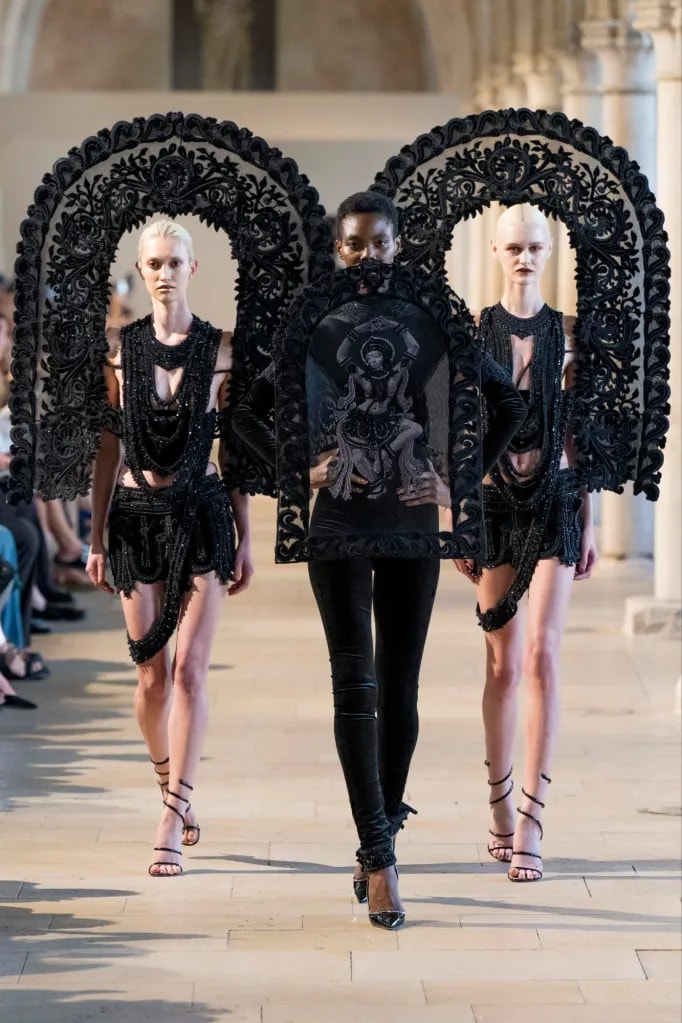
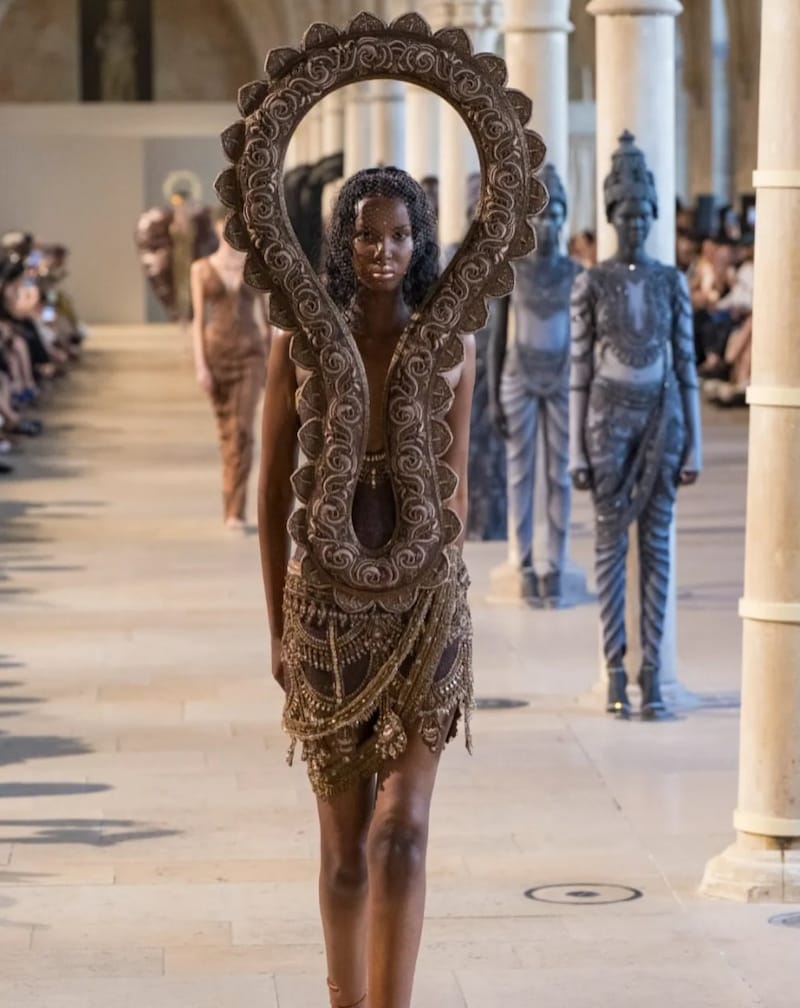
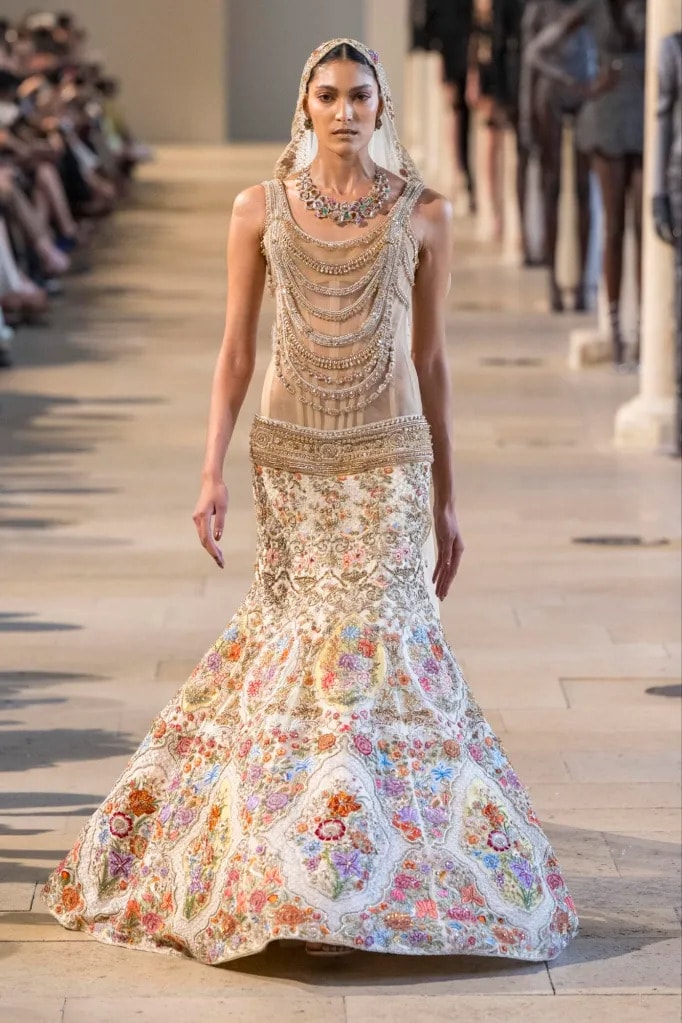
The palette plays along. Stone grey, jet black, ivory, beige, antique gold, nothing that would break the spell. Underneath it all, models wore skin-toned bodysuits, so you genuinely can’t tell where the body ends and the garment begins. Rather than moulding or stiffening anything, Mishra built the stone effect out of thousands of individual zardozi, dabka, crystal, and bugle bead stitches, layered until they created their own relief and shadow. The result is trompe l’œil at its sharpest: it looks heavily sculpted, almost too solid to move in, yet it’s feather-light and soft to the touch. Structurally, the collection pushed past the traditional gown too, with exaggerated sculptural frames, oversized collars, and dramatically carved shoulder plates, and it even stretched into menswear with fluid ivory silhouettes layered in pearl jewellery.
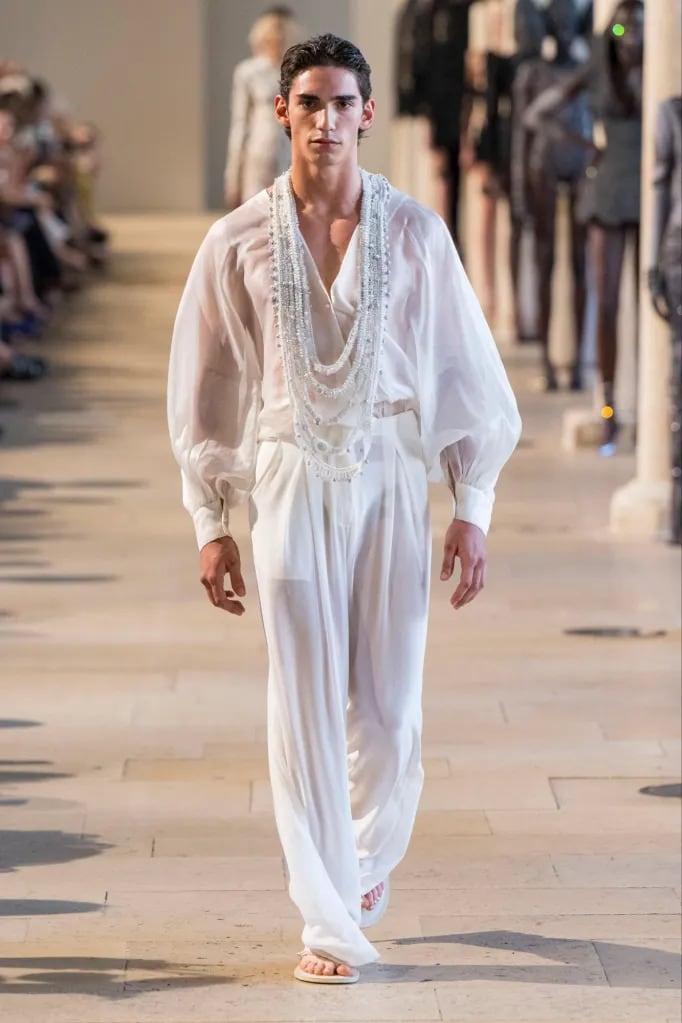
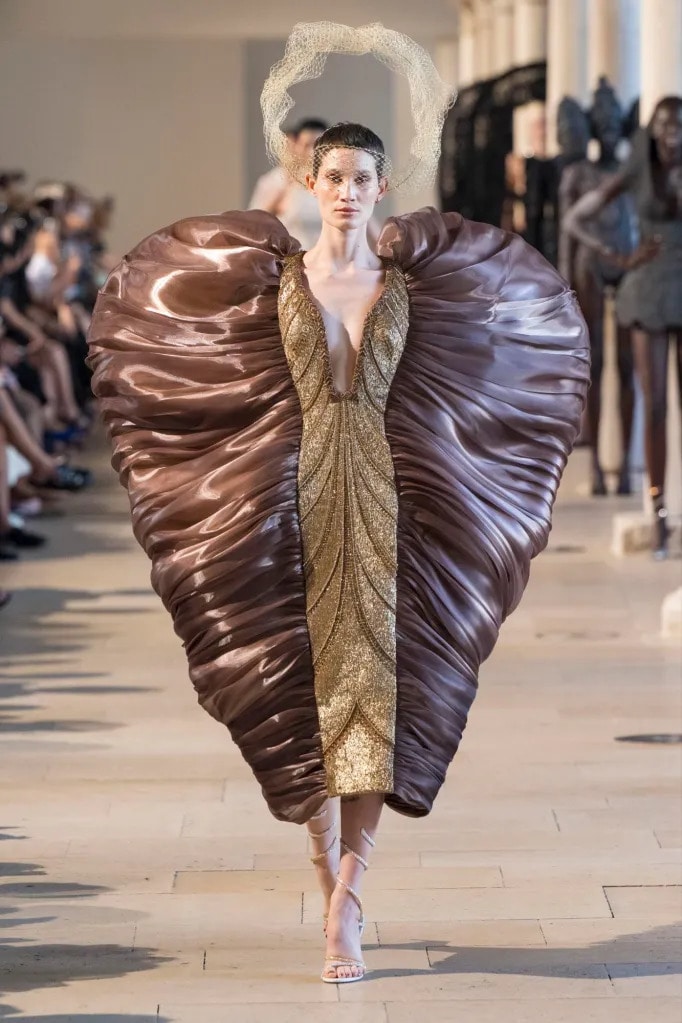
Not every look chased the same shadow. The ivory and antique gold pieces softened the mood, carrying colourful floral embroidery and catching the light instead of absorbing it, while the black ensembles stayed in gothic, lace-like territory. Even the ivory pieces held onto the stone illusion running through the rest of the collection, just with more shimmer and less shadow.
The Hands Behind the Chisel
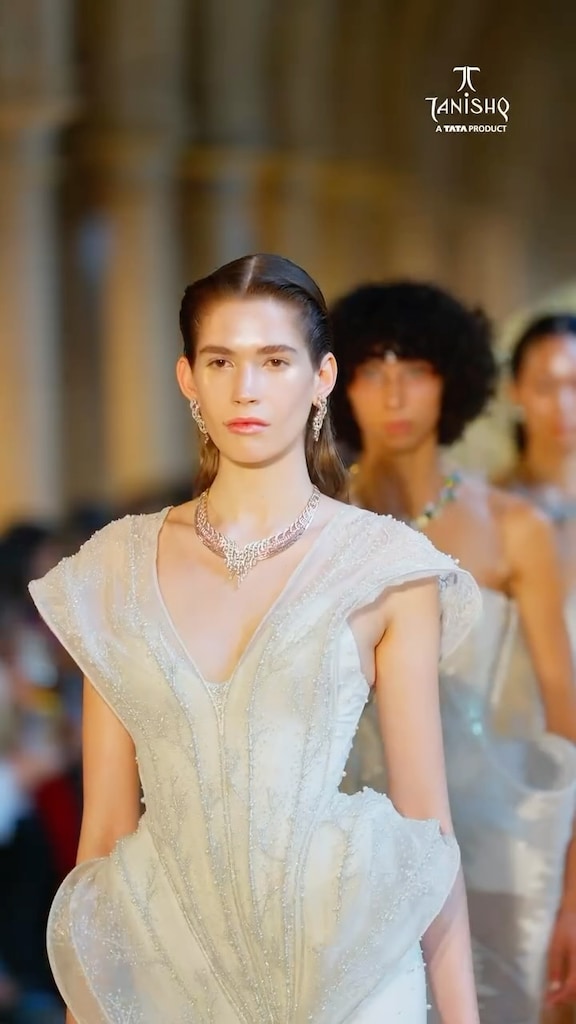
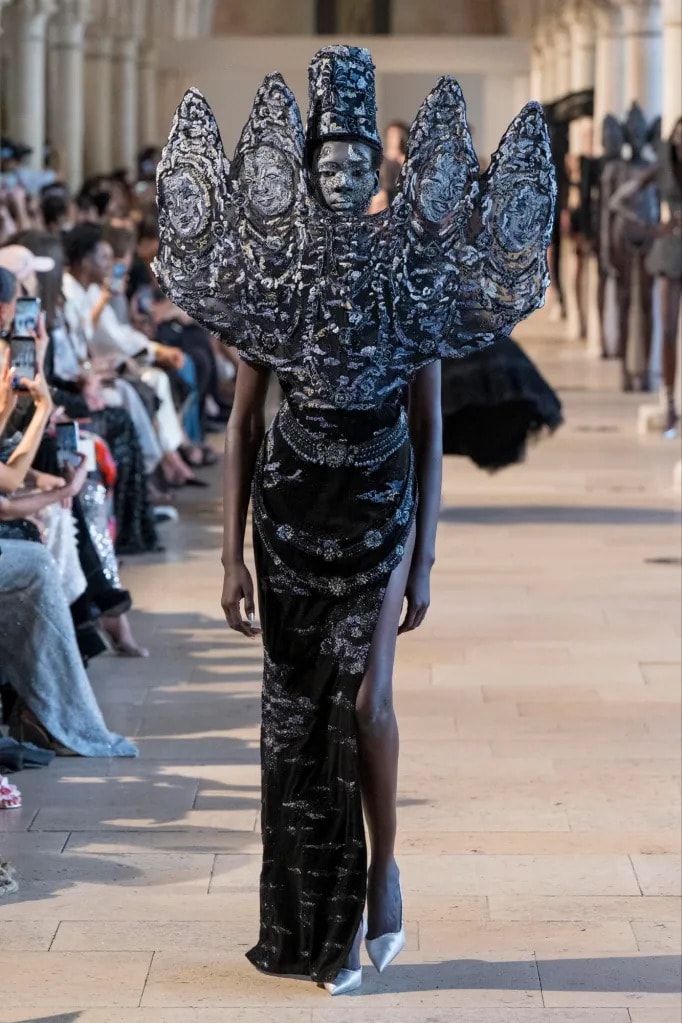
It didn’t stop at clothes. Tanishq, Mishra’s long-time collaborator, didn’t just lend jewellery for styling; they built natural diamonds and heritage temple pieces right into these creations. British milliner Stephen Jones topped it off with headwear so sculptural it looked like it belonged in a museum, not on a runway.
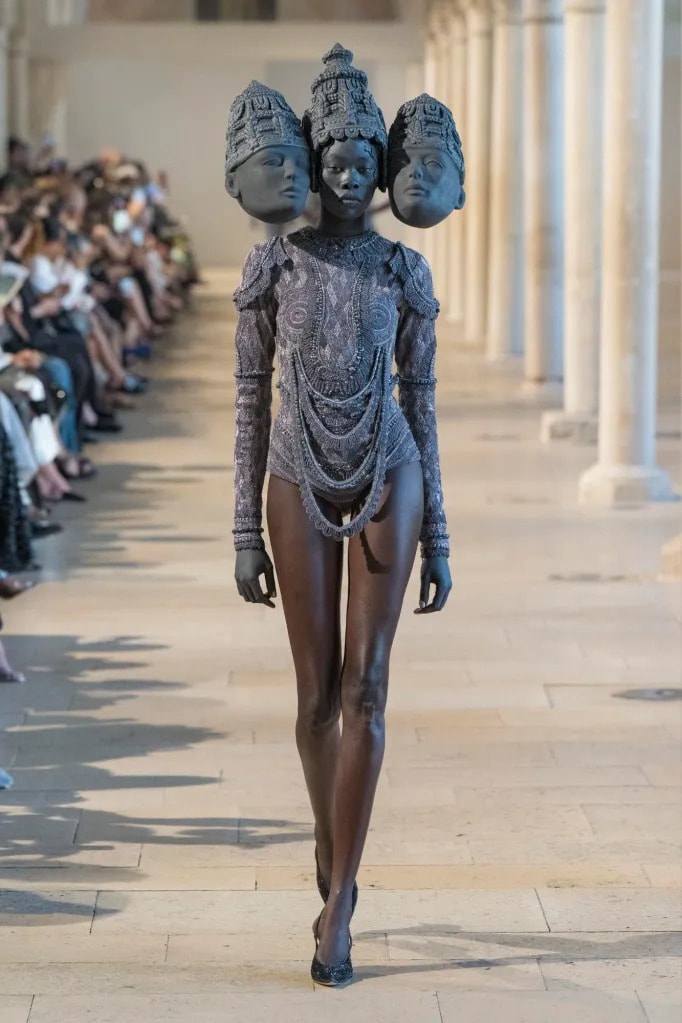
Clay artisan Sumant Kumar handled a different part of the story. He built the temple-crown-shaped headpieces by hand, using clay, a craft technique that’s been around for centuries.
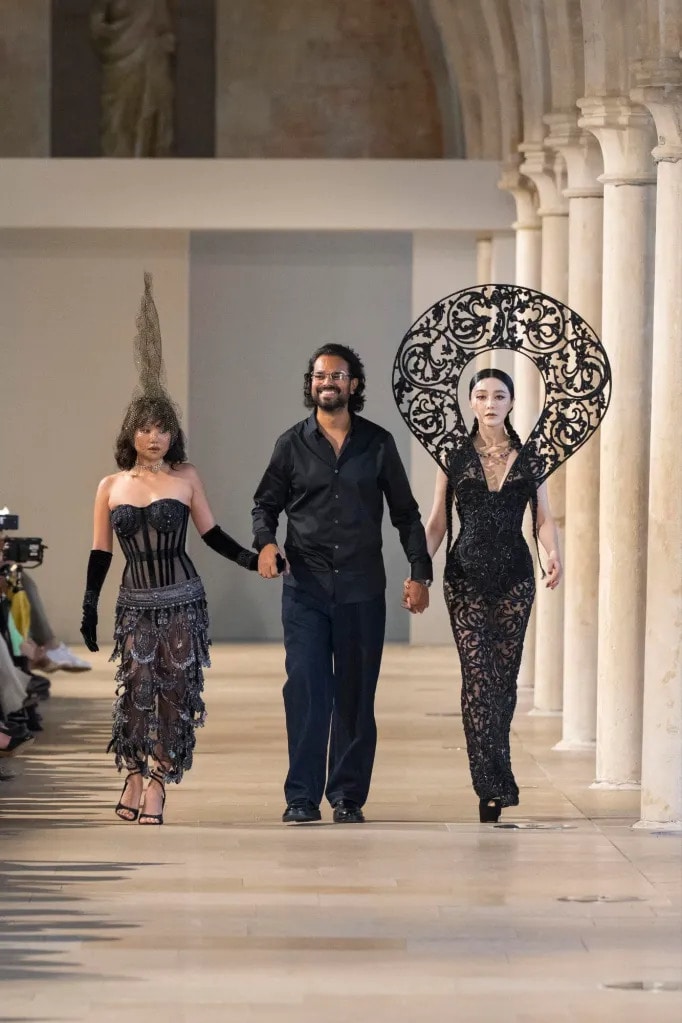
Rahul Mishra didn’t just dress models in Devi. He carved an entire audience’s perception, thread by thread, until stone and silk stopped being different things. That’s not embroidery anymore. That’s a sculpture that happens to move.
Devi is proof that “traditional” doesn’t mean limited. This is an age-old embroidery technique pushed somewhere it’s never gone before.