


India’s craft traditions have long been sustained by generations of families who have carried techniques, stories and cultural memory from one generation to the next. Today, the baton of responsibility to keep these traditions alive, relevant and revered is being passed onto designers who speak the language of couture. The new generation of designers are not merely preserving craft; they are finding ways to reinterpret it – allowing heritage techniques to evolve without losing the identity that makes them distinct.
Among them is Arpita Mehta. A decade into her eponymous label, the designer made her couture debut at Hyundai India Couture Week (ICW) 2026. Reflecting on that, the debutante says, “Over the years, we have built our language around contemporary Indian occasion wear, and ICW gave us the opportunity to take that language into a more expansive space. I didn’t see it as stepping into an existing conversation as much as bringing our own perspective to it.”
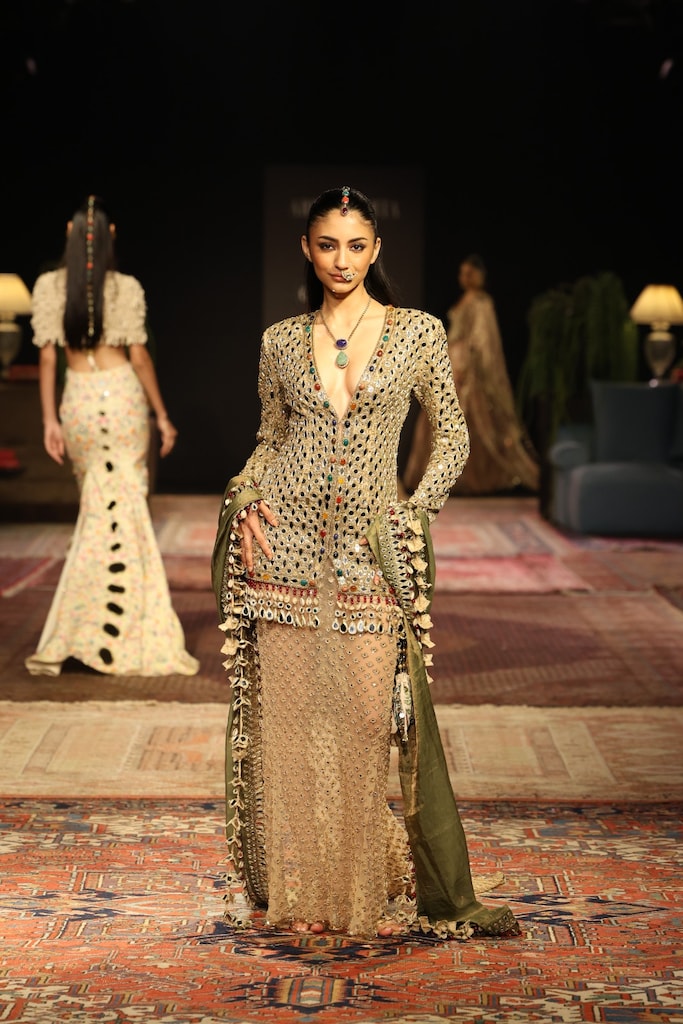
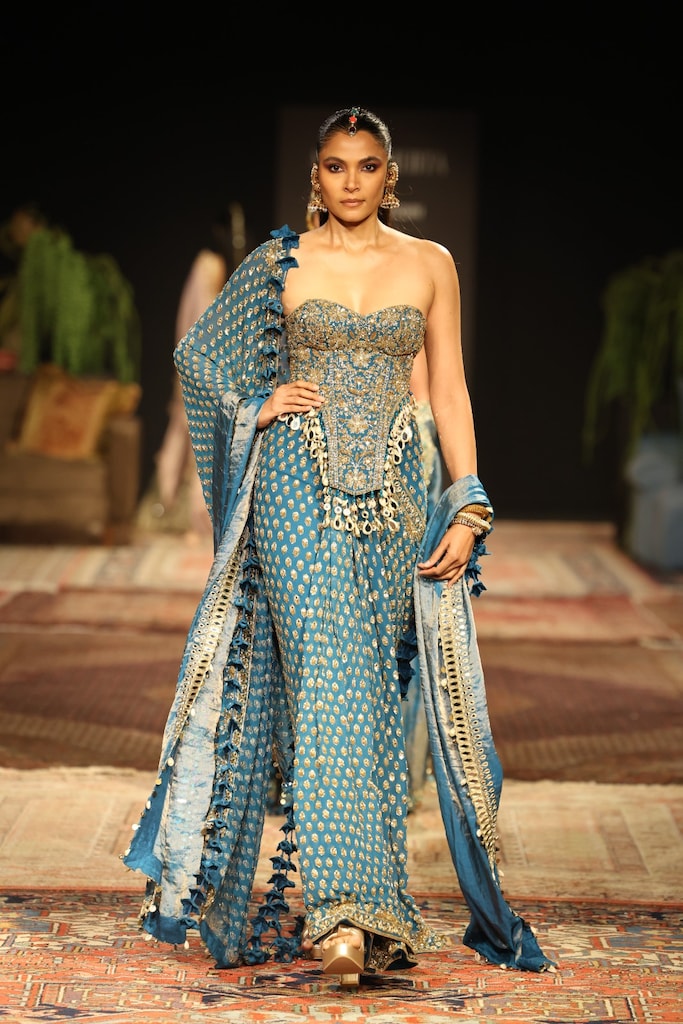
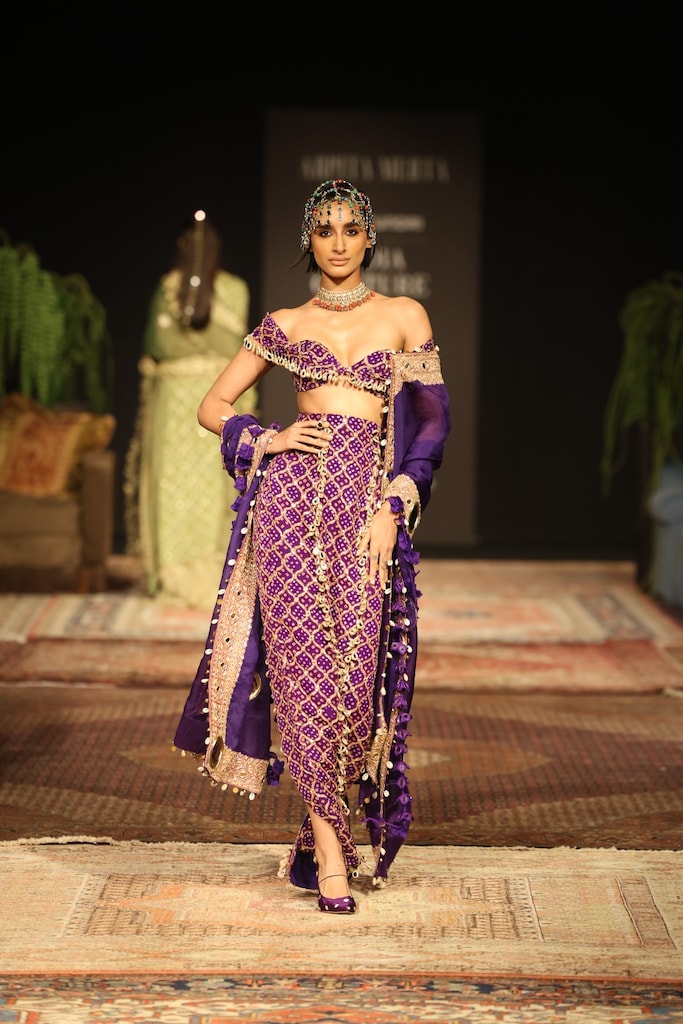
The collection, aptly titled Ceremonial, begins with one of the most enduring rituals of Indian culture: celebration. In a country where ceremonies, particularly weddings, have historically shaped the way women dress, occasion wear has often been governed by convention – by the significance of the event, the people being celebrated and the customs surrounding it. Mehta, however, views ceremonies as more than occasions dictated by dress codes. Instead, she considers it as a space for personal expression.
“The idea was to let the textiles remain recognisable while placing them in a world that felt very much like us.”
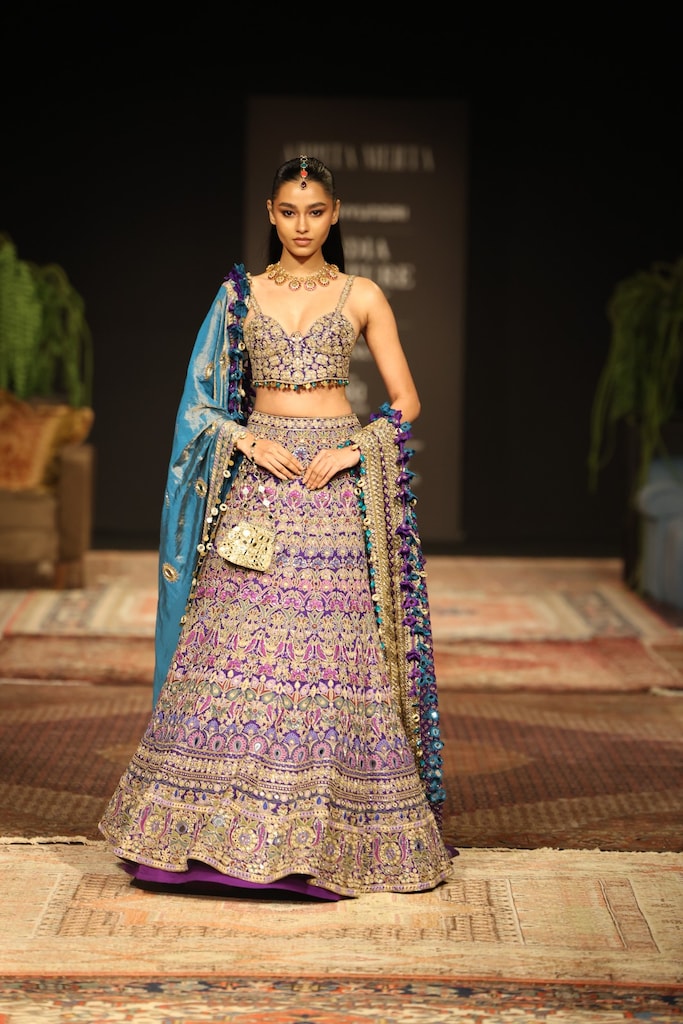
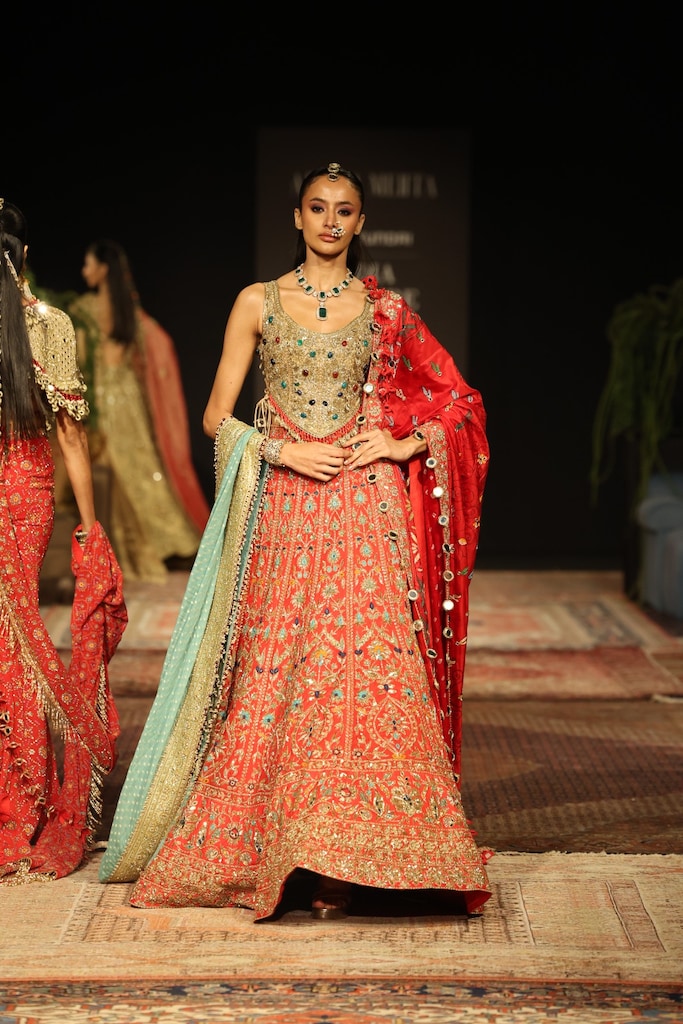
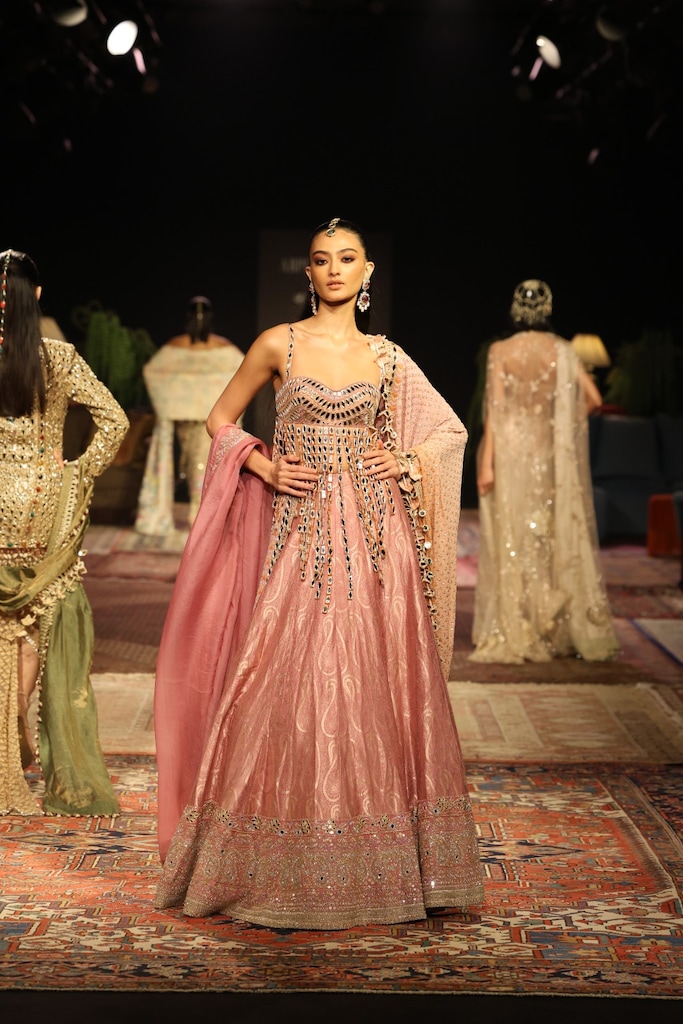
Drawing from India’s expansive textile heritage, Ceremonial brought together Bandhani, Banarasi and tissue, while introducing Kantha into the designer’s design vocabulary for the first time. As Mehta explains, Kantha carries a distinct character and a sense of storytelling that is intrinsic to the craft. “It has such a beautiful, handmade quality and a rhythm of its own. Bringing it into couture was really about giving that craftsmanship the space it deserved, while allowing it to work with our silhouettes and design language.”
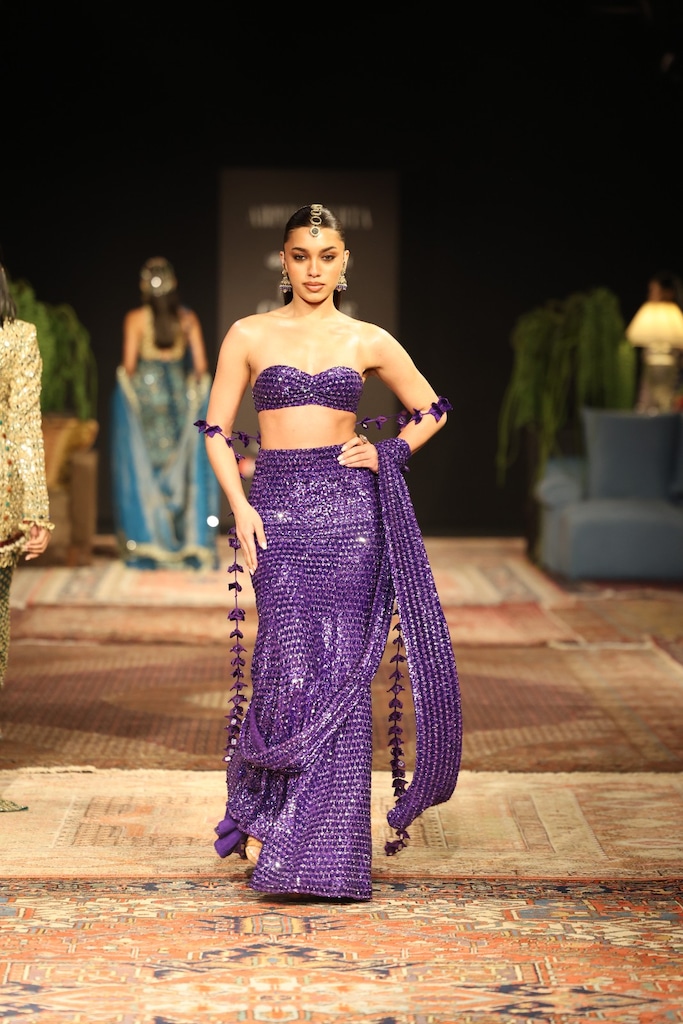
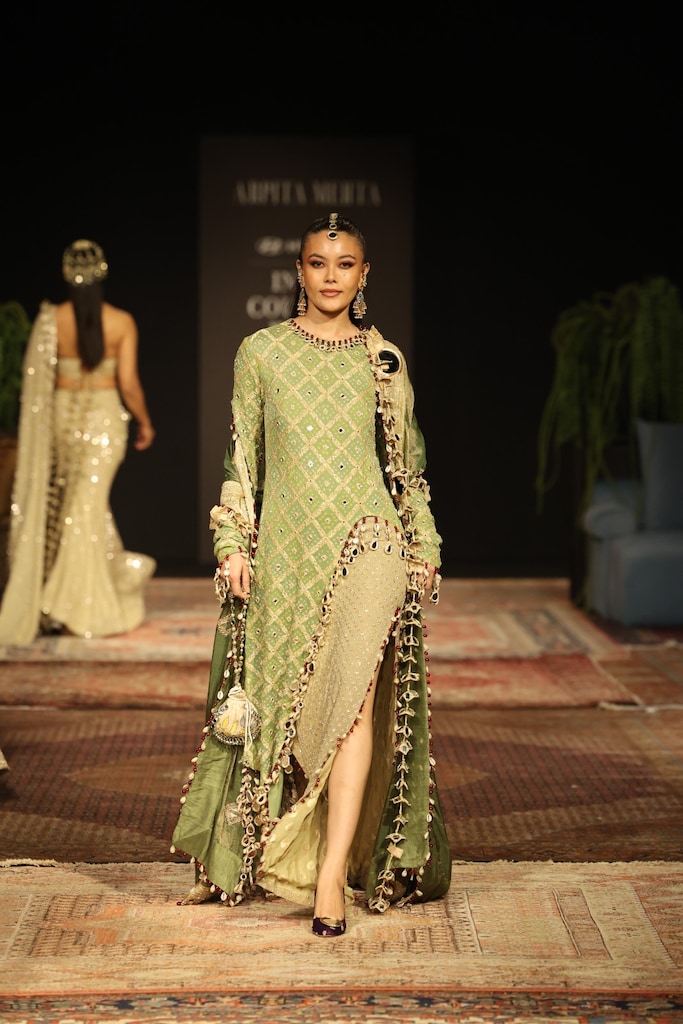
While the designer aims to create contemporary occasion wear, she believes that one needs to be conscious of preserving the inherent character of the crafts. “I don’t think a craft needs to be changed completely to make it contemporary. It is more about finding the right balance between its original character and our silhouettes, colour and embroidery language”, the designer expresses. That philosophy is evident in the collection’s corseted silhouettes. “I’ve always loved corsets because they create such a beautiful balance between structure and softness. Pairing corsets with fluid drapes, Indian textiles and intricate craftsmanship allowed us to create something that felt contemporary while still having a strong connection to Indian dressing.”
According to Mehta, the woman at the centre of contemporary Indian occasionwear is changing, and with her, so is the meaning of ceremony. “Women today are much more comfortable defining celebrations on their own terms”, she adds.
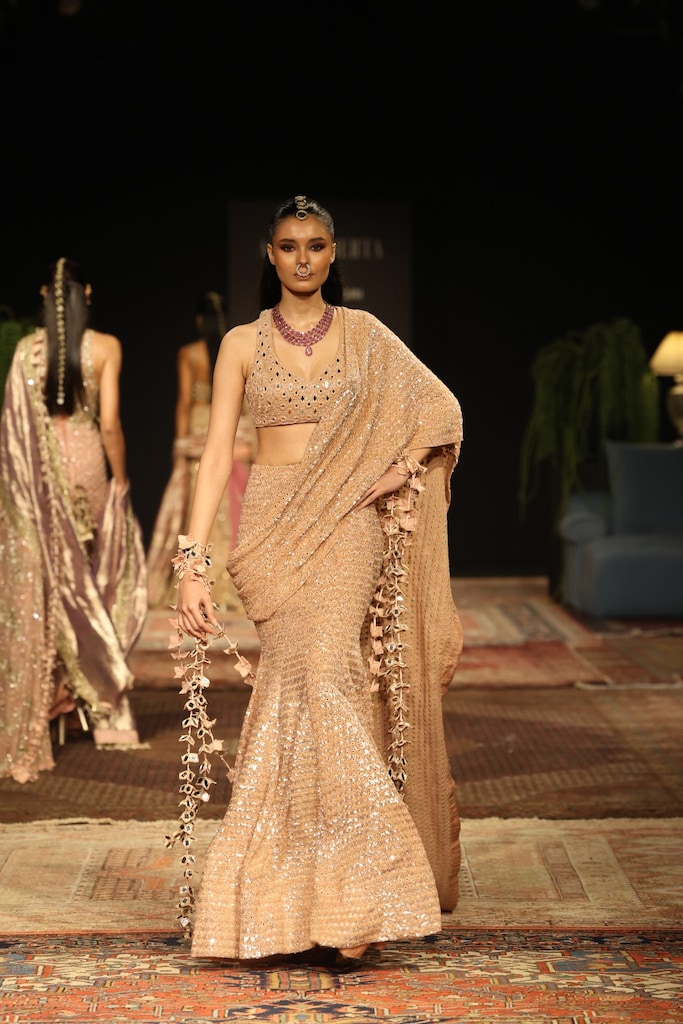
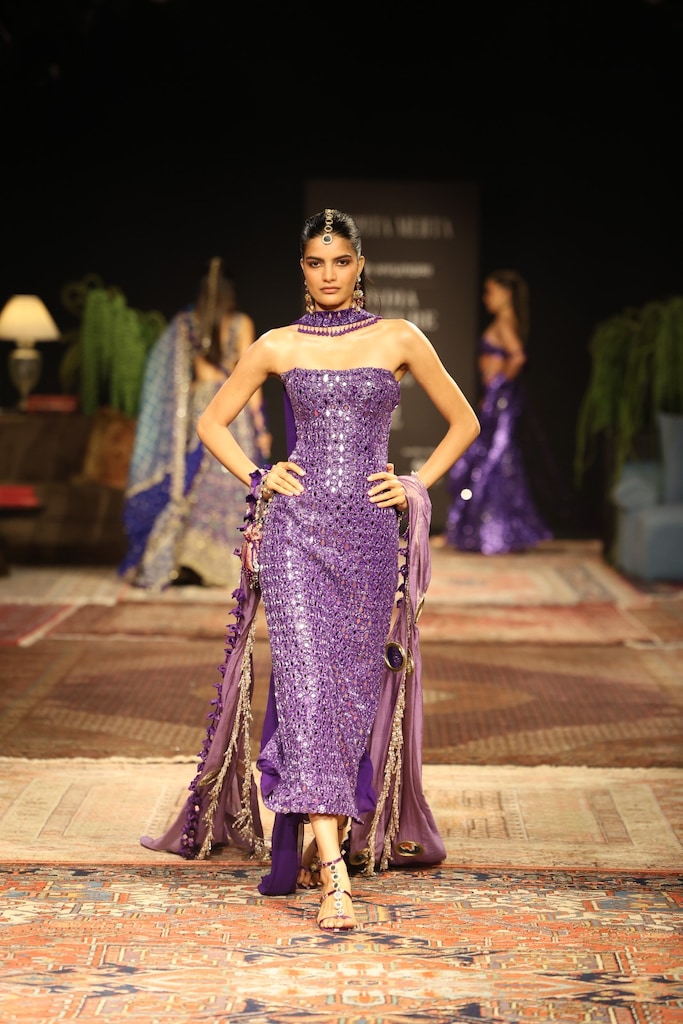
“Modern Indian couture is increasingly about individuality and the occasion, rather than fixed ideas of bridal or ceremonial dressing.”
“They still value tradition and craftsmanship, but they also want individuality, versatility and ease. They may want something elaborate for one moment and something more relaxed for the next, and they want both to feel like them.”
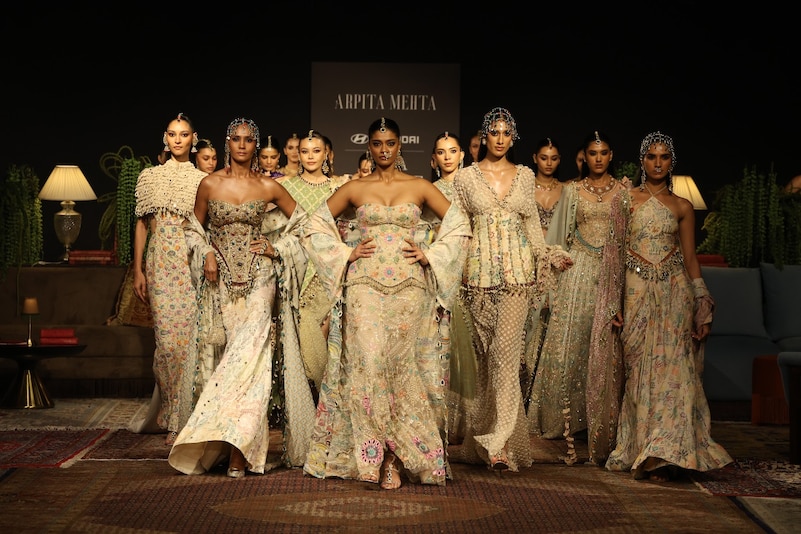
For Ceremonial, this desire translated into clothes that were deliberately flowy and light. Yet striking that balance presented its own challenge: how does one preserve the richness and grandeur expected of couture while creating garments that retain ease of movement and comfort? It is a question that sits at the heart of Mehta’s couture debut.
For decades, couture in India has been closely associated with bridal wear. While the connection remains intrinsic to that, its definition is beginning to expand. The emphasis is shifting from dressing according to a fixed idea of what a bride, a wedding or a ceremony should look like to dressing in a way that feels personal to the wearer. Mehta observes, “Women want beautiful craftsmanship, but they also want versatility and a sense of ease.
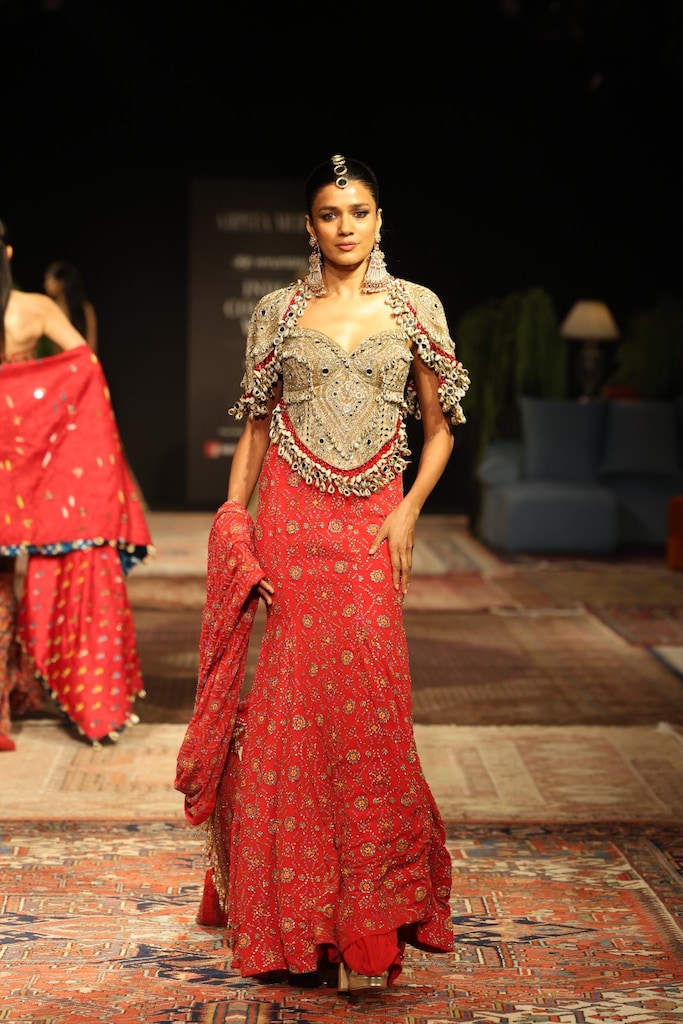
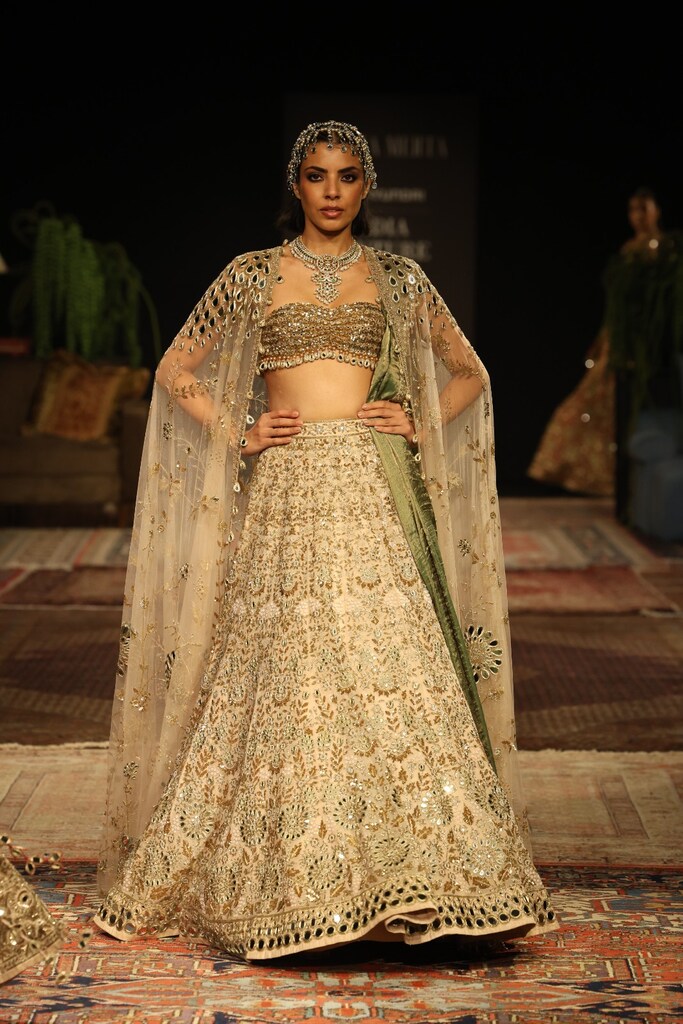
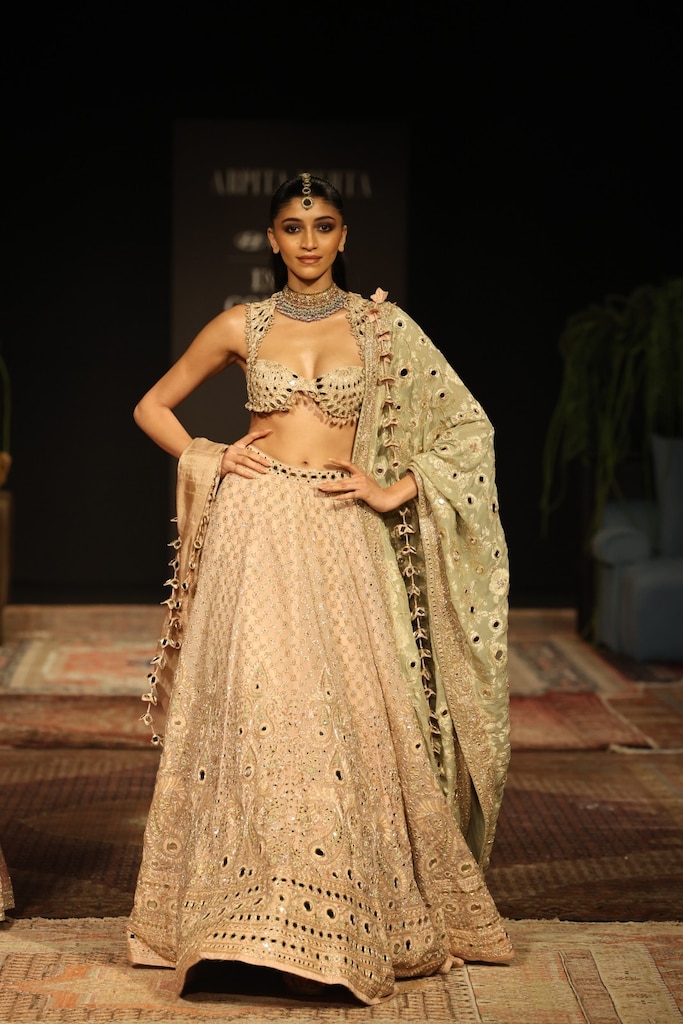
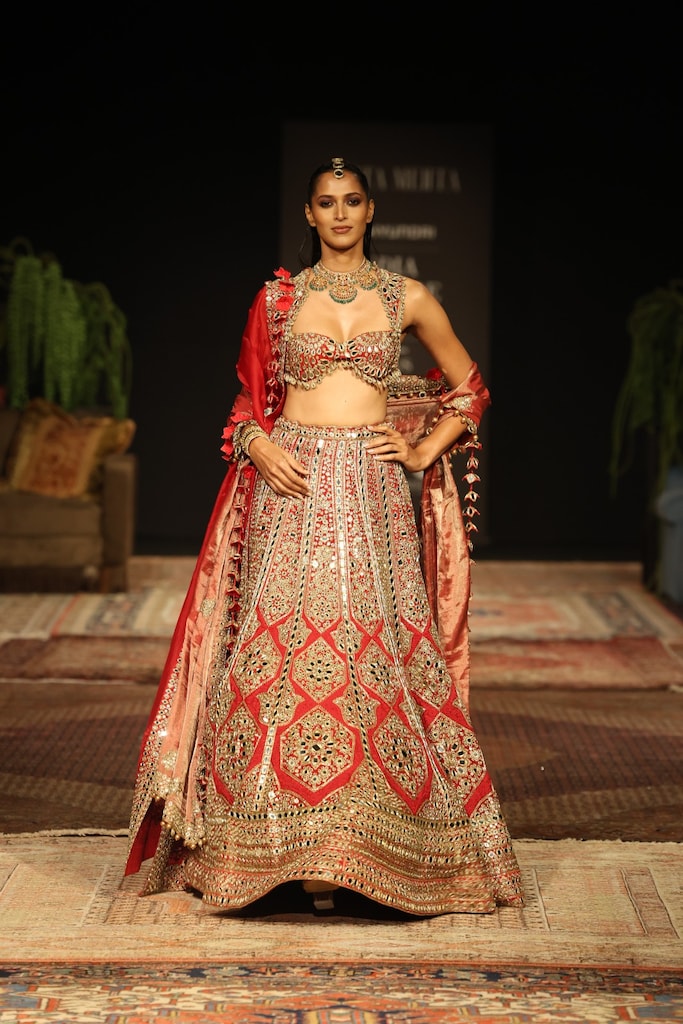
I think the industry is moving towards couture that can be experienced in more personal ways, while still respecting the techniques and artisans that make Indian fashion so special.”
Couture is often celebrated through the singular vision of the designer, but behind every garment lies another story – that of the craftspeople and artisans whose hands bring its most intricate details to life. They are the quiet torchbearers of India’s textile heritage, carrying generations of knowledge through techniques that are as intuitive as they are precise. And, as the designer points out, there is much to learn from them. “When you work closely with artisans, you realise that these techniques carry so much knowledge and intuition that can’t always be translated onto paper. Working with crafts like Kantha, Bandhani and intricate embroidery made us appreciate how important it is to give that expertise space within the design process, rather than treating craft as just another detail on a garment.”
Ceremonial is not simply an ode to India’s textile heritage. It is a proposition for its future: that craft can remain deeply rooted while couture gives it new context, new movement and, most importantly, a new generation of wearers.