


Brimming with a wealth of textile traditions, the Southern part of India is home to centuries-old silks. From the bustling looms of Kanchipuram to the serene weaving villages of Pochampally, silks like Kanchipuram silk, Mysore silk, Pochampally Ikat, Dharmavaram silk, and more have narrated a story of local tradition, rich artistry, and history that continues to resonate in the present.
THIRUMANAM
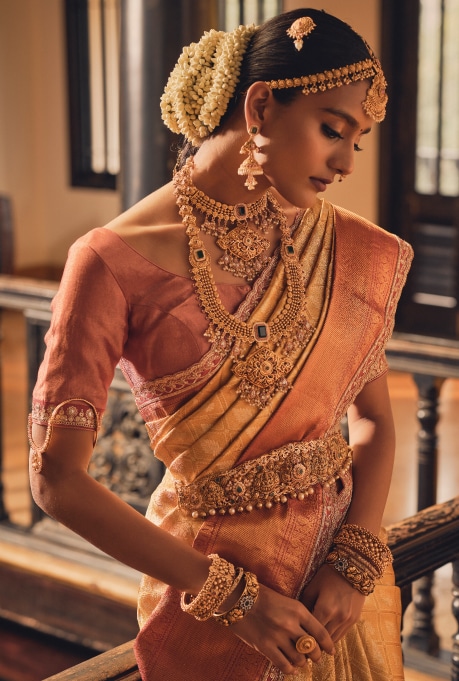
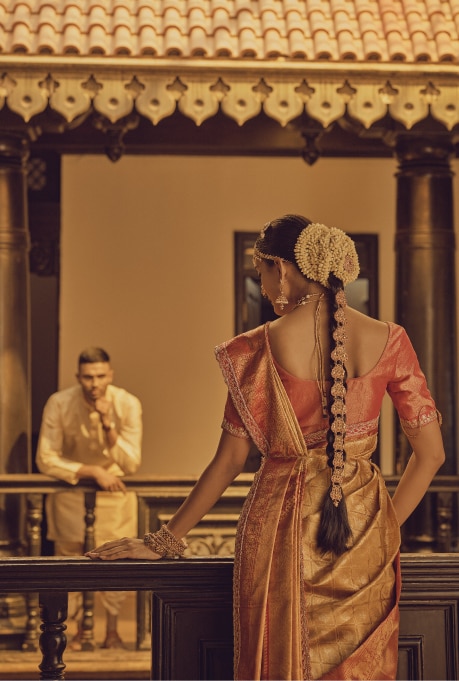
Wedding celebrations across Southern India see people drape themselves in textile-rich silk silhouettes. When it comes to integral ceremonies and celebrations for brides of Tamil Nadu, Kanjeevaram or Kanchipuram – a masterpiece representing skilled artisanship – dominates the scene. The tradition of weaving Kanjeevaram takes us back over 400 years, during the reign of the Pallava dynasty, in a little town in Tamil Nadu called Kanchipuram, now known as the “Silk City” of India. An essential part of temple rituals and the royal closet, the Kanjeevaram saree was more than an article of clothing – it was a symbol of purity, power, and prestige.
Traditionally, South Indian brides, typically in Tamil Nadu, drape themselves in a Kanjeevaram saree crafted in pure mulberry silk and interlaced with real gold and silver zari. Fresh regional blooms like Kanakambaram (Firecracker flower) and Mallige (Jasmine) adorn the bride’s hair-do, enhanced with a Surya and Chandra pendant worn on either side of the central hair parting, Jadanagam – a bejewelled plait worn along the length of the braid, and a mathapatti or maangtikka gracing her forehead.
While brides take centre stage in extravagant designs and dynamic hues, grooms stand out with an air of regal simplicity. Unlike North India’s heavily embellished Sherwanis, grooms of South India are seen in silhouettes in white or cream shades. Generally, the Veshti (dhoti) and Angavastram (shawl) make up the quintessential wedding attire, crafted using Mysore or Kanjeevaram silk.
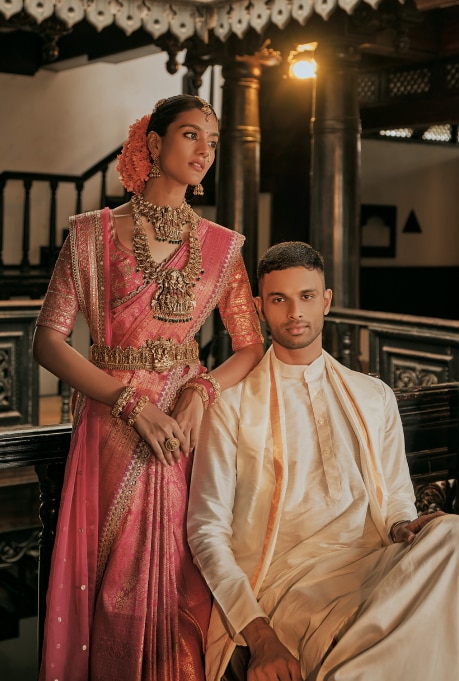
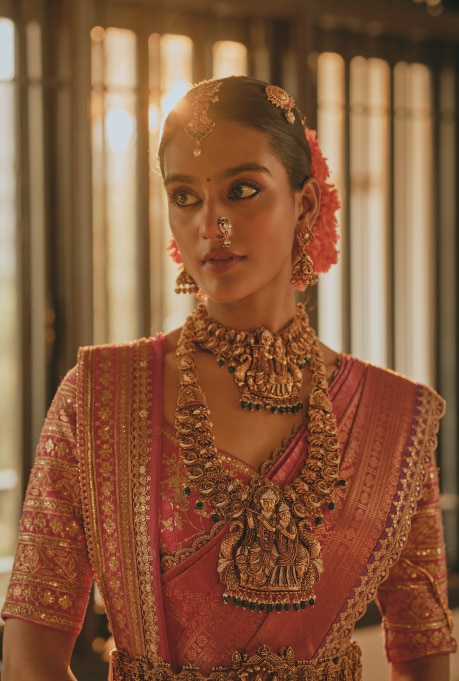
KALYAANAM
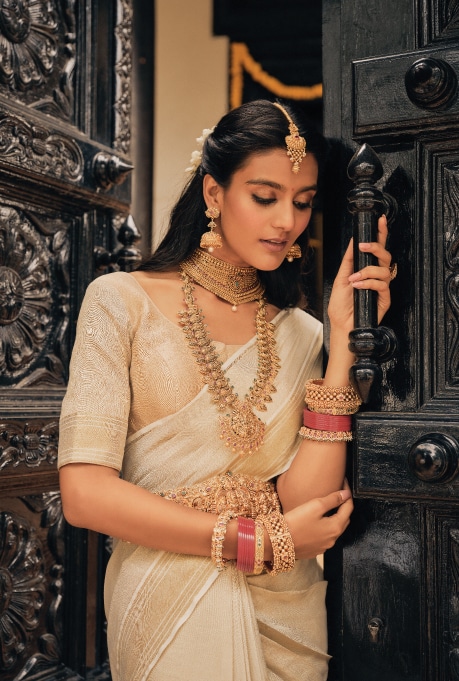
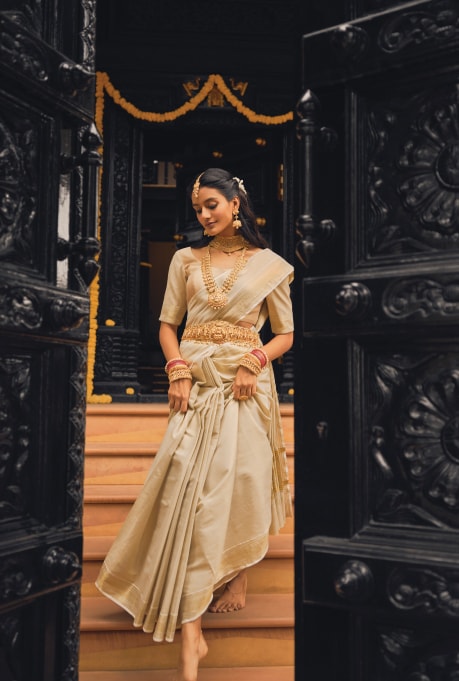
Another saree with secondary dominance in Southern India is the elegant, crisp Kasavu saree from Kerala. Kasavu, often associated with the traditional Kerala saree, actually refers to the intricate gold zari woven into the saree’s border. Subdued in an ivory and gold palette, the handwoven drape was once patronised by royalty and aristocrats. The sarees were originally made from pure cotton and authentic gold threads, making the process of weaving labour-intensive.
Upholding the handloom traditions of God’s own country, weavers have introduced variations with coloured borders. The new iterations of Kasavu sarees hold the same eternal appeal as the ageless six-yard classic. Red, green, and blue borders, adorned with intricate zardozi or threadwork, offer a striking contrast to the pristine body of the saree, infusing a new energy into the classic. Tuning into a canvas of craftsmanship, the blouse often complements the coloured borders, embellished with elaborate threadwork, beadwork, or the ever-elegant zardozi.
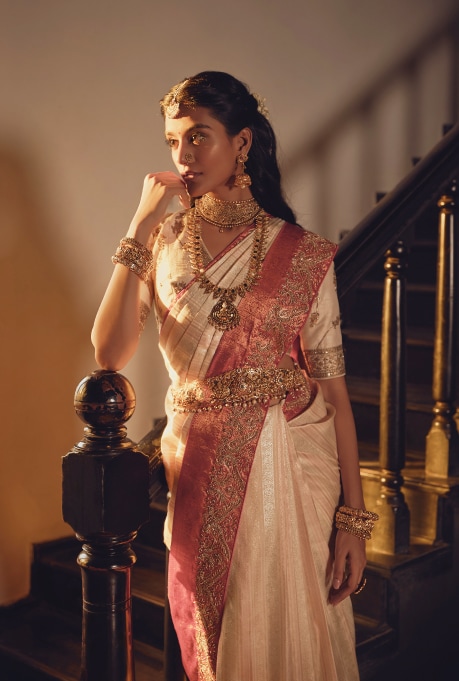
Defined by their simplicity, brides accentuate their look with minimal jewellery, with yellow gold as a cornerstone of the ensemble. Jhimkis (bell-shaped earrings), Oddiyanam (waistbelt), Netti Chutti (forehead ornament) add an ethereal grandeur to the bride’s otherwise understated appearance, while fresh Mallige flowers complete the look.
In Kerala, the Mundu, which is similar to Tamil Nadu’s Veshti, is often worn by men for ceremonial occasions and weddings. Woven from fine cotton or silk and paired with a Jubba or a short kurta featuring a golden Kasavu border, the groom’s apparel is a testament to Kerala’s rich handloom heritage. A matching or contrasting Angavastram is draped over the shoulder to complete the look.
PELLI
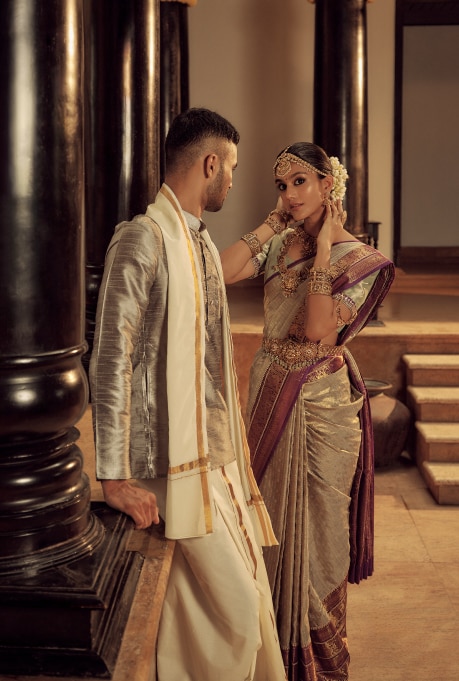
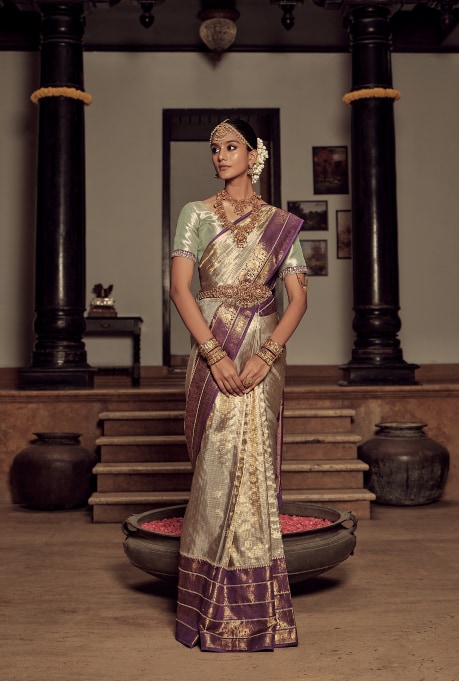
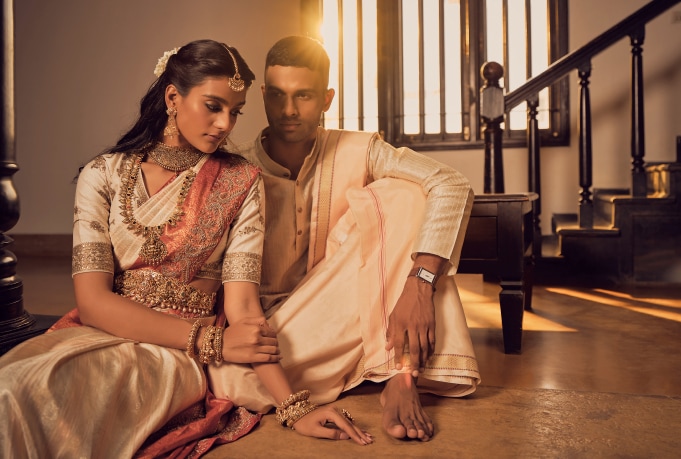
Immersed in jewel tones like red, maroon, green, pink, orange, or purple, brides of Andhra Pradesh adorn themselves in heirloom Kanjeevaram sarees, adored for their contrasting zari borders and intricate motifs. The design element draws inspiration from temple iconography and features motifs like peacocks, flowers, and mythological figures.
Modern brides add their distinctive spin to the heirloom silhouette by opting for pastel pinks and greens and swapping traditional blouses for designer ones ornate with heavy embroidery – striking a dainty balance between modern rendition and the traditional soul of Kanjeevaram sarees. Adding a layer of age-old charm to their looks, the brides punctuate the ensemble with intricately detailed ancestral temple jewellery, like layered necklaces, earrings, armlets, and bangles, with a temple-inspired Kamarbandh (waistbelt) tying the look together.
Reflecting the understated elegance of South Indian tradition, grooms in Andhra Pradesh often choose a classic silk or cotton kurta paired with a Panche, the traditional dhoti. While the conventional white kurtas have dominated groomswear in the region, modern grooms are embracing subtle pastels to match their brides. Accessories are kept minimal yet refined, with gold chains, rings, and wristwatches as the preferred choices, with the final element being an Angavastram and traditional footwear.

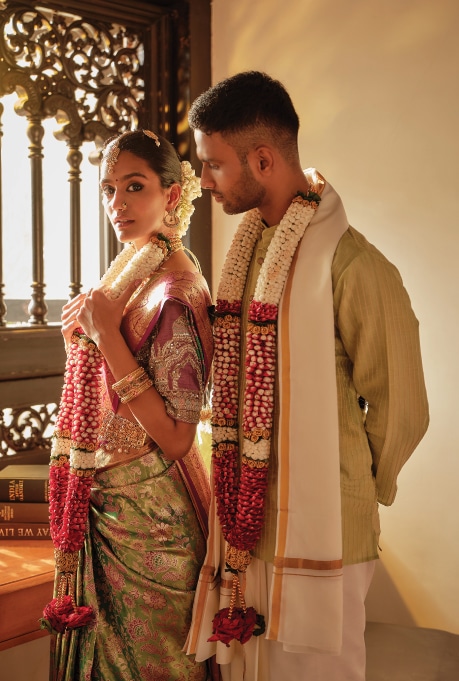
Even today, brides and grooms continue to bring centuries-old customs to life, infusing them with little nuances representing their personalities. They exude regality, with each element meticulously chosen to honour and connect them to their rich cultural lineage. From the scrumptious silk sarees to the symbolic temple jewellery, every detail weaves together a narrative of long-lived traditions of South Indian weddings.