


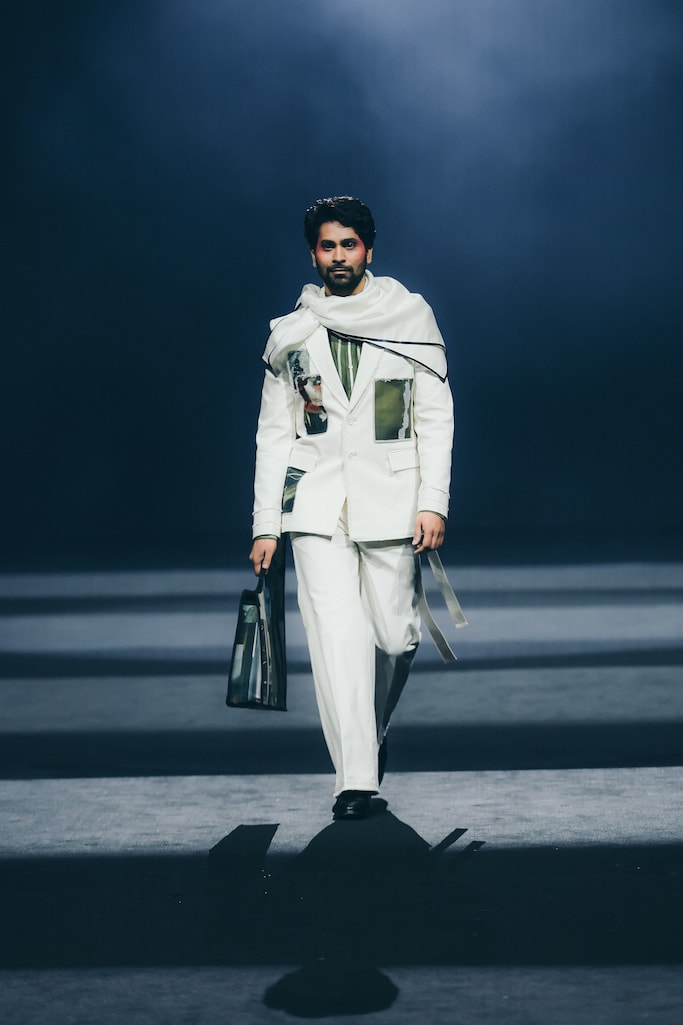
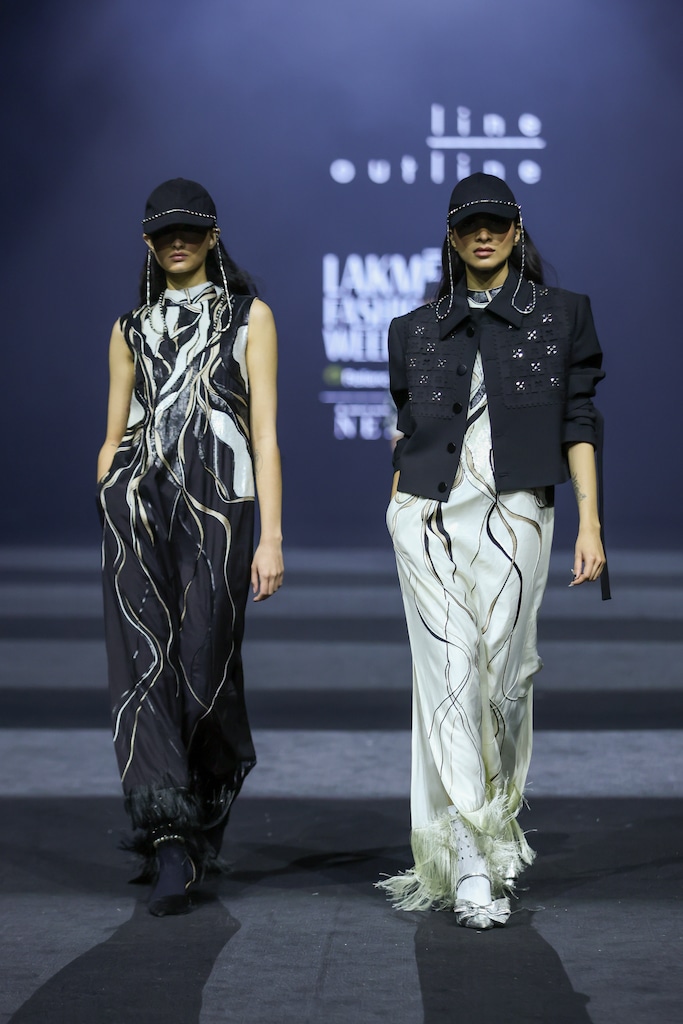
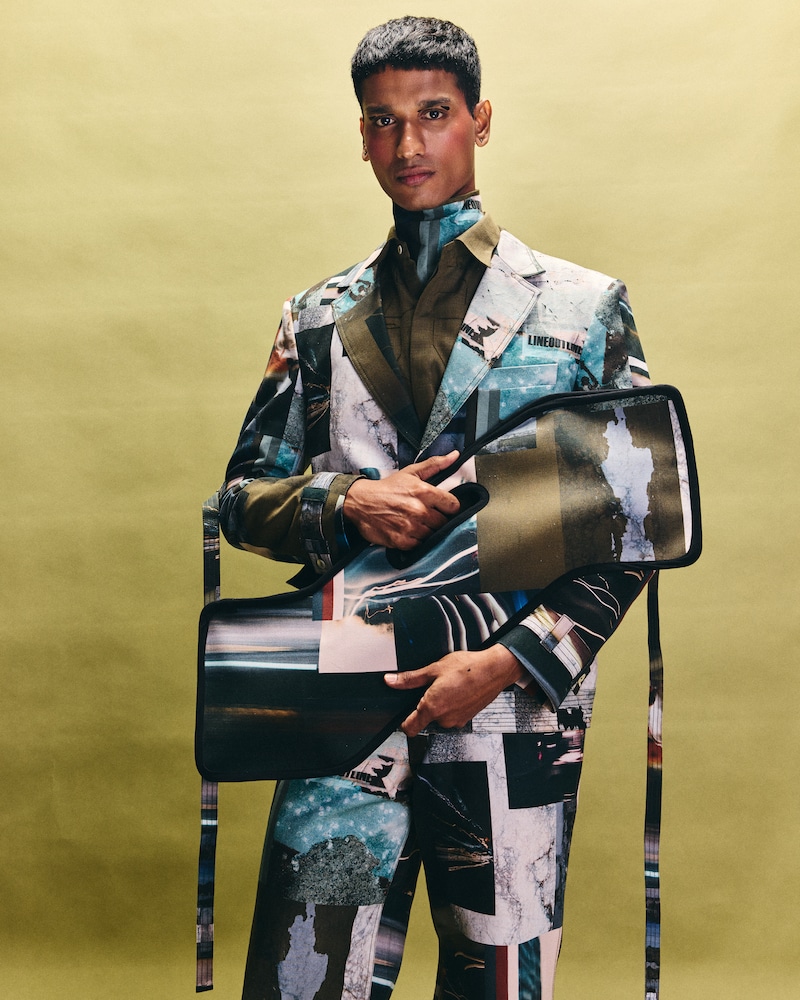
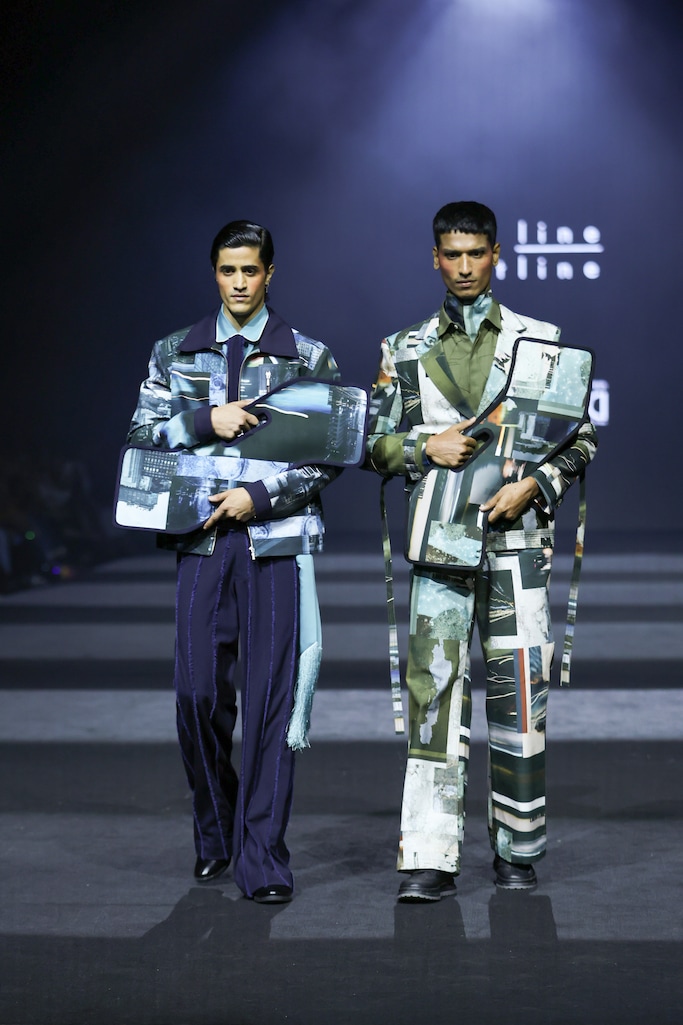
As Day 3 of Lakmē Fashion Week in partnership with FDCI unfolded with a mix of emerging and established voices, Line Out Line by Deepit Chugh stood out with a playful, high-spirited collection that felt both experimental and personal. Blending cutwork, patchwork, cording, and a rich mix of textures, Chapter 8 drew inspiration from the diverse cultures of cities the designer has lived in, translating his experiences into tactile, expressive garments.
Grounded in materiality and construction, the collection moves between structure and ease, with denim emerging as a key medium for experimentation. Subtle interventions in texture and technique lend the pieces a tactile, lived-in quality.
We spoke with the designer to delve deeper into the concepts driving the collection and the narrative behind it.
FL: “Chapter 8” draws from urban infrastructure. What made you look at the city’s functional elements as a starting point for design?
DC: The city isn’t just a backdrop for us – it’s a system of movement, pressure, and pause. I was drawn to its functional elements because they’re honest. Grids, scaffolding, and transit lines already solve problems; we translate that logic into garments.
FL: Denim plays a central role here. What drew you to use it as a medium for expressing structure and experimentation?
DC: Denim felt like the closest parallel to the city – durable, democratic, and constantly evolving. It holds structure, but also records wear, making it ideal for experimenting with construction, washing, and surface disruption.

FL: There’s an underlying tension between construction and deconstruction in the collection – was that intentional?
DC: Yes, that tension was intentional. Cities are constantly being built and broken at the same time. I’ve seen a city like Mumbai grow tenfold in the last 20 years. We wanted the garments to reflect that – pieces that feel resolved but still in process.
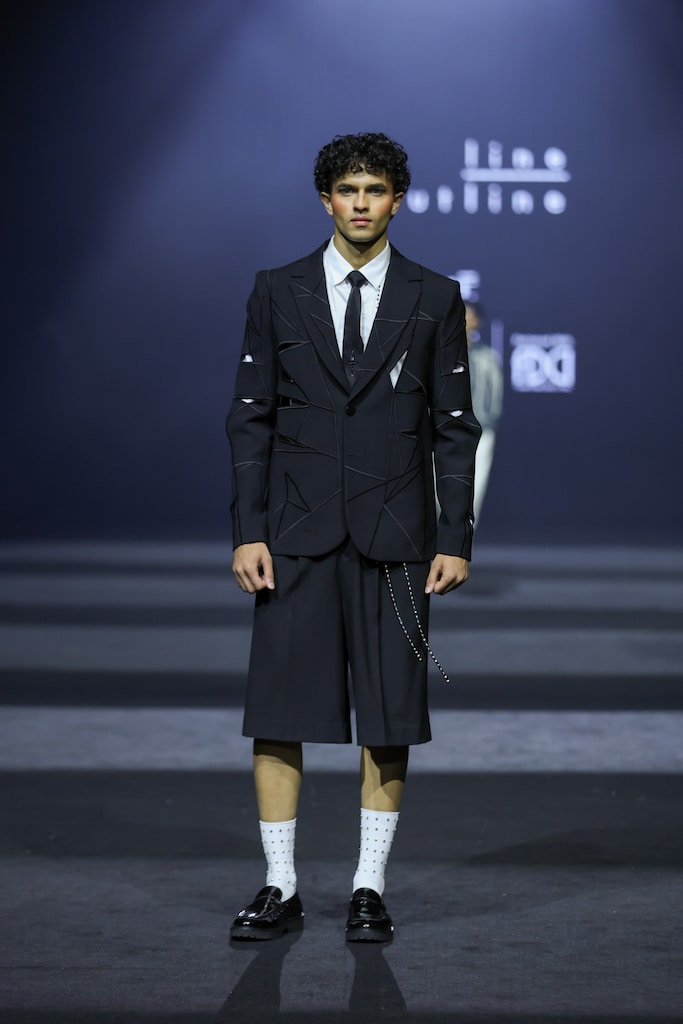
FL: Were there particular garments where construction became the focal point rather than silhouette?
DC: Shirts and outerwear became key. In some pieces, seams, panels, and internal frameworks took precedence over the overall silhouette – almost like exposing the blueprint rather than the finished building.
FL: Does “Chapter 8” mark a shift in your design direction, or is it a continuation of an ongoing narrative?
DC: It’s a continuation, but more distilled. “Chapter 8” sharpens our ongoing narrative of architecture and movement, pushing it into a more raw, functional, and introspective space.