


In the treasure trove of Indian fashion, sherwanis have long been the epitome of regality and tradition. From the rich heritage of the Mughal era to the contemporary fashion landscape, the evolution of menswear in India is a fascinating journey that reflects cultural shifts and global influences. However, as fashion trends continue to change, a new narrative is taking shape that poses the question: Has Indo-Western fashion disrupted traditional menswear? In this article, we will explore the impact of Indo-Western on traditional menswear and how it is changing the face of conventional fashion for men.
History of Traditional Menswear
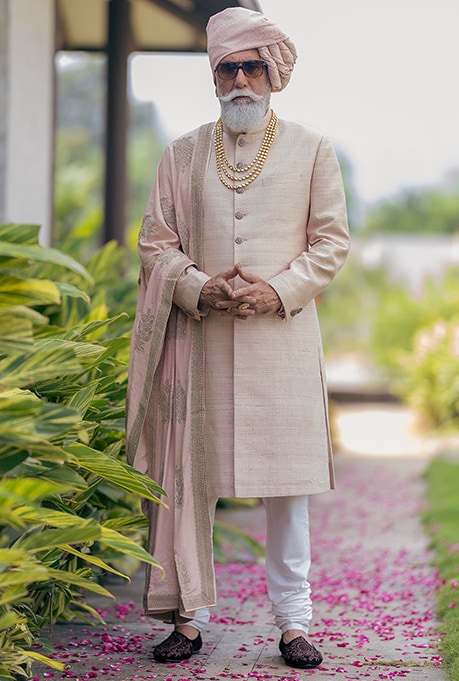
Traditional Indian menswear has roots in ancient times when simplicity and functionality defined the attire. The dhoti, a draped fabric worn as a lower garment, and the kurta, a loose-fitted tunic, were the staples of men’s clothing. This classic combination not only provided comfort in the Indian climate but also symbolised the timeless essence of traditional /classical attire.
The Mughal era brought a paradigm shift in Indian fashion, marked by luxury, intricate detailing, and the introduction of iconic garments. The Sherwani, with its regal silhouette and adorned with exquisite embroidery, became synonymous with aristocracy. Simultaneously, the Bandhgala, characterised by a high-collared jacket, found its roots in Mughal court attire, blending seamlessly with Indian sensibilities.
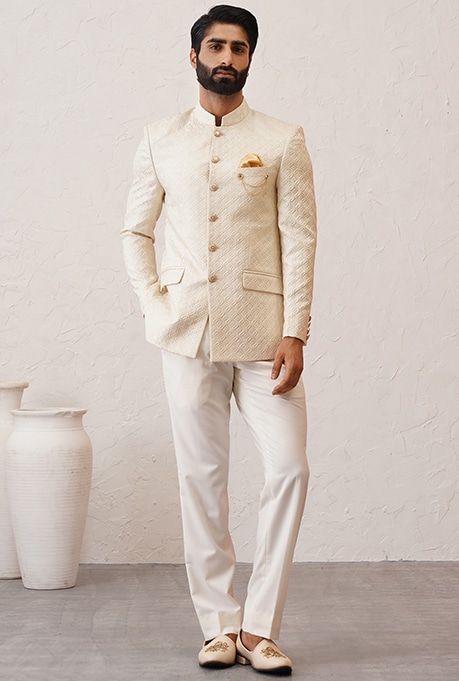
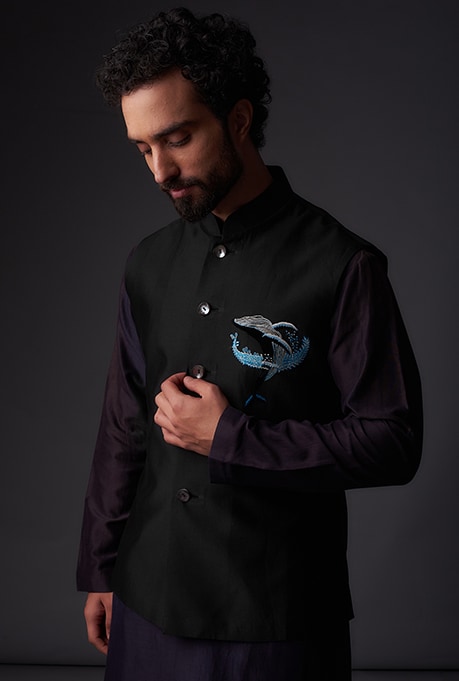
The colonial era left an indelible mark on Indian menswear by introducing the Jodhpuri suit. Inspired by the equestrian attire of the British aristocracy, the Jodhpuri suit featured a distinctive jacket with a more extended cut paired with trousers. This amalgamation of fashion reflects the cultural fusion of the time.
Post-independence, India witnessed a revival of indigenous fabrics and styles. The Nehru jacket, named after India’s first Prime Minister, Jawaharlal Nehru, gained prominence. This sleeveless jacket with a Mandarin collar symbolised political and cultural identity, embodying a fusion of Indian aesthetics with modern tailoring.
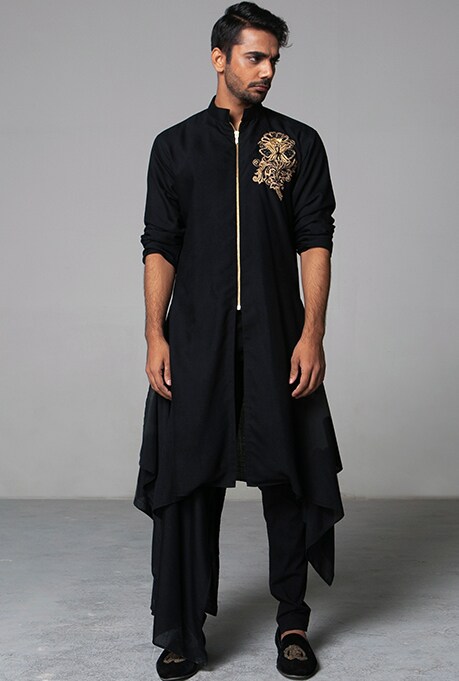
Khadi, a handspun and handwoven fabric, also experienced a resurgence during this period, championed by Mahatma Gandhi. Khadi kurta-pyjama sets became a symbol of self-reliance and a connection to India’s rural roots, fostering a sense of pride in indigenous craftsmanship.
Khadi attire is a unique and versatile clothing option that can be worn for any occasion, from running errands to attending formal events. The fabric is lightweight, breathable, and comfortable, making it an excellent choice for hot and humid climates. Khadi kurtas and scarves are popular among people of all ages and backgrounds. They reflect the timeless appeal and versatility of Khadi attire.
Indo-Western’s Influence on Traditional Indian Garments
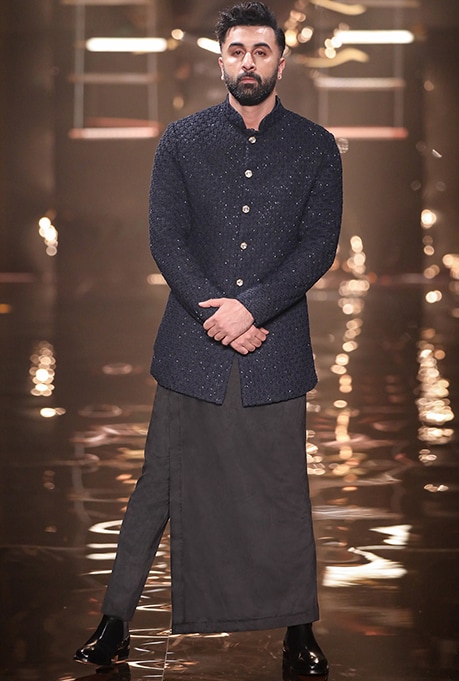
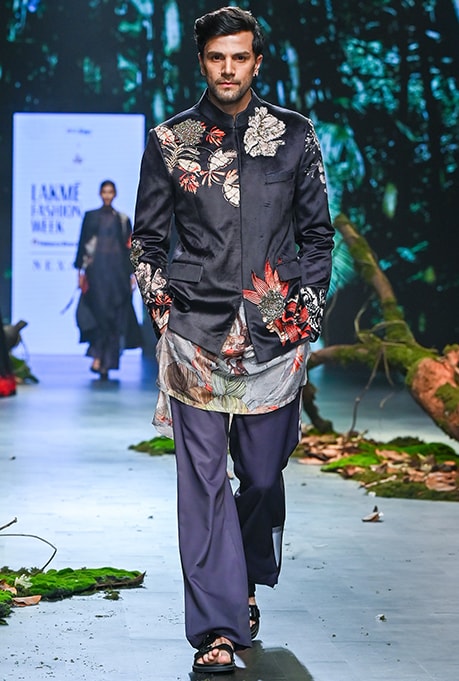
Fast-forward to today, we are witnessing a fascinating shift as Indo-Western styles spread through ethnic garments, breathing new life into them. The union of traditional Indian aesthetics with Western elements has birthed a new era in men’s fashion, creating a captivating blend.
The Sherwani, once bound by convention, now showcases modern cuts, contemporary fabrics, and innovative embellishments. Sherwanis adorned with Western-inspired tailoring, such as structured silhouettes and sleek lapels, present a harmonious fusion of the old and the new.
The impact of Indo-Western fusion extends beyond the Sherwani, seeping into various long-established Indian garments for men. The Bandhgala, once characterised by its high-collar jacket and straight-cut design, now adopts modern twists with asymmetrical closures and tailored fits. Jodhpuri suits embrace Western influences with buttoned blazers and slim-fit trousers, resulting in ensembles that effortlessly blend the old and the new. The versatile Kurta-Pyjama ensemble has also witnessed a makeover, with shorter hemlines and experimental silhouettes catering to the evolving preferences of the modern man.
The intersection of cultures is beautifully reflected in incorporating Western textiles, such as velvets and satins, into traditionally crafted garments, adding a touch of contemporary luxury. The colour palette has also expanded beyond conventional hues, which is quite evident in modern menswear, which often embraces a broader spectrum, incorporating pastels and muted shades influenced by Western fashion sensibilities. While ancestral motifs retain their significance, designers have incorporated Western-inspired detailing, such as sequins, beads, and intricate threadwork, creating a fusion of cultural aesthetics.
Indo-Western Wear: A New Chapter in Men’s Fashion
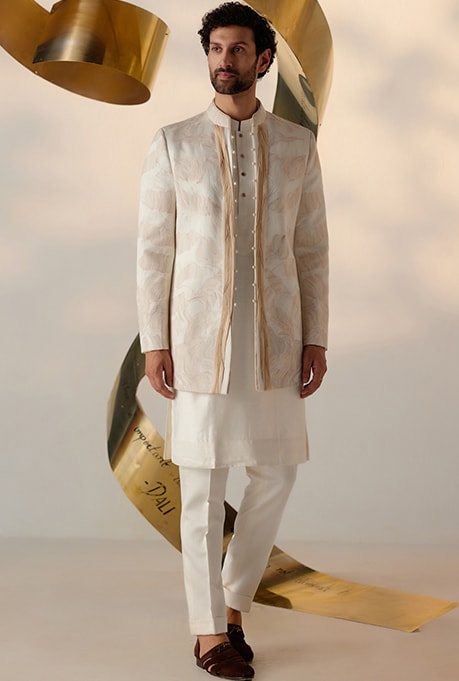
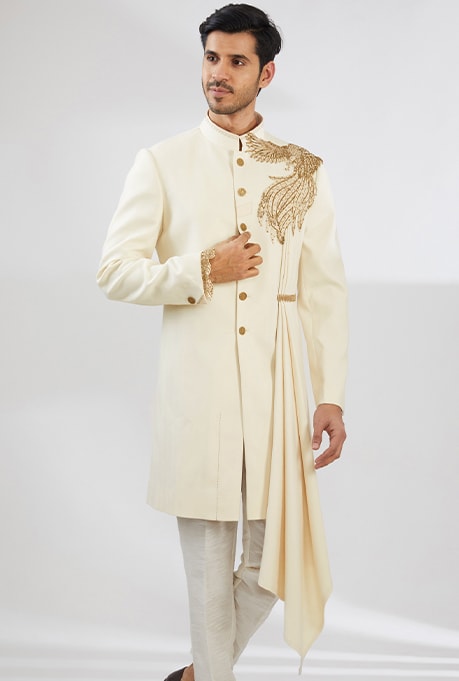
As we reflect on the transformative journey of traditional Indian garments, especially under the influence of Indo-Western, a new chapter unfolds in men’s fashion. The question posed earlier finds resonance: Has Indo-Western disrupted traditional menswear?
The answer lies in the harmonious blend of tradition and modernity, where the historical garments, infused with Indo-Western elements, emerge as a versatile emblem of elegance. This fusion has opened new avenues, redefining the segment and shaping the future of men’s fashion.
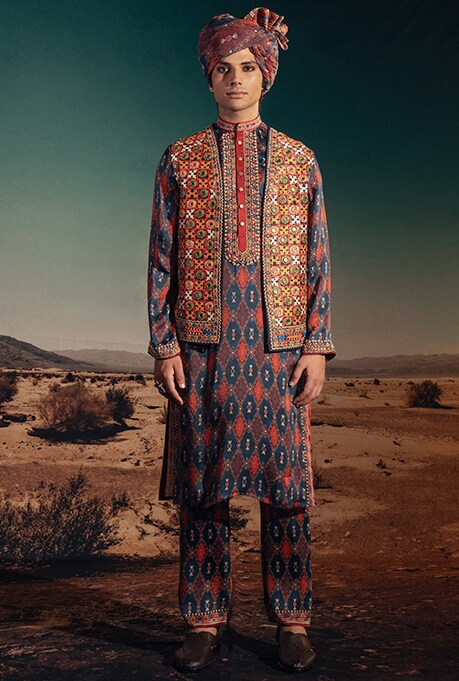
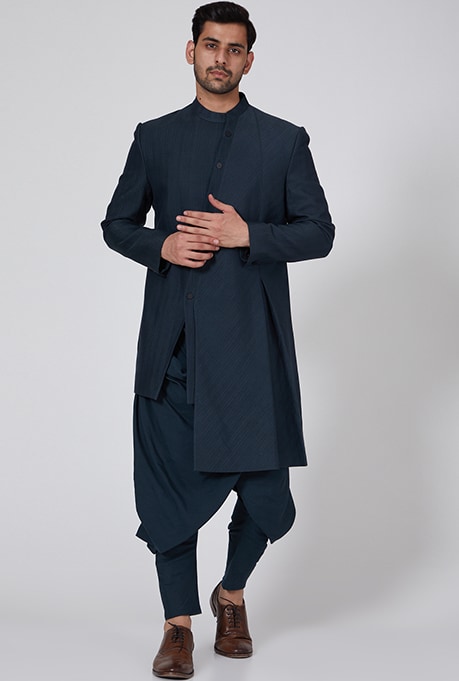
Prominent Indian designers like Jatin Malik, Rajdeep Ranawat, Kunal Rawal, Shantnu & Nikhil, and Antar-Agni are navigating uncharted waters and pushing the boundaries of creativity and innovation. The journey from tradition to modernity, guided by the spirit of fusion, emphasises the evolution of men’s fashion and promises a future where innovation and heritage coexist.
In conclusion, Indo-Western is not merely a trend but a cultural synergy that breathes new life into time-honoured garments. With its adaptability and allure, the Sherwani remains at the forefront of this sartorial evolution, inviting the modern man to embrace a style that transcends borders and captures the essence of a truly global aesthetic.