


Day 3 of FDCI presents Lakmē Fashion Week witnessed a series of noteworthy showcases by some of the industry’s most compelling voices, with Anurag Gupta emerging as a key name. Closing the day on a high, the designer presented a striking avant-garde vision with his collection, The New Primitive.
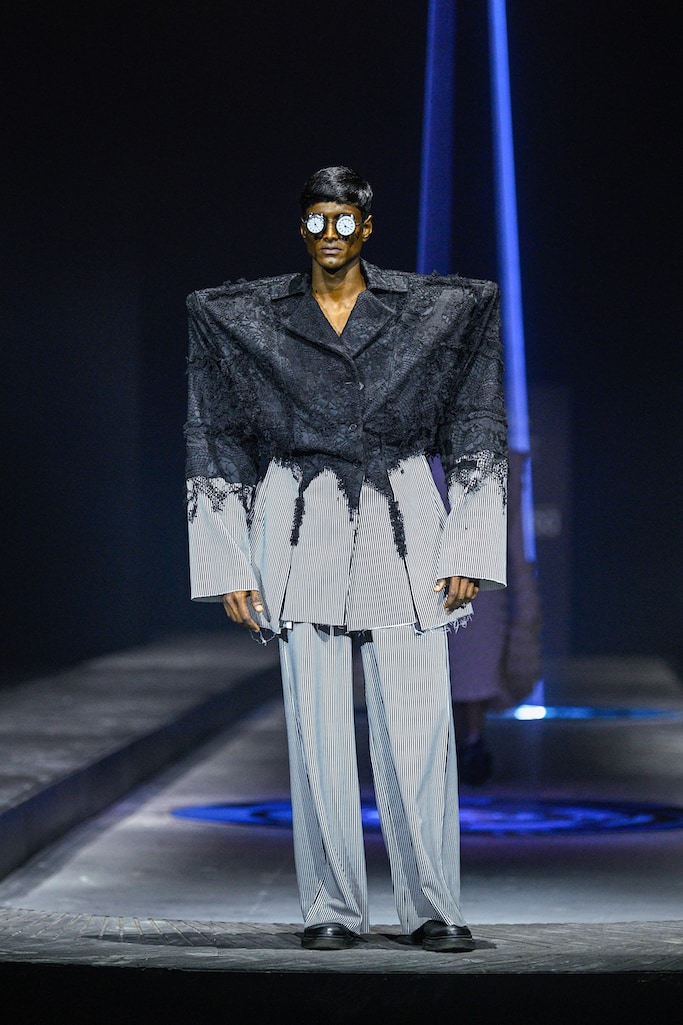
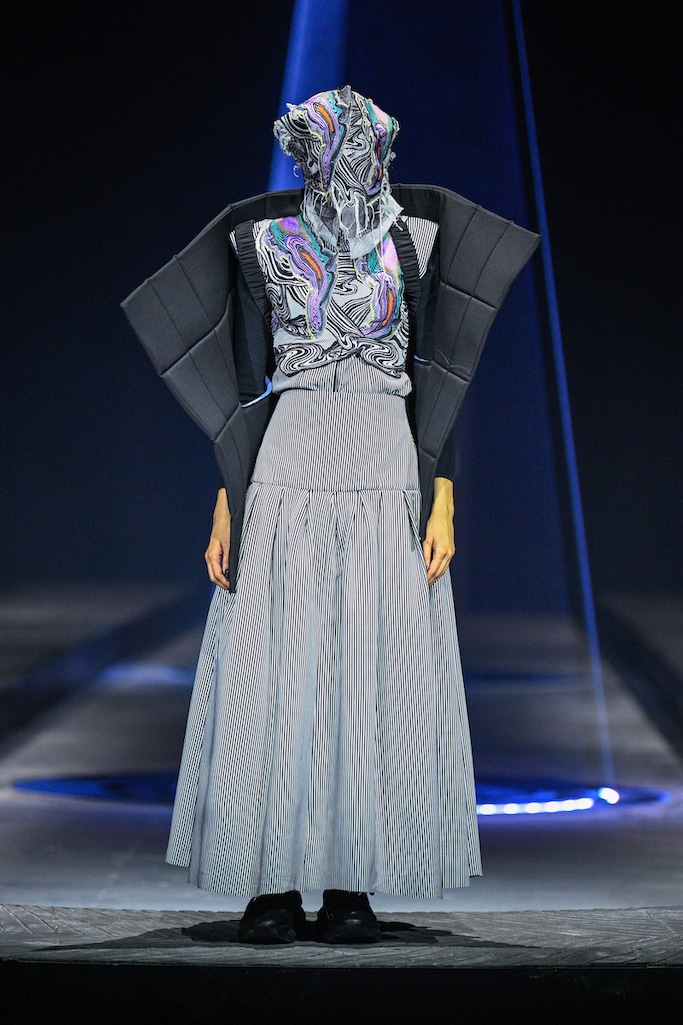
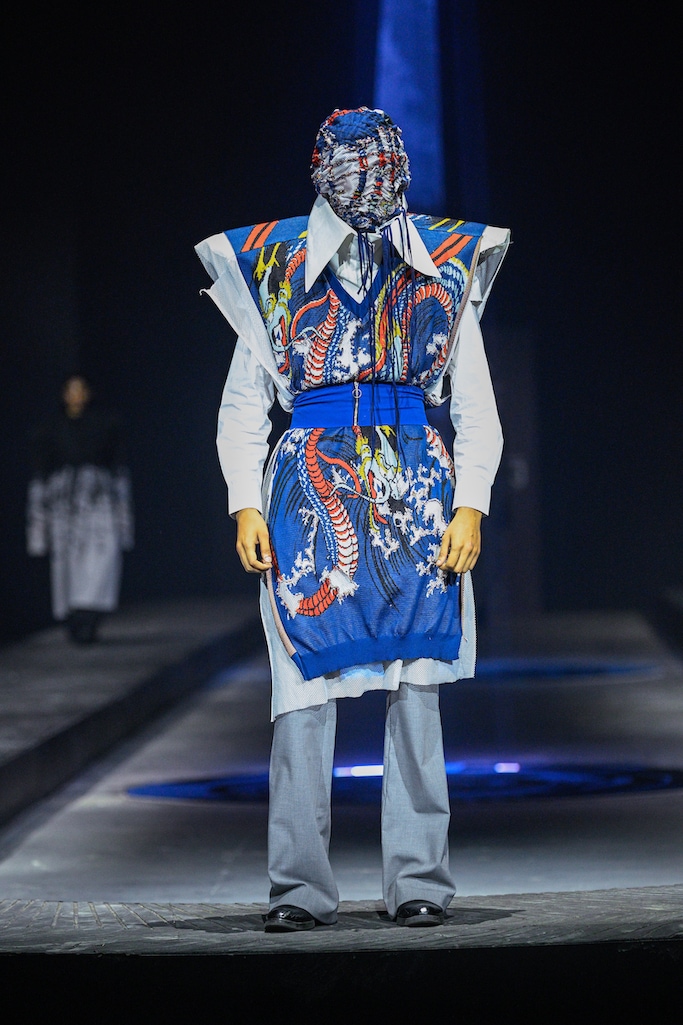
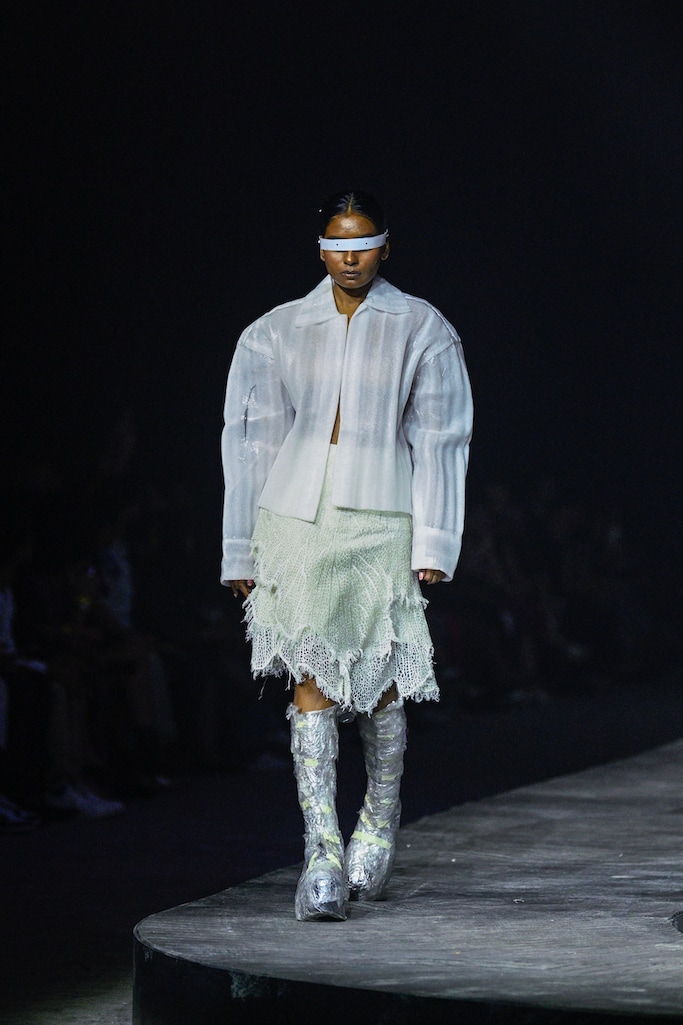
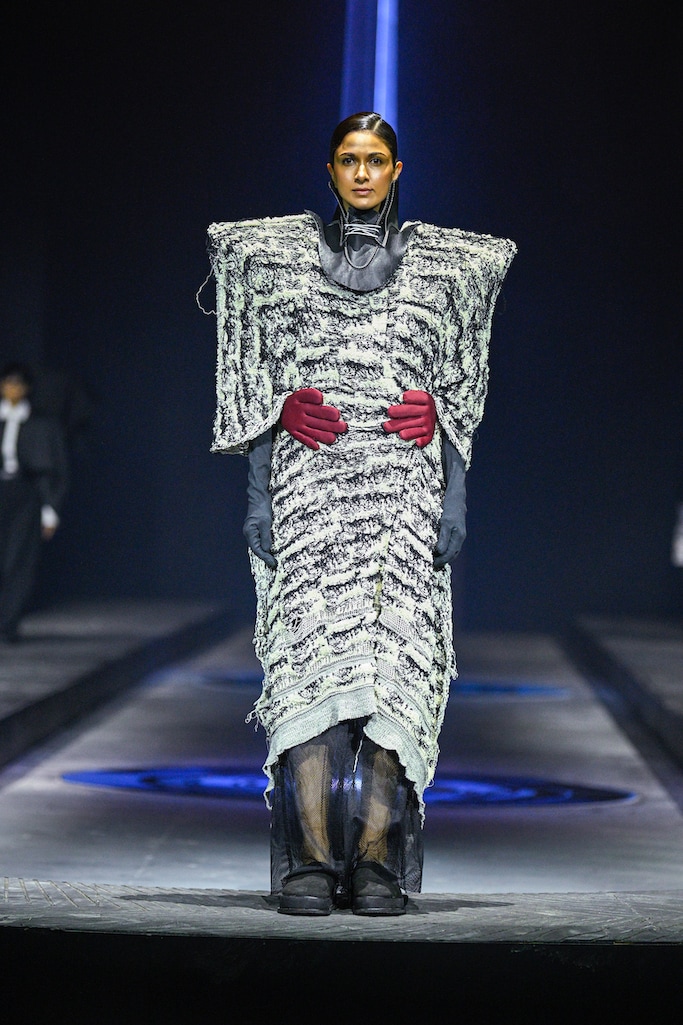
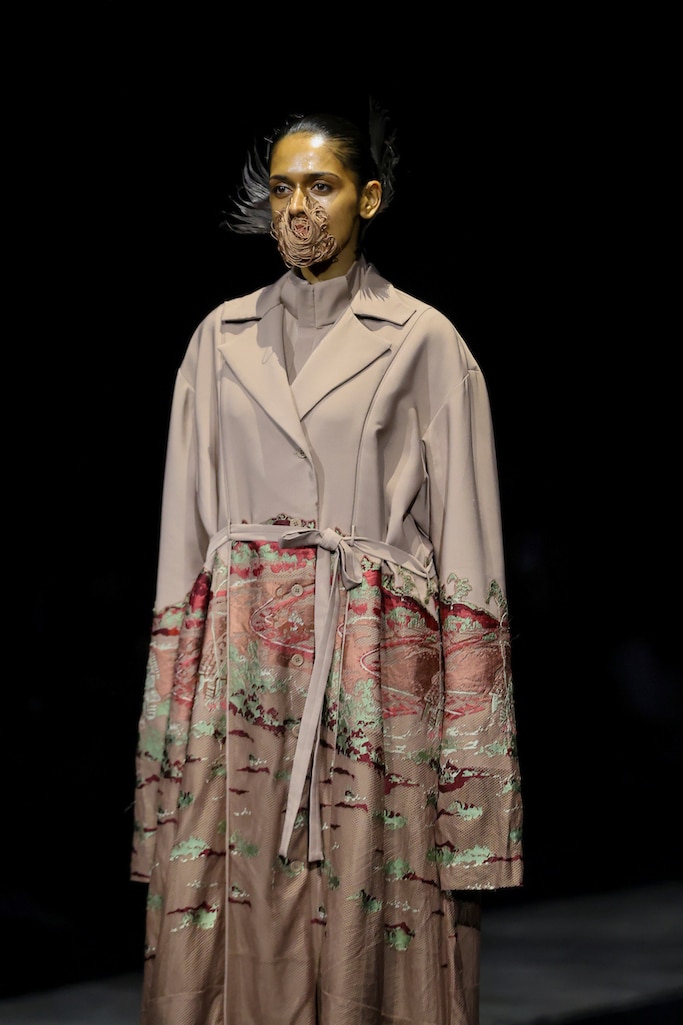
Drawing from the dynamic narratives of nature and movement in Utagawa Kuniyoshi’s work, the collection reinterprets traditional visual rhythm through a contemporary, architectural lens – creating a powerful dialogue between motion, form, and structure.
In this conversation, Anurag Gupta lets us in on the innovative technologies at play and his views on avant-garde fashion and sustainability.
FL: Your work often draws from disciplines beyond fashion. This season, what drew you to Utagawa Kuniyoshi’s visual language, and how did you reinterpret it through a contemporary lens?
AG: I’ve always been drawn to a sense of movement and controlled chaos. With Kuniyoshi, it was the way everything feels alive, almost in motion, even within a still frame. His work has this fluid, wave-like quality, but at the same time, it’s incredibly deliberate. What stayed with me was how he builds narratives through fragmentation where bodies, creatures, and environments blur into something surreal.
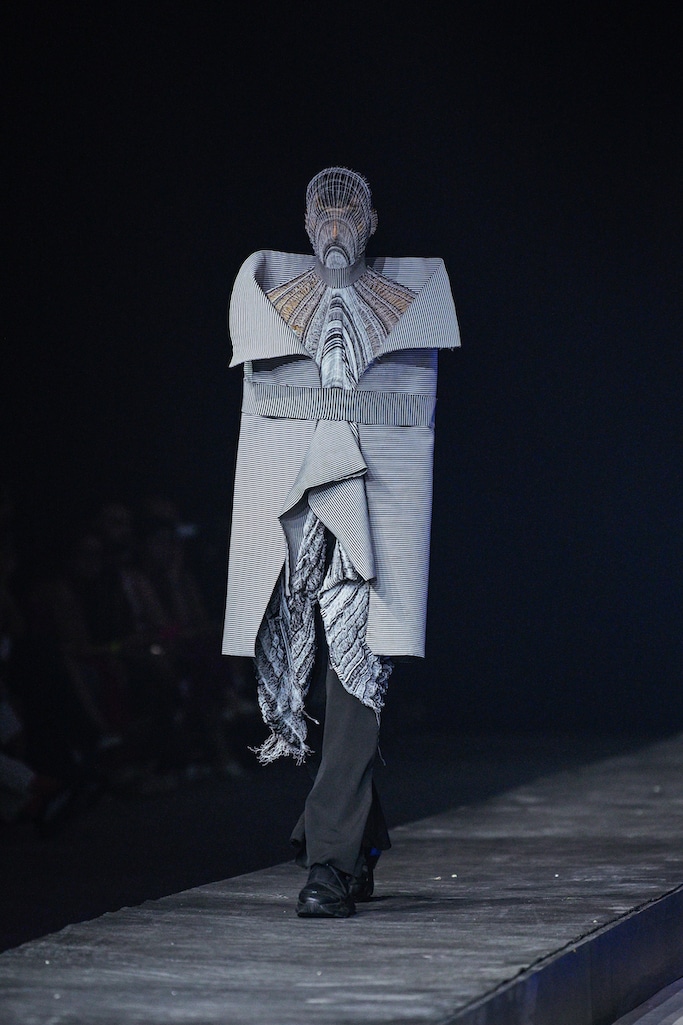
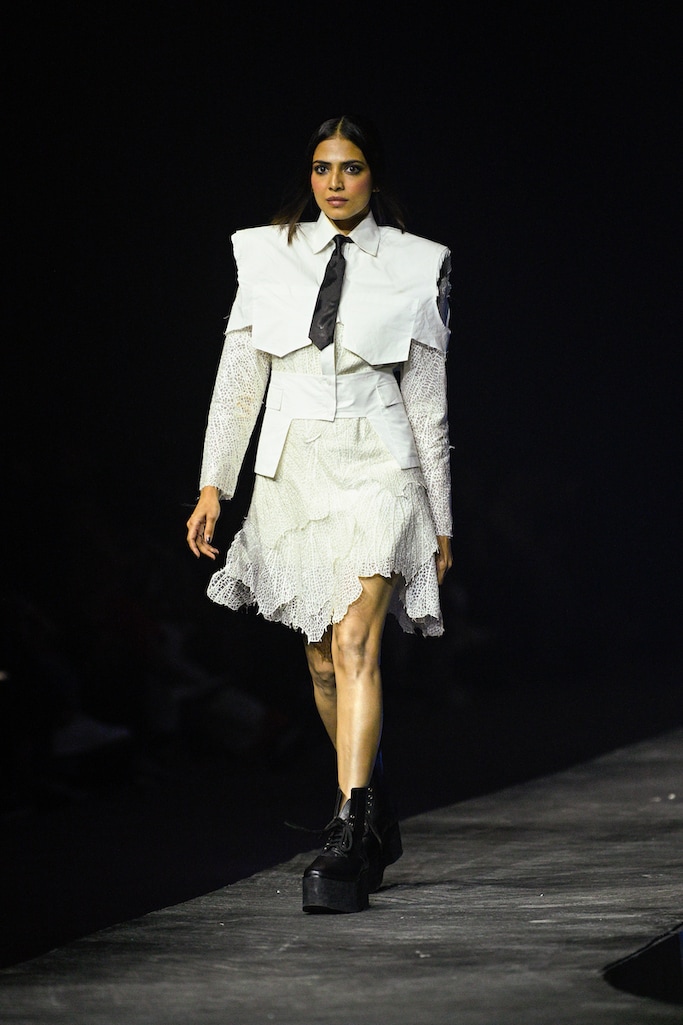
For The New Primitive, I didn’t want to translate that literally through prints. Instead, I tried to bring that energy into the construction itself. It shows up in layered silhouettes, modular panels, and pieces that feel like they’re shifting as you look at them. It became less about referencing his imagery and more about capturing that sense of unpredictability and movement in the garments.
FL: At the core of The New Primitive is a natural fibre developed through plasma technology. What inspired this material exploration, and how does it shape the garments both structurally and sensorially?
AG: It really began with curiosity. I wanted to see how far we could push natural materials without losing what makes them feel honest. Structurally, this fibre allowed us to create sharper, more sculptural forms that usually rely on synthetic support. But what I find more interesting is how it feels. There’s a kind of duality to it. It feels raw but also refined, familiar but slightly unfamiliar at the same time. That tension between something primitive and something engineered became central to how the garments are experienced.
FL: There’s a clear balance between material innovation and restraint in your process. How do you ensure that technology enhances, rather than overpowers, the craft?
AG: For me, technology is never the starting point. Everything begins with the hand draping, cutting, and really understanding how a fabric behaves in its most natural state. Only after that do we bring in any kind of technological intervention. And even then, it’s always about asking whether it’s necessary. If something doesn’t add real value, whether functional or emotional, it doesn’t stay.
“Craft is always the anchor. Technology is just layered in quietly, so the final piece feels intuitive rather than forced.”
FL: As one of the few Indian designers working within an avant-garde space, how would you define Anurag Gupta’s design voice? What does avant-garde mean to you today?
AG: I think of my work as a constant negotiation between opposites: tradition and futurism, control and disruption, organic and constructed. It’s not about moving away from heritage, but about seeing how it can exist in a more contemporary context.Avant-garde today doesn’t have to be loud or shocking. For me, it’s more about perspective. It’s about questioning how we make clothes, how we wear them, and even how we perceive them.I’m interested in garments as ideas where form can challenge function, and where a bit of discomfort can open up new ways of thinking about the body and identity.
FL: With sustainability and innovation at the forefront of global fashion, how do you see your work contributing to a more responsible and future-facing design language?
AG: For me, sustainability has to be built into the process, not added later on. It comes through the choice of materials, the way textiles are developed, and how we approach waste. But beyond that, I think a future-facing approach is also about creating pieces that people form a connection with. Garments that evolve with the wearer, rather than being discarded quickly. If we can shift the mindset from consumption to meaning, that’s where real change begins.