


To speak of Tarun Tahiliani is to speak of modern Indian fashion.
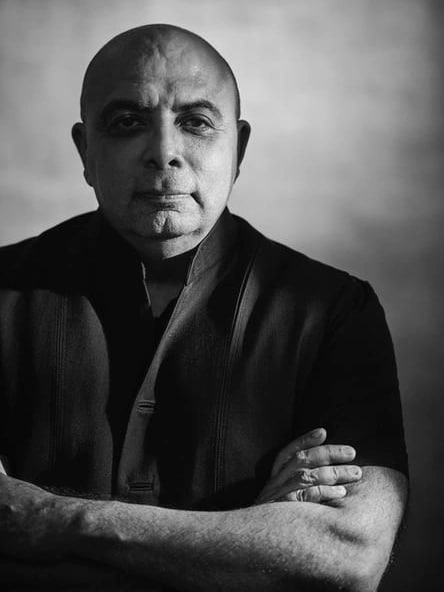
Few designers have shaped modern Indian fashion as decisively as Tarun Tahiliani. Over the last 30 years, his work has not merely followed the evolution of Indian luxury, it has actively defined it. From redefining retail to reimagining the sari, from championing craft to embracing technology, Tahiliani’s journey is just as much about vision as it is about courage.
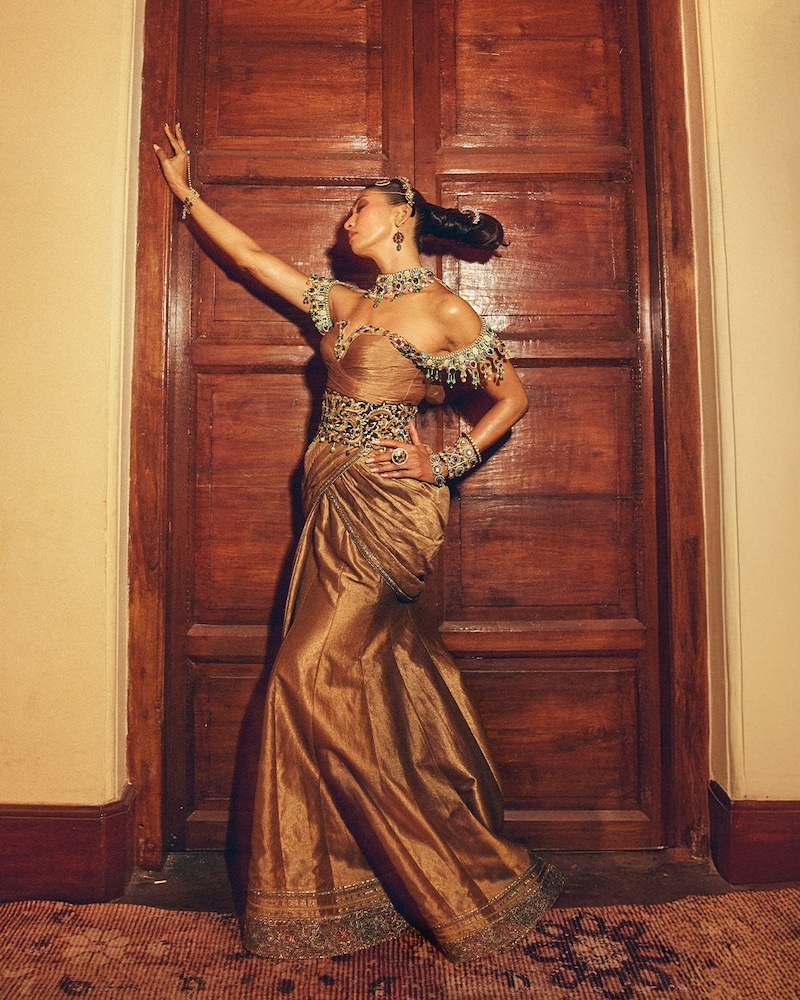
When Tahiliani began in the late 1980s, Indian fashion was still finding its voice. Couture existed, craft existed, but there was little conversation between the two. In 1987, he co-founded a multi designer store in Mumbai, where helped create a framework where design, retail and creative identity could coexist. At the time, it became a launchpad for an entire generation of designers. It was a blueprint that would go on to shape the industry, and establishing fashion as a serious cultural enterprise in India.
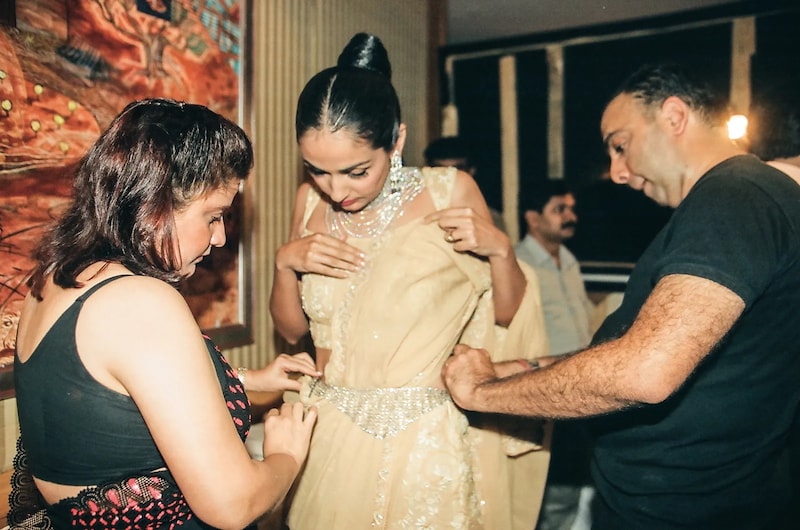
The birth of India Modern
When he launched his own label, later in the early-1990s, the designer brought with him a deliberate understanding of India, her aesthetics and her tradition. Indian clothing, he believed, did not need to be diluted to be modern. Instead, he treated India as a living archive.
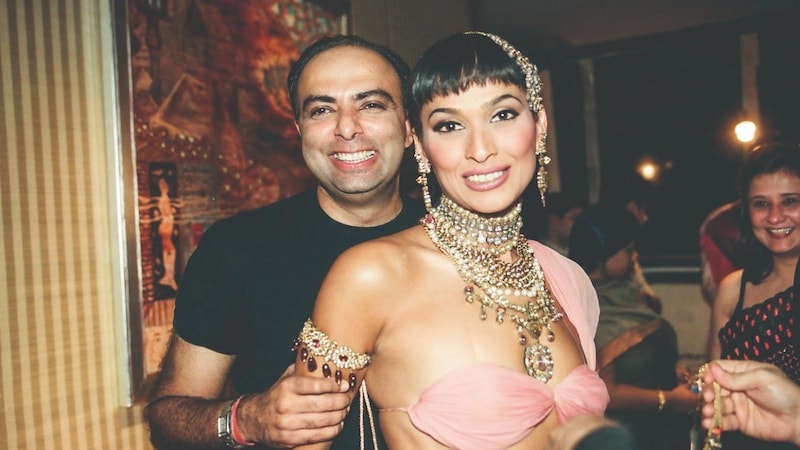
At the heart of Tahiliani’s work has always been fabric. Handloom, muslin, malkha, brocade, silk, chiffon and organza are not treated as surfaces, but as living materials that respond to the body. His mastery lies in how he sculpts movement, introduces architecture, and builds volume. Equally important has been his engagement with craft. From chikankari to mirrorwork, hand painting to kashidakari, Tahiliani has consistently returned to India’s artisanal vocabulary. His work has shown that tradition evolves, adapts and thrives when given room to breathe.
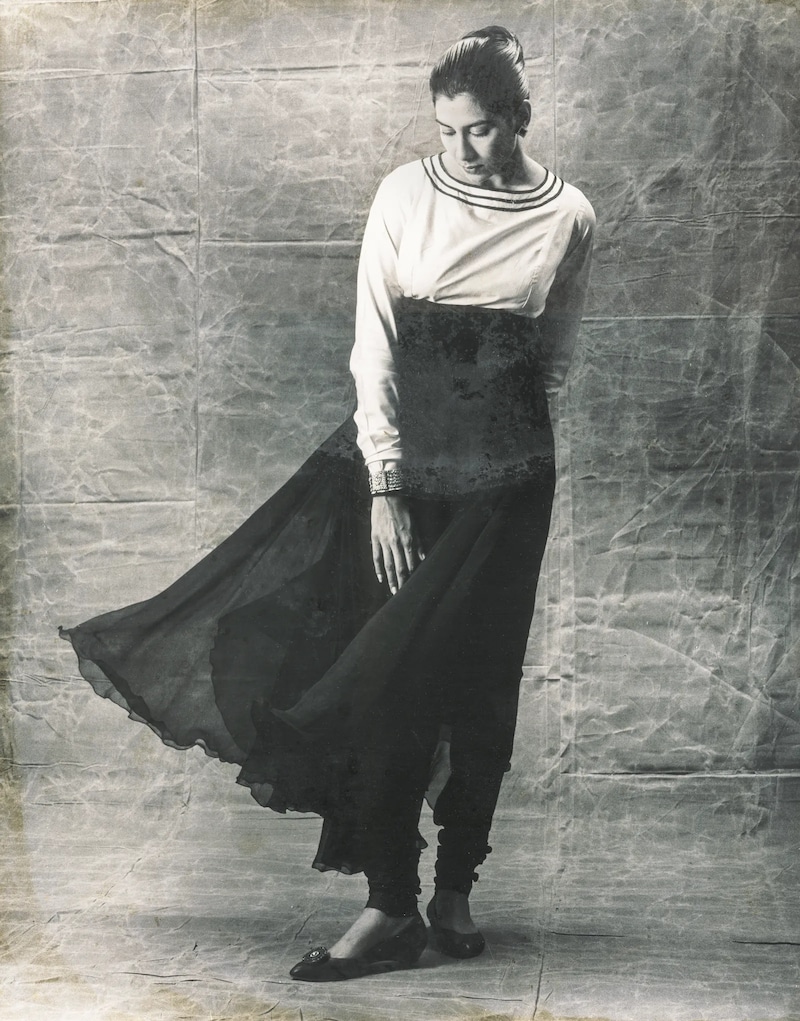
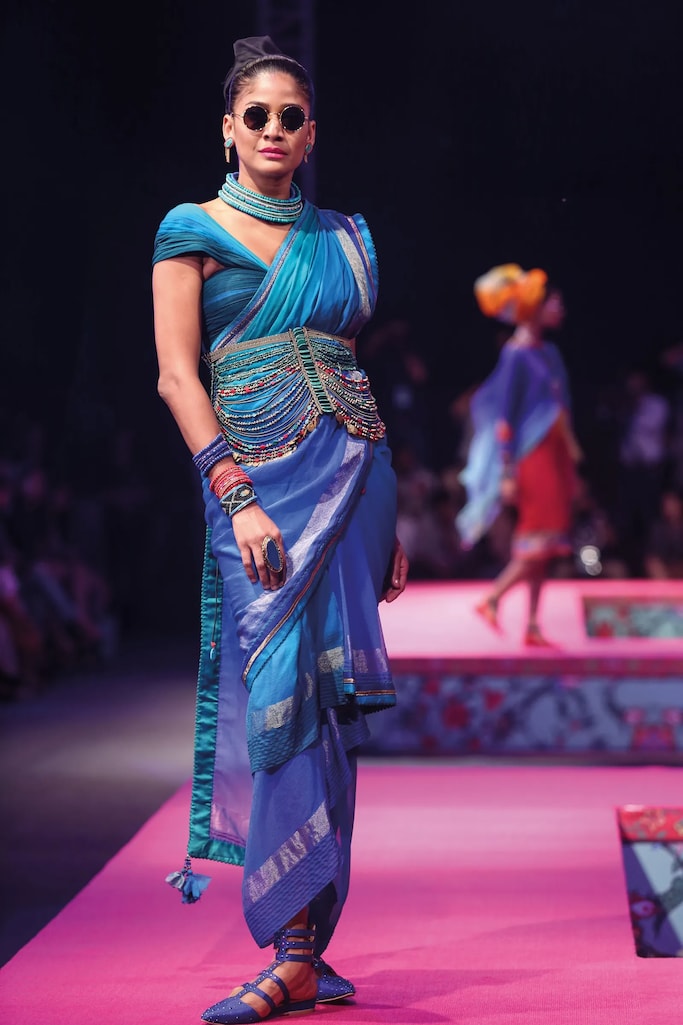
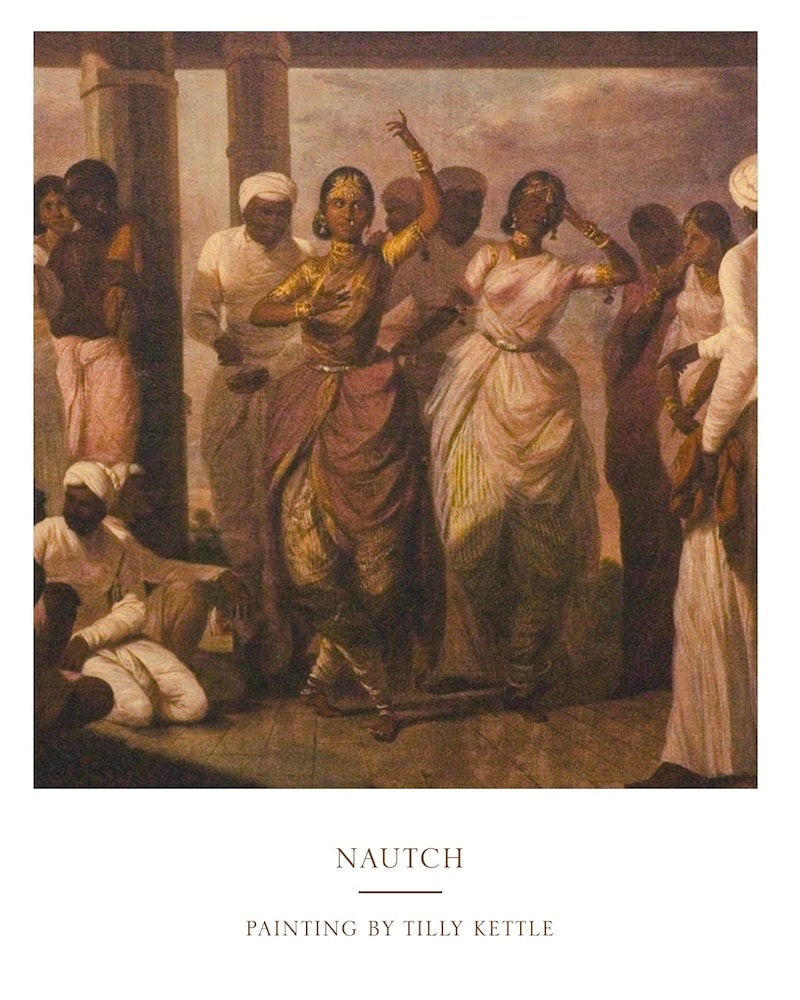
His early experiments with drape, layering and construction led to what is now widely recognised as the concept sari, a silhouette that liberated the garment from rigid conventions while respecting its soul. It was a turning point not just for his label, but for Indian fashionscape at large.
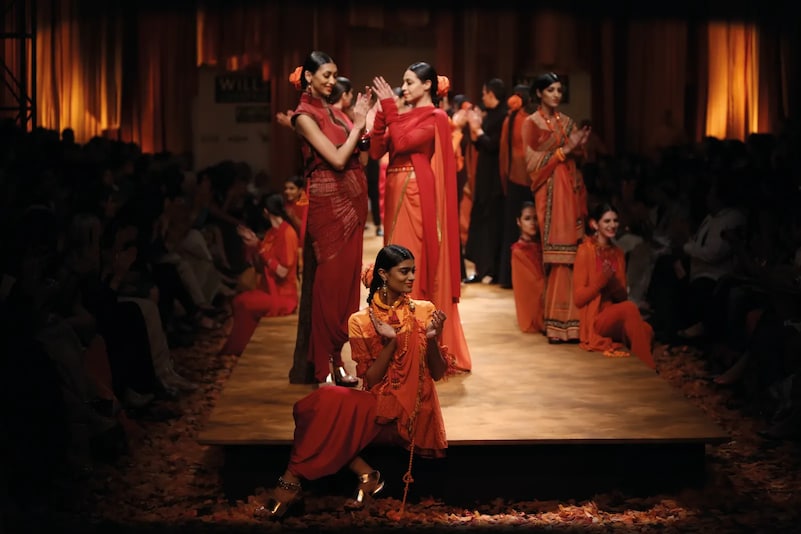
Over time, this language extended into sculpted bodices, corsetry, architectural blouses, tailored jackets, lehengas, kaftans and menswear, creating a wardrobe that feels expansive yet deeply cohesive. With prêt and occasion wear, he bridged aspiration and accessibility without diluting design integrity.
What emerged was an idea now synonymous with his name. India Modern.
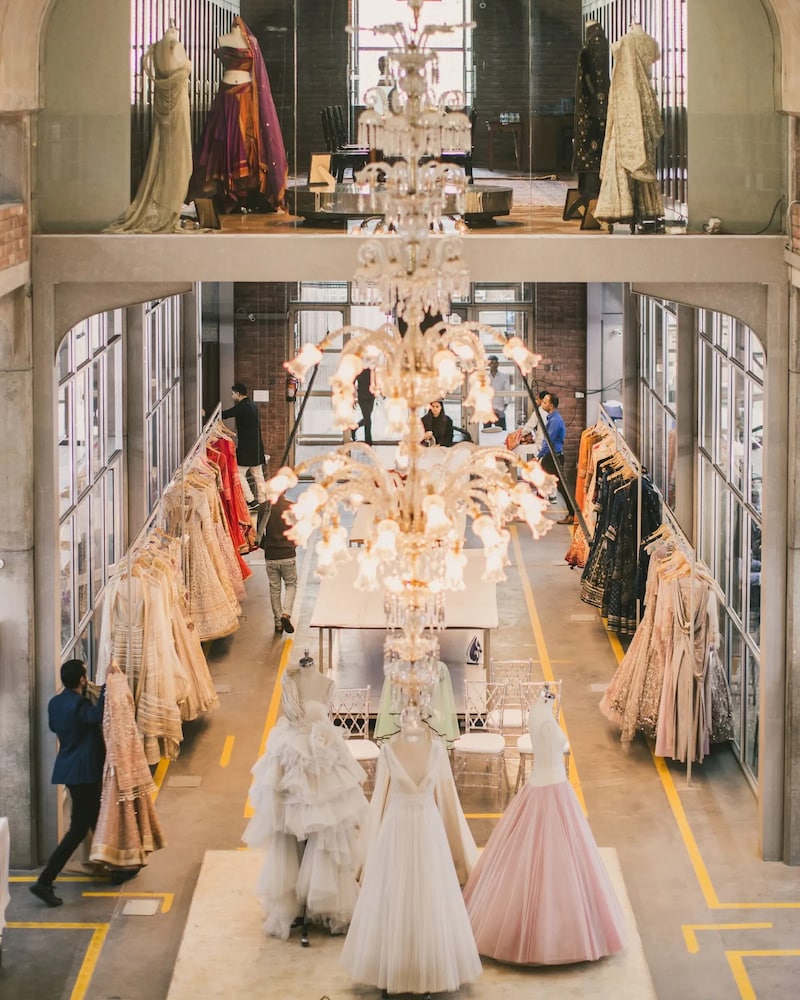
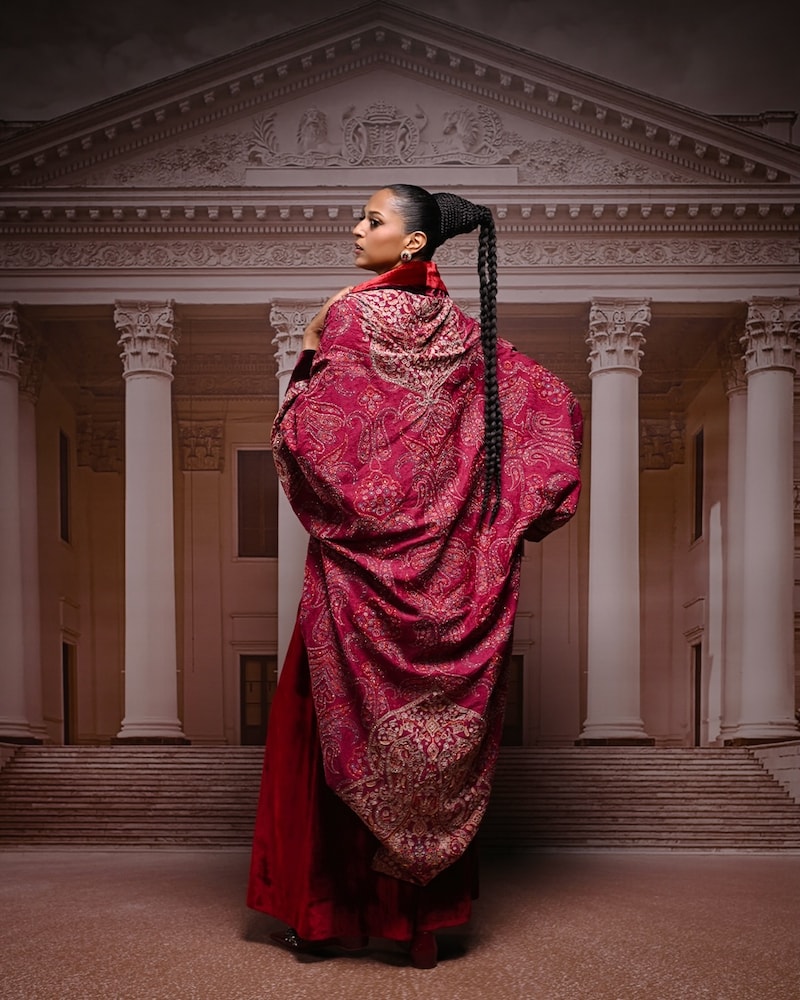
Hyderabad as canvas
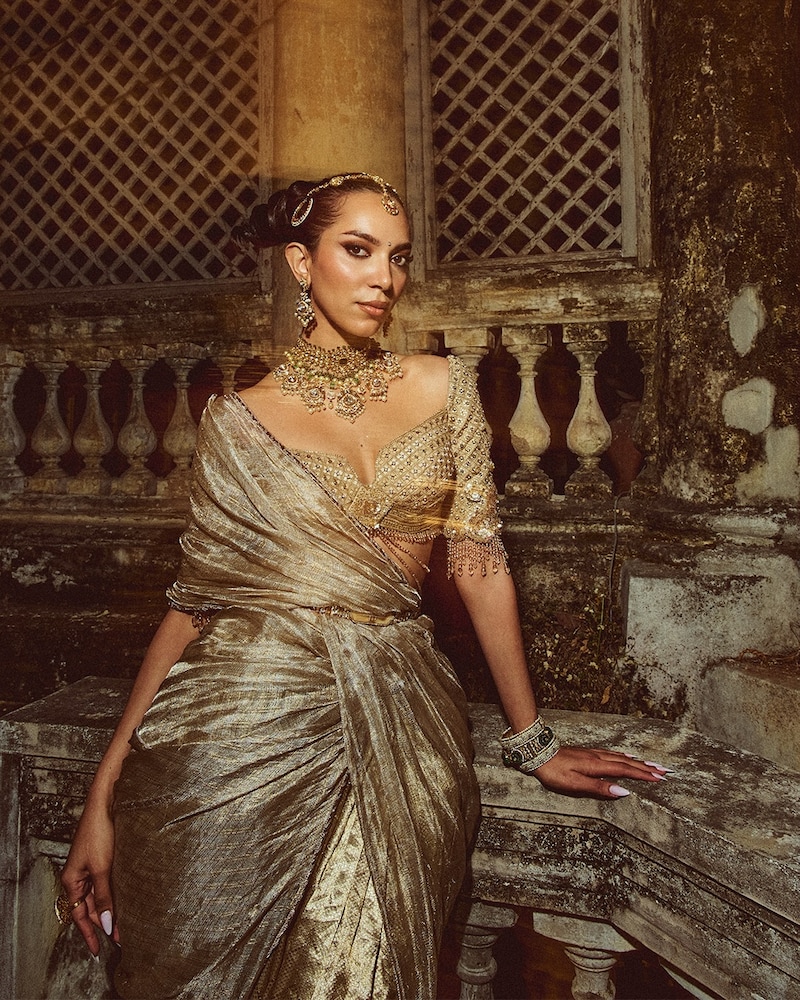
The city’s layered histories and architectural grandeur became a natural extension of Tarun Tahiliani’s design language, one that has always thrived on cultural synthesis. British Residency, became a perfect backdrop for the designer’s 30 year milestone.
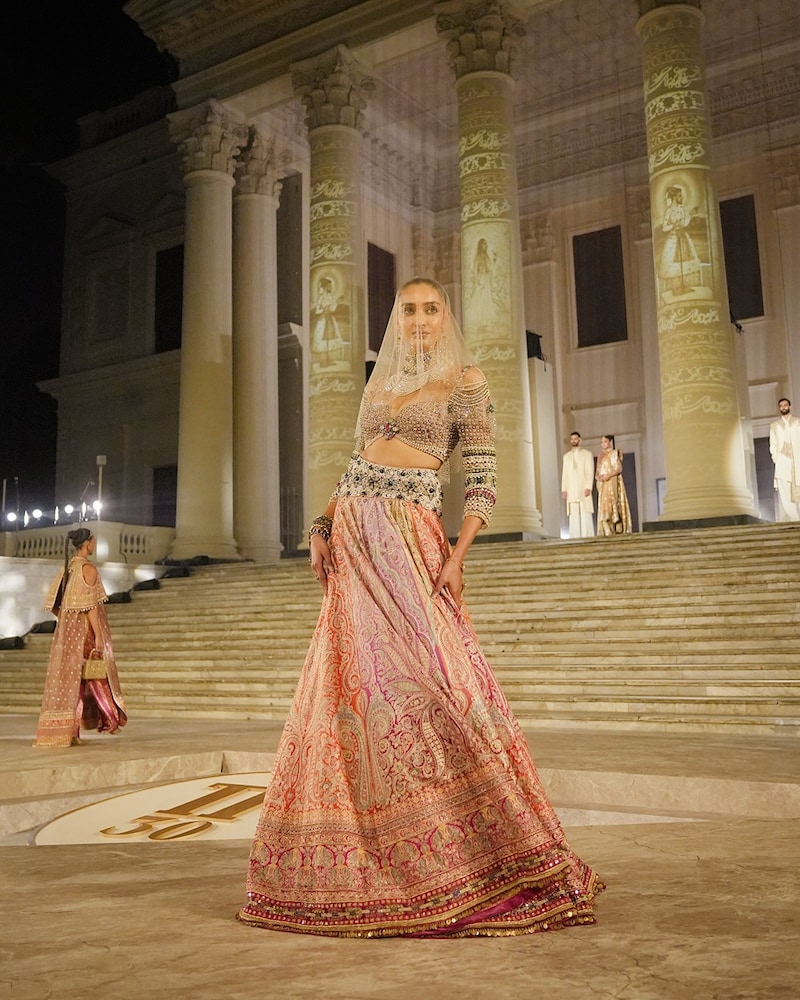
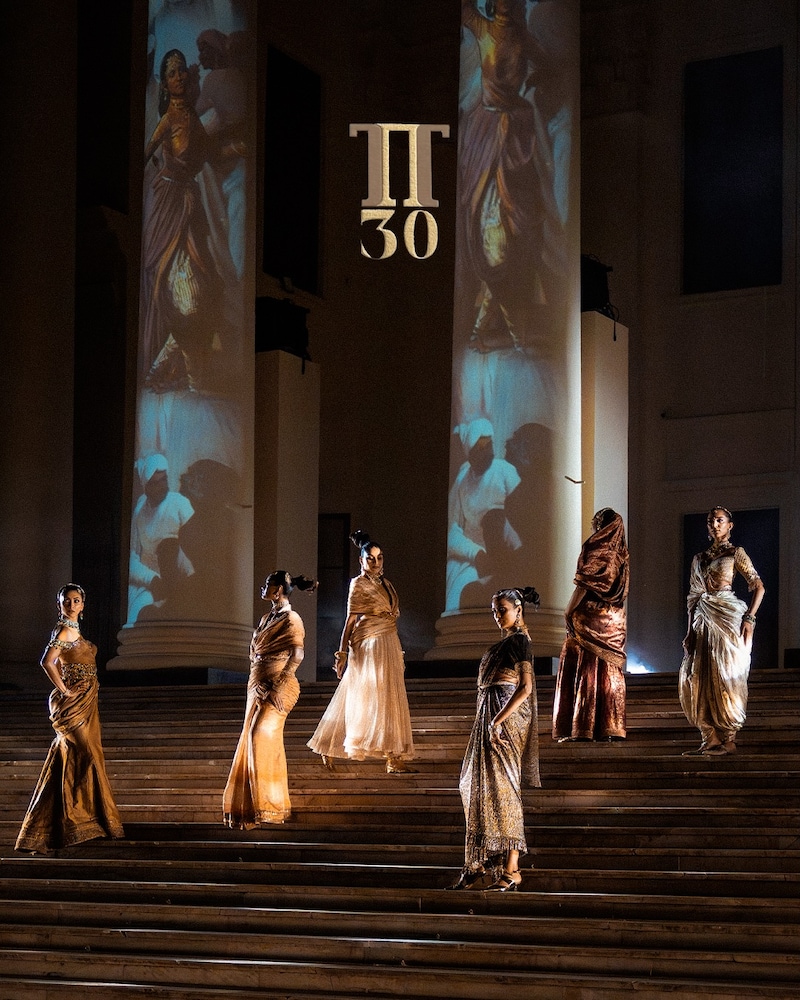
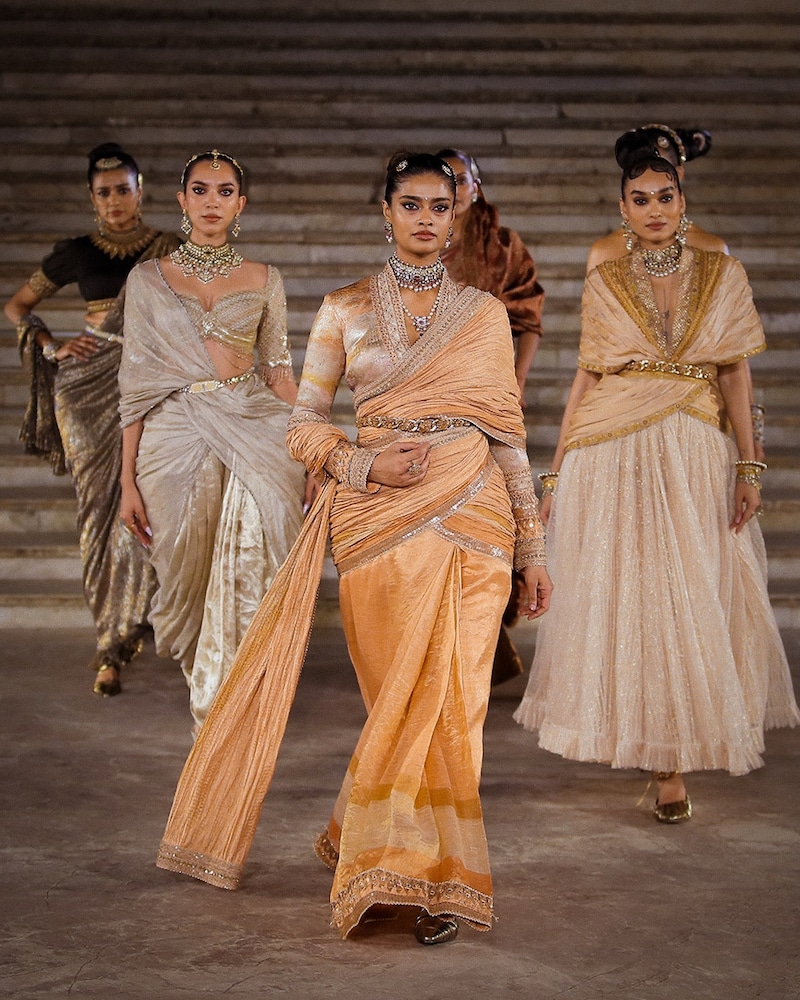
The Hyderabad collection felt calm. Familiar Tarun Tahiliani elements appeared in a more refined form. Draped saris, sculpted blouses and flowing silhouettes were lighter and easier, with the focus clearly on cut, fabric and movement. The colour palette stayed soft, moving between monochromes, pastels and gentle metallics, allowing the craftsmanship to speak without feeling heavy.
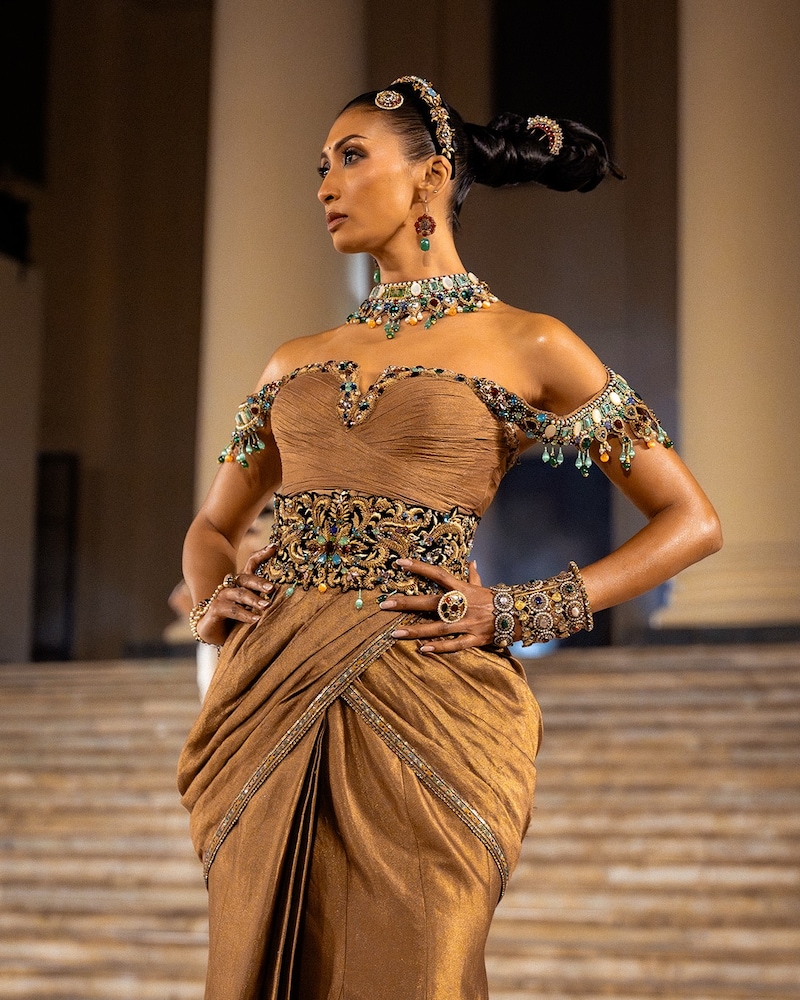
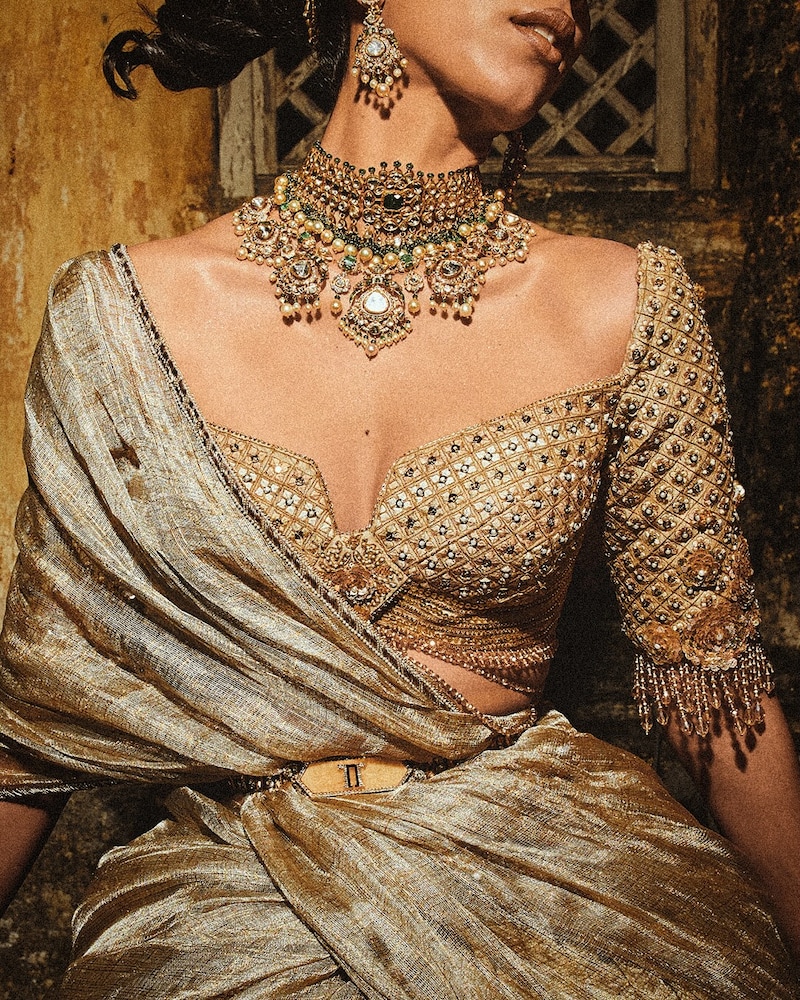
What stood out was the confidence of edit. Embellishment was controlled, proportions were clean and every look felt intentional. Instead of revisiting past highlights, the collection showed how his design language has matured. Less like statement and more like continuation of an evolving vocabulary.
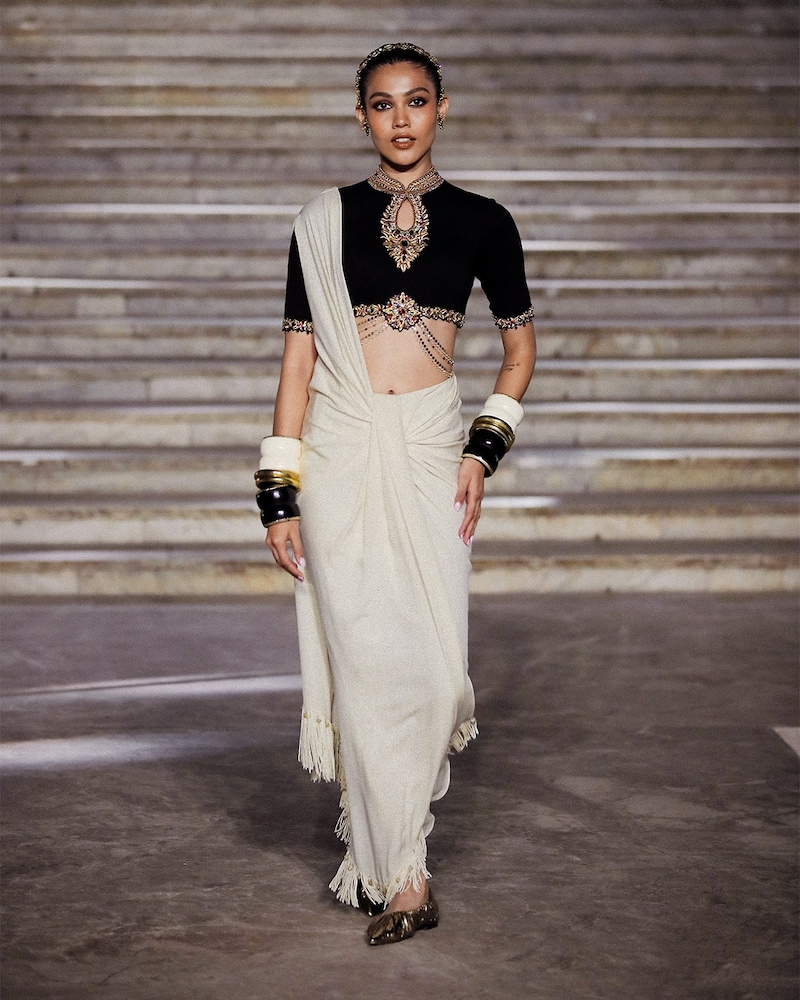
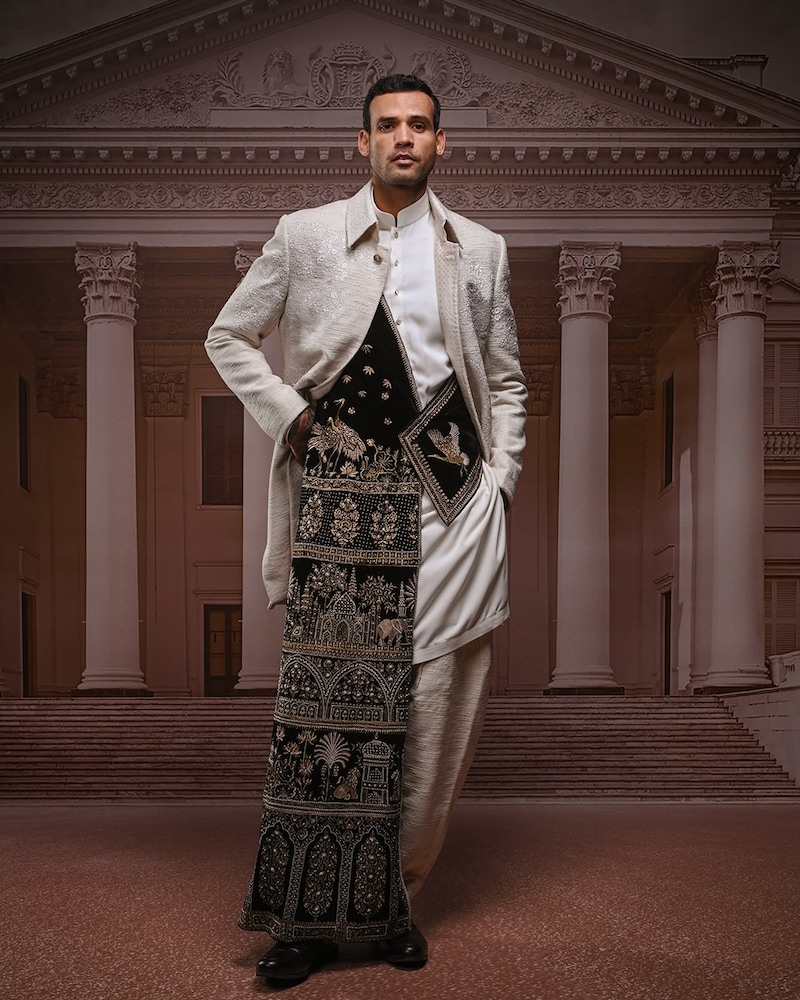
Menswear followed the same approach. Embroidered achkans, panelled kurtas and tailored layers balanced tradition with wearability-of-today. The bridal look anchored the showcase, reminding viewers of Tahiliani’s lasting influence on Indian occasion wear.
Three decades on, what stands out is not just longevity, but relevance. Tahiliani continues to question form, scale and technique. This was not a retrospective collection. His recent work reflects a designer still evolving, using heritage as a foundation, open to new tools, new technologies and new ways of seeing.
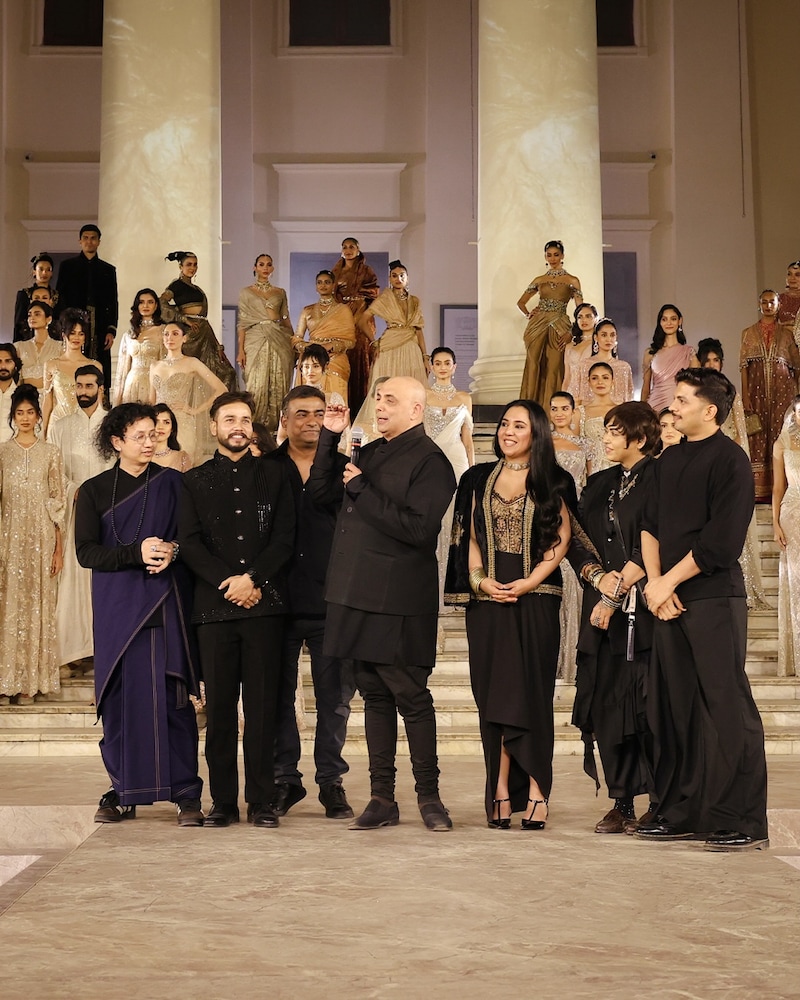
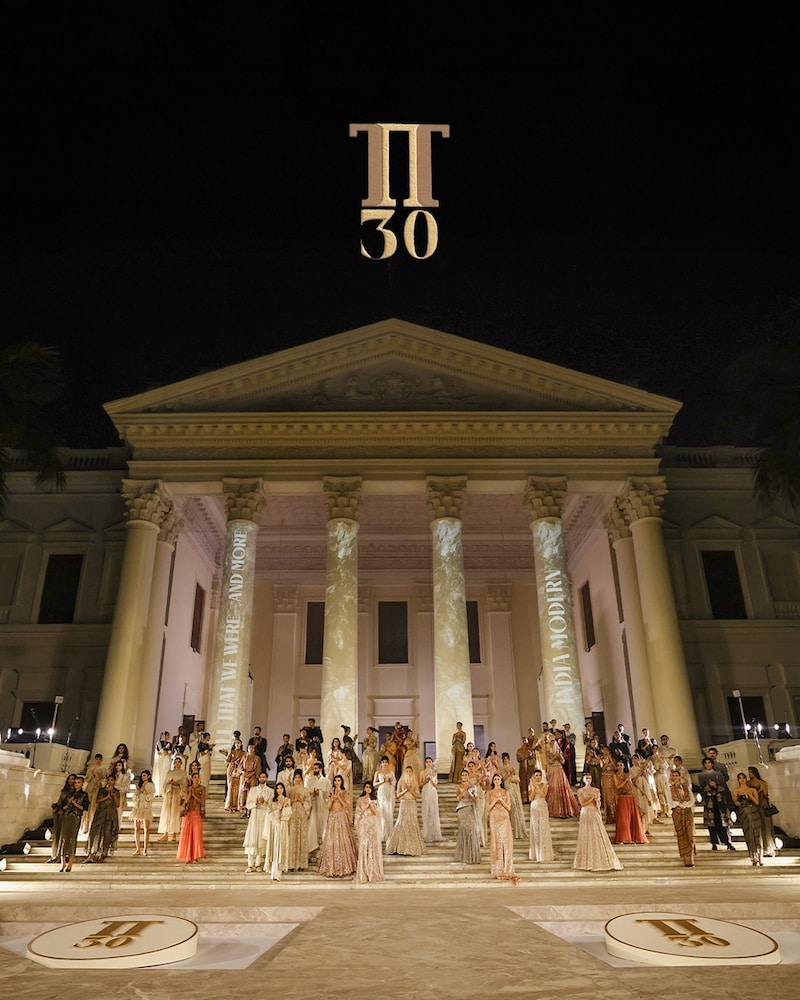
To celebrate 30 years is to acknowledge a body of work that has shaped taste, expanded possibility and elevated Indian fashion onto a global stage without ever losing its sense of self. Tarun Tahiliani’s legacy lives in the confidence with which India dresses today. And in the assurance that the conversation between heritage and modernity is far from over.