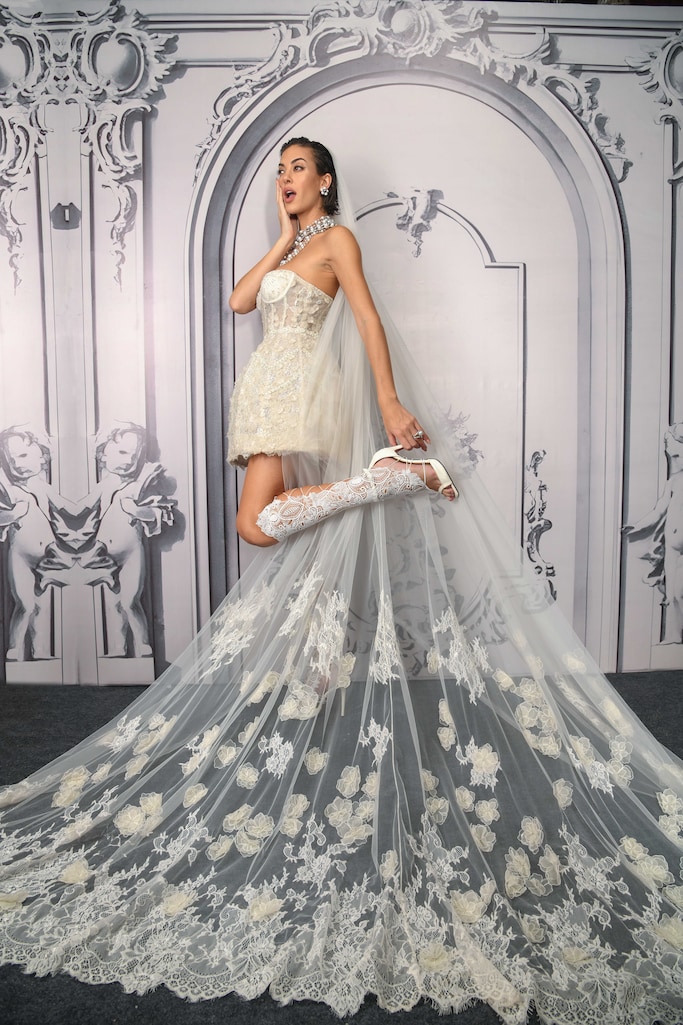
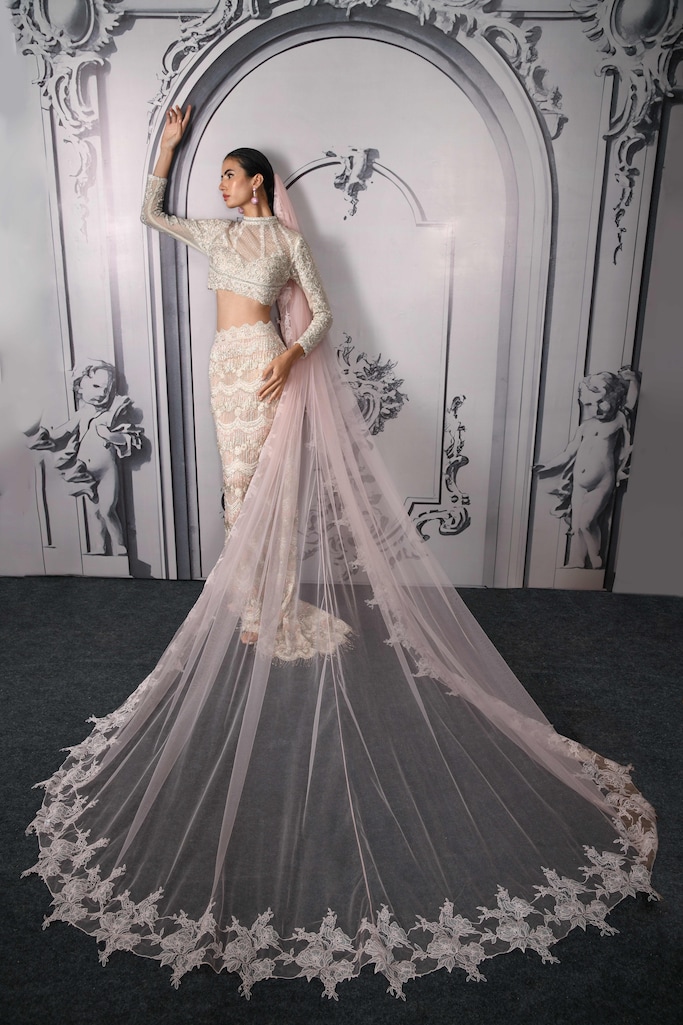
In the language of wedding fashion, the veil is punctuation, poetry, and power all at once. A lehenga may set the stage, but it is the veil that delivers the finale. Every bridal look has that one defining detail – and this season, all eyes are on the veil.
At most weddings, just before the music swells and the aisle stretches out, there comes a moment of stillness: the veil is placed, and everything changes. What was once a quiet, sacred tradition becomes a declaration – of grace, grandeur, and the bride’s arrival.
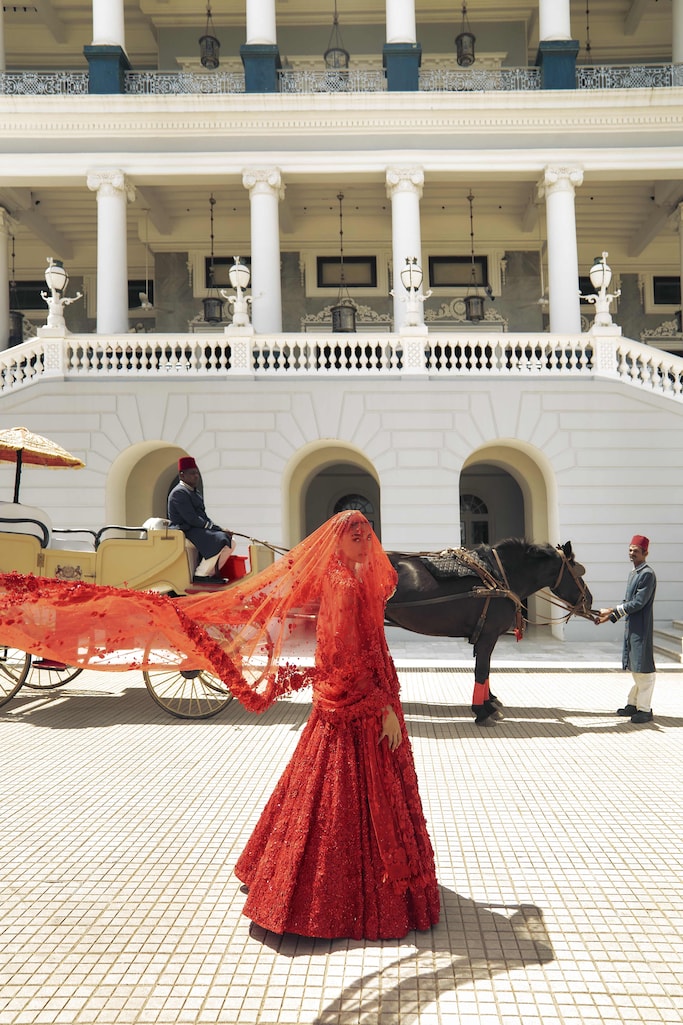
Designer Isha Jajodia of Roseroom captures this sentiment perfectly: “It slows the moment, elevates the outfit, and turns dressing into an experience rather than just a visual.”
Once considered secondary by many new-age brides, it has swiftly emerged as the finishing note that crowns the ensemble with gravitas and grace. These unapologetically extra veils are the ones rewriting modern bridal codes – the kind that turn heads, spark double takes, and secure the bride’s role as the undeniable main character.
Originally reserved for traditionalists and women of noble birth, veils in India were conventionally known as the ghoonghat. Rooted in ancient lore, it was initially meant to guard maidens from prying eyes and dark omens threatening their happiness.
– Aisha Rao
“A veil frames a moment – it softens, it conceals, it reveals, and there’s something very powerful about that.”
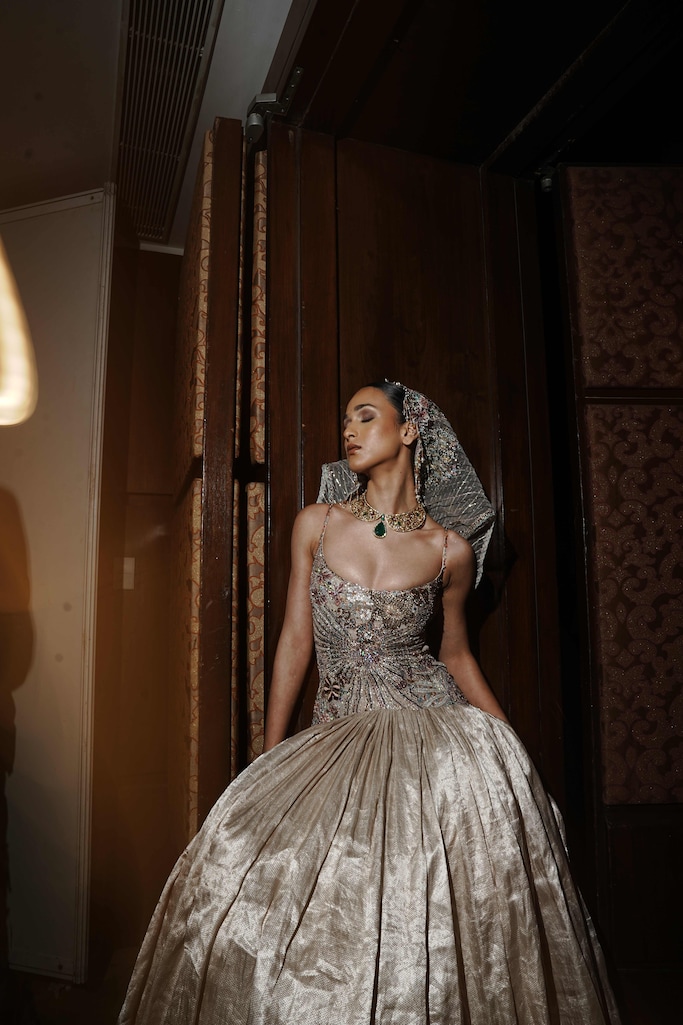
The fabric, style, and symbolism changed from one region to another. In the North, light cotton or silk veils prevailed, while in Rajasthan and Gujarat, heavier, intricately embroidered odhnis made their mark.
The rise of the minimalist bride saw veils fall out of favour – but in fashion, nothing stays forgotten for long. Once a traditional accessory – a dupatta pinned into place – it has become a standalone design element, no longer worn simply “because you’re supposed to.” Today, veils are chosen with intent – not merely crafted to match the outfit, but often styled to create contrast.
Indian designers are reimagining the veil in strikingly diverse ways. Think Sabyasachi’s intricately embroidered gossamer veils paired with sarees, and Tarun Tahiliani’s fusion of traditional zardozi with delicate crystal work – each interpretation brings something new. Gaurav Gupta sculpts his veils like wind-caught waves, and Aisha Rao turns hers playful – adorned with appliqué and unexpected textures, while Roseroom by Isha Jajodiaʼs veils are impeccably designed to lend silhouettes a delicate softness, adding depth and dimension to the look.
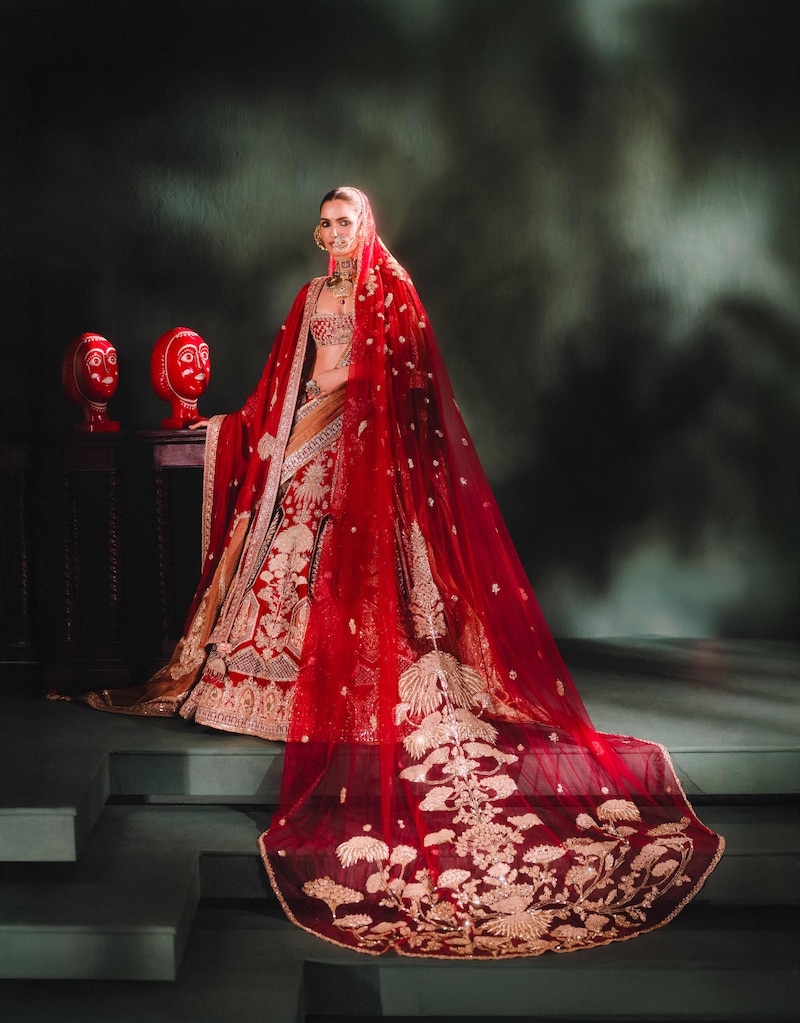
Brides are rewriting the rulebook by leaning towards veils that are bewitching, bolder, and far more personal. Dramatic cathedral lengths, pearl-dusted tulle, mesmerising 3D embellishments, even ombré hues – it’s less about what the veil means and more about what it says.
Designer Aisha Rao, who recently made her India Couture Week debut, sees the veil’s return as a reflection of modern brides “seeking a sense of theatre and intimacy in their wedding day style.” She adds, “Not just that, it also photographs beautifully, which matters to this generation of brides who want their wedding ensembles to feel timeless in imagery as well as in person. Which, in essence, is what every bride is after – a look that transcends the day and lives on through time.”
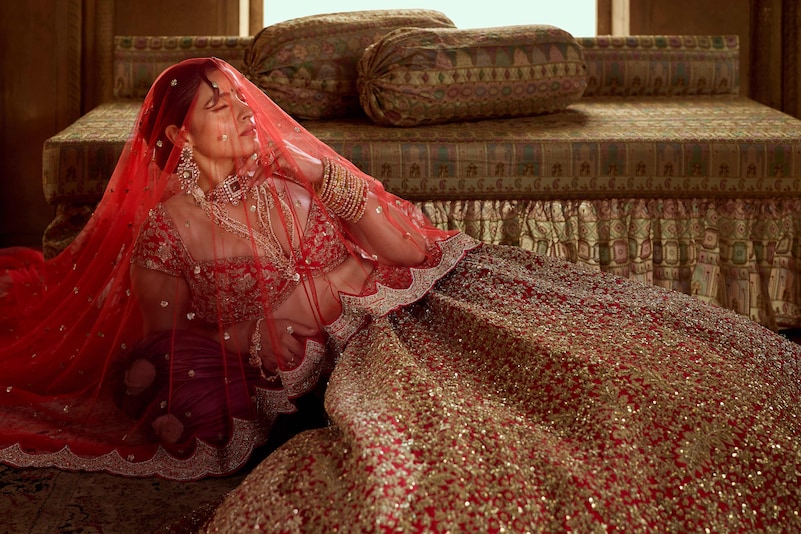
Though the lehenga is often seen as the veil’s perfect companion, Aisha presents a different take. “Veils don’t have to be confined to lehengas,” she notes. “This season, we styled them with ball gowns – and we received a wonderful response. It proved to me that they can bring drama and softness to many different silhouettes.”
No longer confined to tradition, the veil has found new life across an array of bridal expressions. Its versatile impact is that it doesn’t hide; it heightens. It distils the moment into something unforgettable – charged with emotion & laced with drama. At a time when bridal looks can blur into sameness, the veil is what sets a bride apart, while marking the quiet threshold between what was and everything that’s yet to come.
– Isha Jajodia
“The veil is never ornamental; it is structural, emotional, and deeply tied to the garment’s narrative.”