


A saree is something that transcends time and bridges the gap between generations. The joy of receiving an heirloom saree from your grandmothers and mothers is unparalleled. Time flies; we go from draping our mother’s dupatta around ourselves and pretending that we’re wearing a saree in the mirror to going to galas and festive events where we need a meticulously draped saree. India is a country blessed with rich and diverse landscapes and every region and community has their unique style of draping a saree.
The way someone drapes a saree can tell a lot about the person. Saree draping methods can signify a myriad of things about a person – their social status, their marital status and their cultural or regional identities. It is an important art to master, so much so that people like Kalpana Shah and Dolly Jain have made very successful careers out of it. Everyone wants perfection, and every person wants to look their best at an event – it may be vanity or just the feel-good factor that comes along with looking marvellous. From the serene shores of Kerela to the bustling streets of Maharashtra, each charming saree draping method can elevate a simple saree look, find out what works best for you!
The Nivi Style
If there were an almanac for saree draping, the Nivi style would be on top. Originating from Andhra Pradesh, it’s the most popular way of draping a saree amongst the masses. It is a style where the pallu cascades gracefully over the shoulder with neat pleats near the waist. The versatility of the style is well-known, and the sophisticated look it gives is what makes it a crowd favorite.
The Bengali Style
The Bengali Style of saree draping has the essence of West Bengal’s rich cultural ancestry. Also known as ‘Atpoure’, this traditional draping style makes use of multiple pleats around the petticoat that accentuate the waist of the wearer. The pallu comes on the left side of the shoulder and hangs freely with grace. The saree is a social symbol in Bengal – it empowers women, makes them feel closer to their roots and is a key feature in all weddings, rituals and festivals. To catch a glimpse of the draping style, take a look around during Durga Pooja, you’ll see an entire swarm of women donning traditional sarees and paying tribute to the goddess Durga.
Gujarati Style
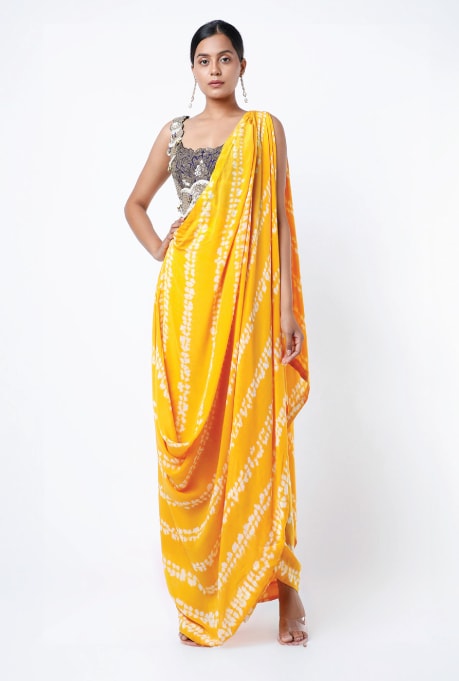
Well known in Gujarat as the ‘seedha pallu’, the Gujrati Style of saree draping makes moving around easy and brings the intricate detailing on the pallu to life. A touch of elegance and refinement is added to the ensemble by neatly pleating the free end of the pallu and pinning it at the waist. The Gujarati draping style is distinctive, the saree is draped tightly with the pallu on the right shoulder for a neat and sophisticated look. A quintessential Bandhani saree looks the best in this style of saree draping.
Maharashtrian Style (Nauvari)
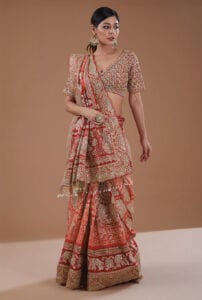
The Nauvari or Lugade, a Maharashtrian style of saree draping, represents elegance and custom. This distinctive drape, which originated in the lively state of Maharashtra, is distinguished through its prominent pleats and the usage of a traditional belt commonly referred to as the kashta. It’s a versatile style of saree draping that allows mobility while still appearing elegant. The pallu is gracefully tossed over the shoulder, exposing the torso, and the saree is seamlessly draped around the body. Worn with pride during festivities and traditional events, the Nauvari saree is an iconic symbol of Maharashtrian culture, often embroidered with exquisite borders and traditional designs.
Assamese Draping Style
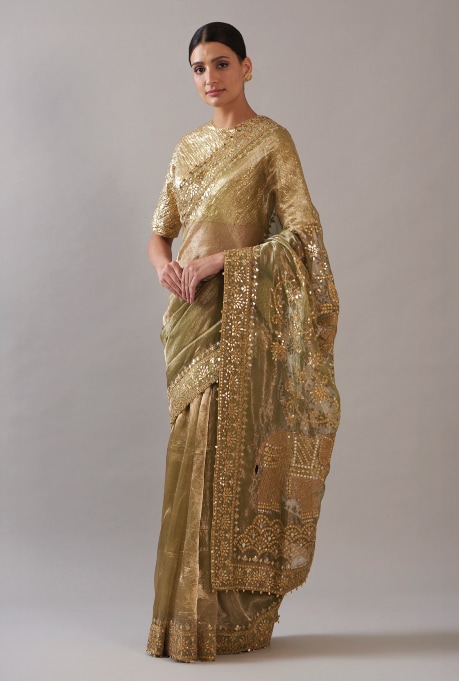
The Mekhela Chador, an Assamese way of draping sarees, is a fascinating blend of grace and heritage. This draping style, born in Assam, is distinctive mainly because of its two-piece look, consisting of a wraparound fabric called the Chador and a bottom piece called the Mekhela. Its rich symbolism and fine craftsmanship are what set it apart. Pleated and tucked into the waist, the Mekhela is worn as a skirt, while the Chador is draped over the front of the body and typically pinned at the shoulder. The Mekhla is an auspicious symbol in Assam and is worn by the women for festivals, poojas and for everyday use as well.
Modern and Fusion Draping Styles
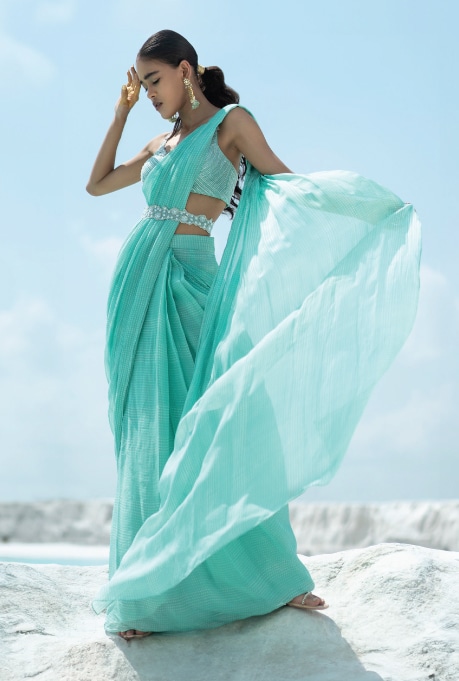
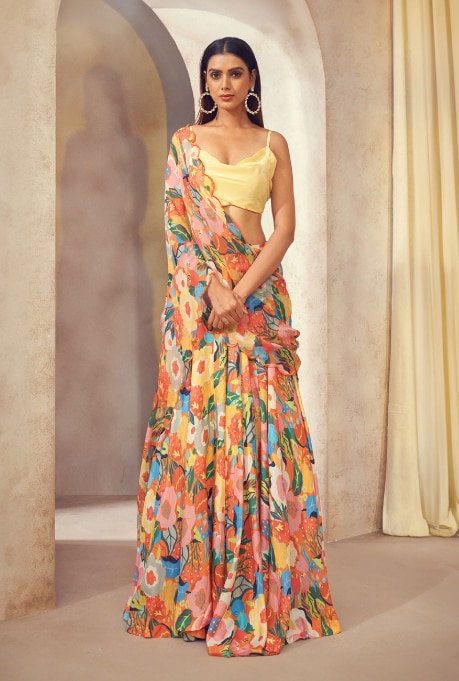
If you’re someone who isn’t deft with pleating or draping, then we have good news for you: evolution is on your side. We live in an age where innovation is key, and fresh silhouettes are all the rage. New draping styles are an amalgamation of everything that works for retro drapes with the appeal of fusion techniques. Take the lehenga saree or a belted saree look as an example; they’re easy to wear and look chic with an added traditional flair, making them ideal picks for festive occasions.
To conclude, the saree is one garment that has been able to stand the test of time- six yards of grace woven with history, culture and spirit. It is the symbol of a woman’s cultural identity, her strength and her ancestry. India is a diverse country with ample draping styles from different regions, with each style having its own unique identity and significance. It’s time to give new saree draping methods a try, whether it be fresh and experimental silhouettes or a time-tested drape and embrace your ancestry with style!