


Every year, Pinterest Predicts offers a rare kind of insight. Unlike trend reports that look outward – at runways, celebrity styling, or industry cycles – Pinterest looks inward, decoding what people across generations are actively searching, saving, and planning to wear next.
It is less about aspiration, more about intent.
The 2026 report is particularly telling. Across fashion, beauty, and lifestyle, one theme cuts through clearly: people are dressing with meaning again. Ornament is personal, silhouettes are expressive, and aesthetics are rooted in emotion rather than excess.
For Indian fashion, this shift feels less like a disruption and more like recognition. Because long before global fashion spoke of sentiment, individuality, and layered identities, Indian dressing had already built its language around them.
Here’s how the key Pinterest Predicts 2026 fashion trends sit within the Indian fashionscape – and how Indian designers are already shaping, absorbing, and refining them.
Brooches: When ornament becomes personal
One of the most striking signals from Pinterest Predicts 2026 is the resurgence of brooches. Searches show men gravitating towards vintage pins, crystal clip-ons, and heirloom-inspired pieces, worn not just on lapels but across ties, socks, and shirts.
In India, brooches have never been decorative alone. Whether on a sherwani, a bandhni scarf, or a turban – they have always symbolised lineage and ceremony. What changes in 2026 is placement and intent. These pieces are stepping out of weddings and into quieter, more personal moments.
Designers like Sabyasachi, Rohit Bal, Anita Dongre Jewellery and Tarun Tahiliani have long explored jewellery as part of the garment narrative rather than an afterthought. Pinterest’s data simply confirms that this deeply Indian sensibility is finding renewed relevance.
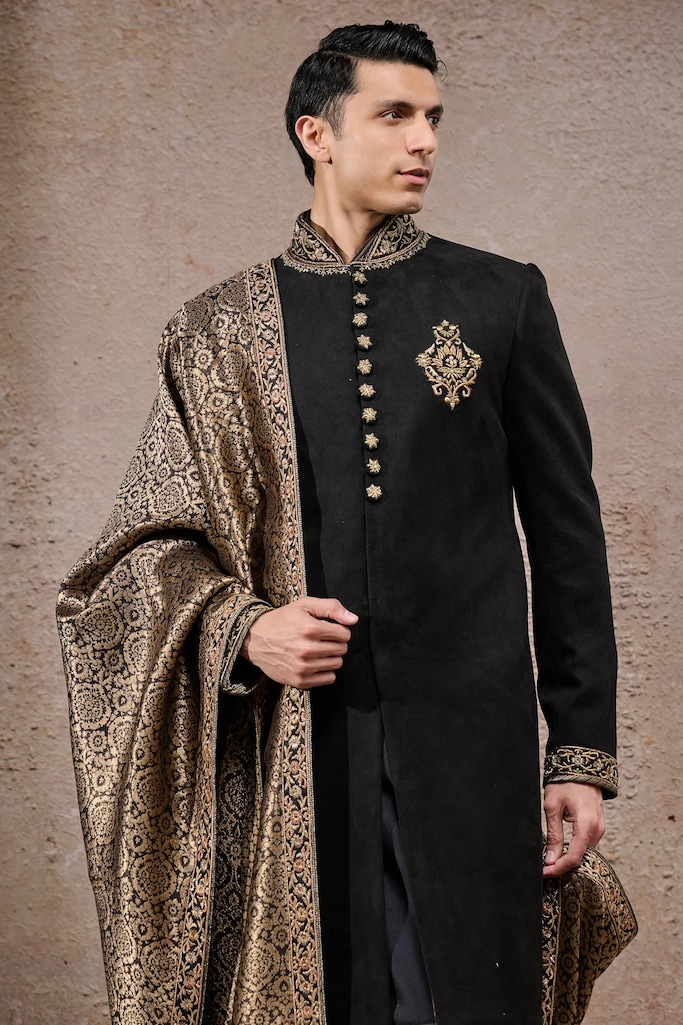
Tarun Tahiliani sherwani with gold zardozi embroidery paired With An embroidered brooch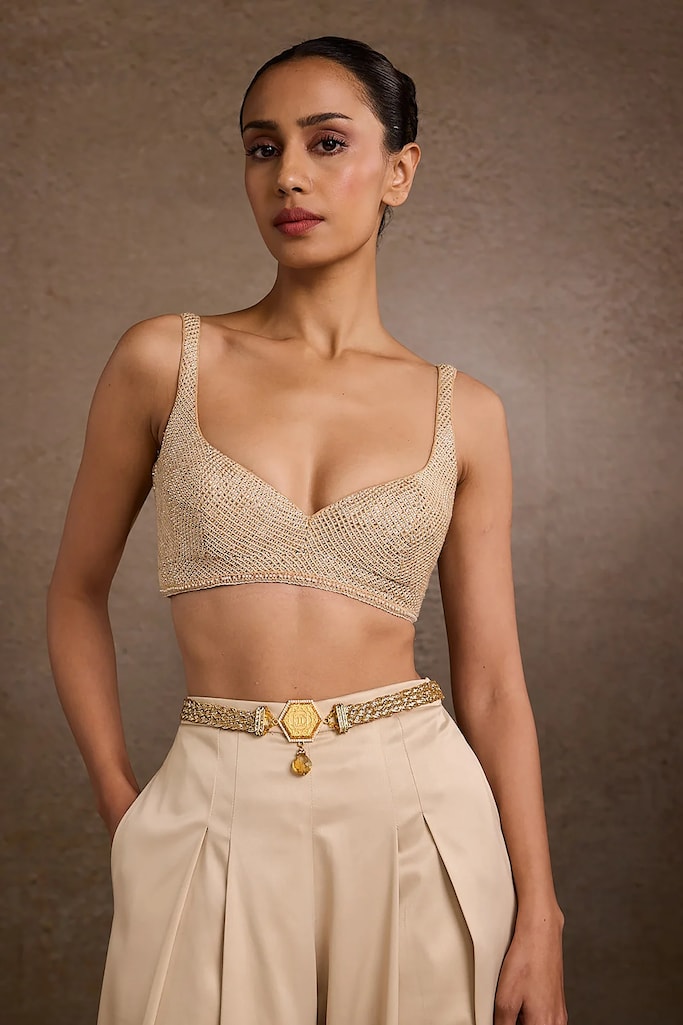
Tarun Tahiliani brooch belt with cutdana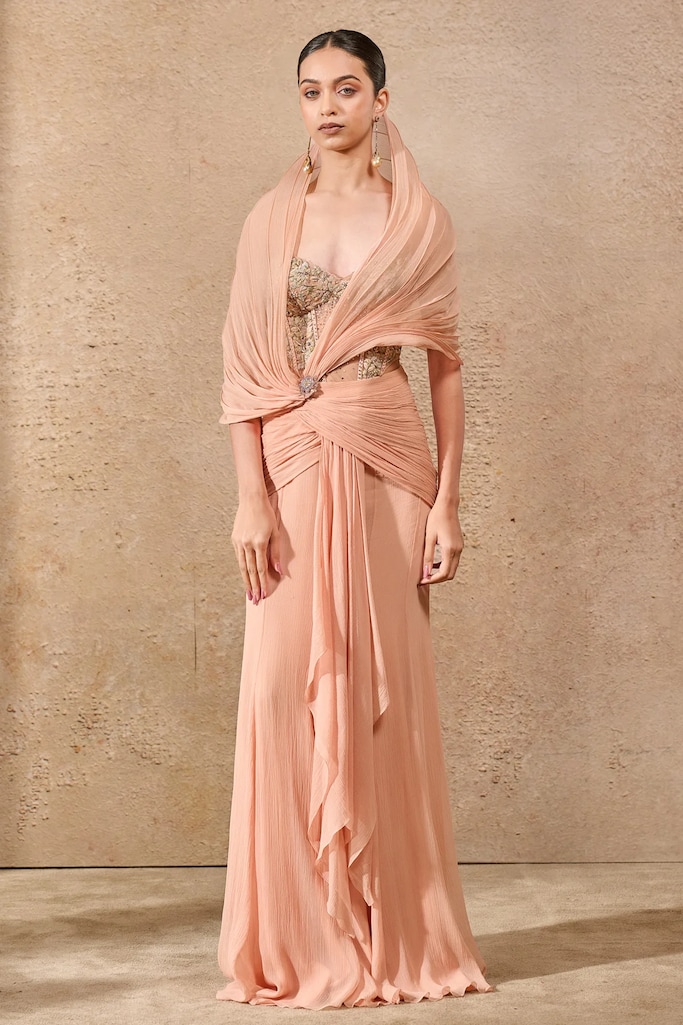
Tarun Tahiliani Structured Signature Concept Saree
Glamoratti: Chunky & Exaggerated, Indian Maximalism
After years of pared-back silhouettes and minimalist codes, Pinterest Predicts points to a return of exaggeration. Oversized tailoring, sculpted shoulders, funnel necks & high collars, and bold gold jewellery are back, driven largely by Gen Z and Millennials who are unafraid of presence.
Indian fashion, of course, understands maximalism instinctively. But the 2026 shift isn’t about heavier embroidery or louder surfaces. It’s about scale and structure – dramatic silhouettes with clarity.
Designers like Gaurav Gupta, Amit Aggarwal, and Anamika Khanna exemplify this evolution. Their work embraces volume and drama. The excess lies in form, not clutter. In an Indian context, this translates into couture that commands attention without overwhelming the wearer.
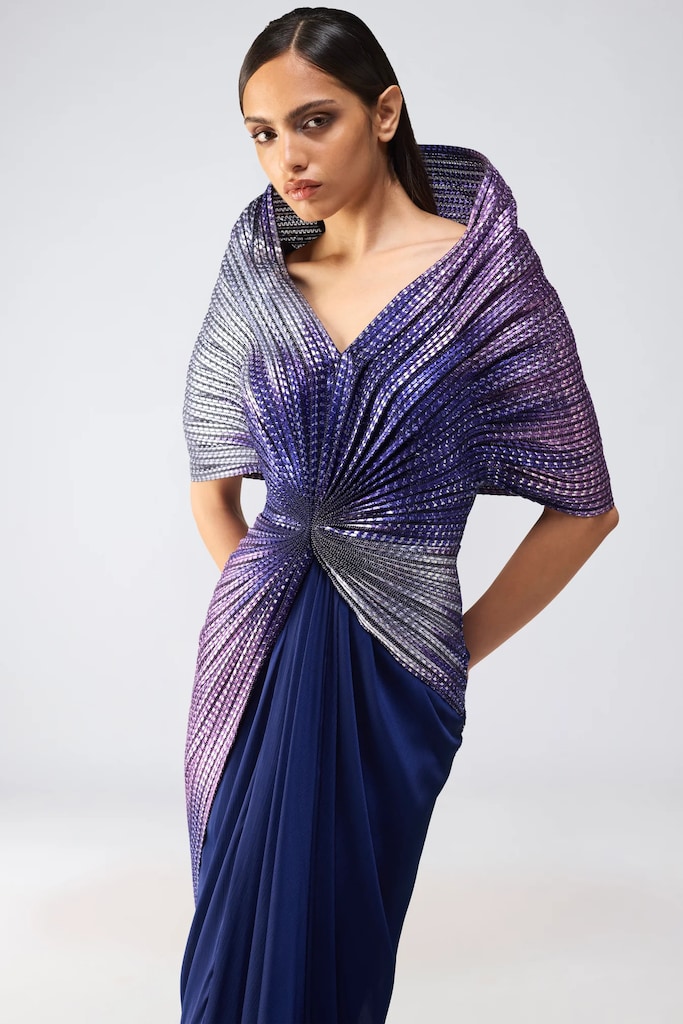
Amit Aggarwal concept saree with a structured drape and a diamond-studded brooch detail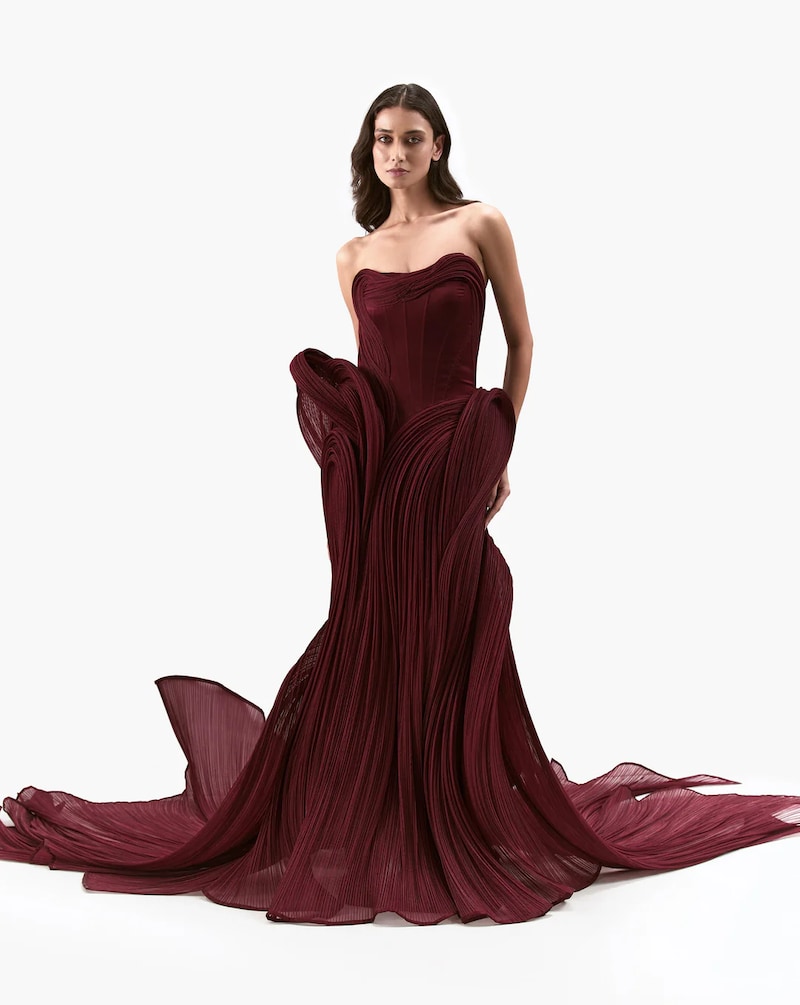
Gaurav Gupta wine corseted gown With voluminous sculpting
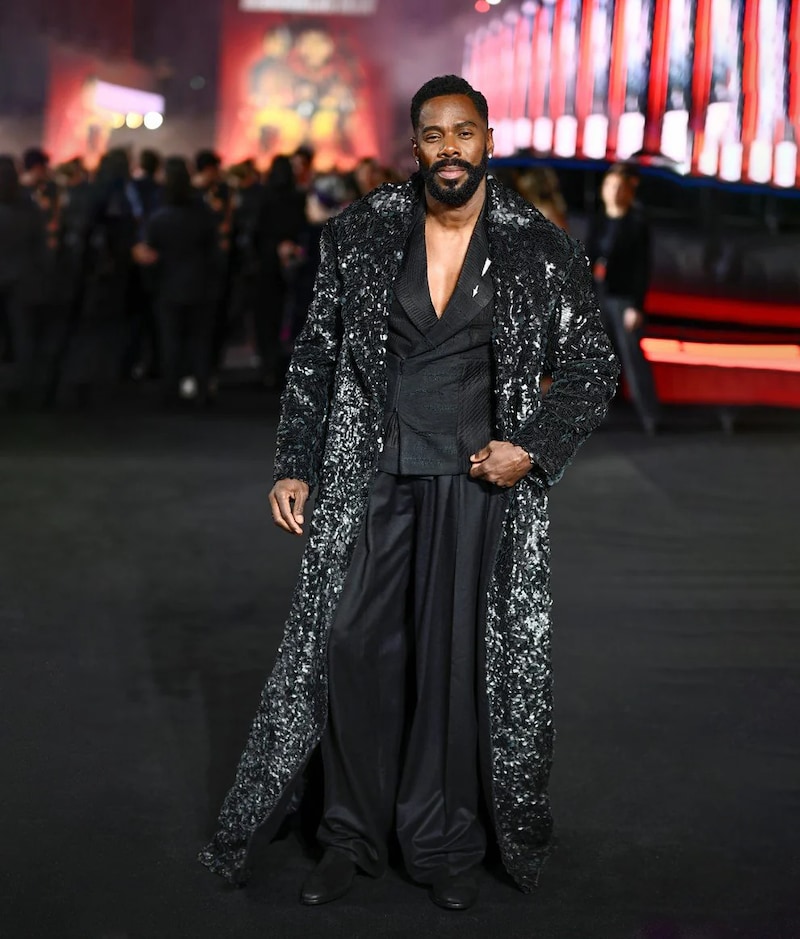
Colman Domingo in Anamika Khanna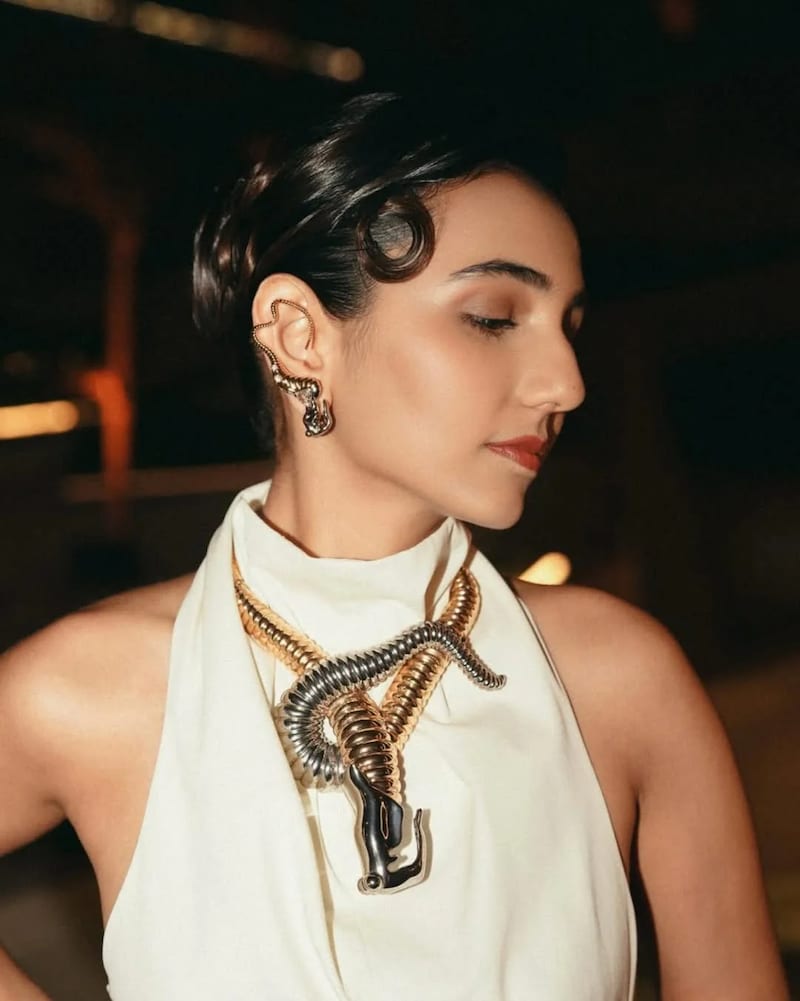
Masoom Minawala in Outhouse Jewellery
Khaki Coded: Utility Meets Indian Sensibility
Pinterest searches reveal a growing fascination with utility-led fashion – khaki tones, field jackets, bermuda shorts, and garments that look ready for movement. At first glance, this might feel far removed from Indian dressing, but the translation is surprisingly organic.
In India, utility doesn’t arrive as rugged streetwear. But, through breathable fabrics, relaxed silhouettes, and climate-conscious tailoring. Think safari-inspired kurtas, pocketed jackets layered over sarees, or linen co-ord sets designed for travel weddings and destination celebrations.
Labels like Nicobar, Perona, And Also and Samaaj Studio already sit comfortably in this space. Their designs balance practicality with polish, proving that function and elegance need not be opposites. Pinterest’s Khaki Coded trend reflects a broader desire for clothes that move with real lives – and Indian designers are well equipped to meet it.
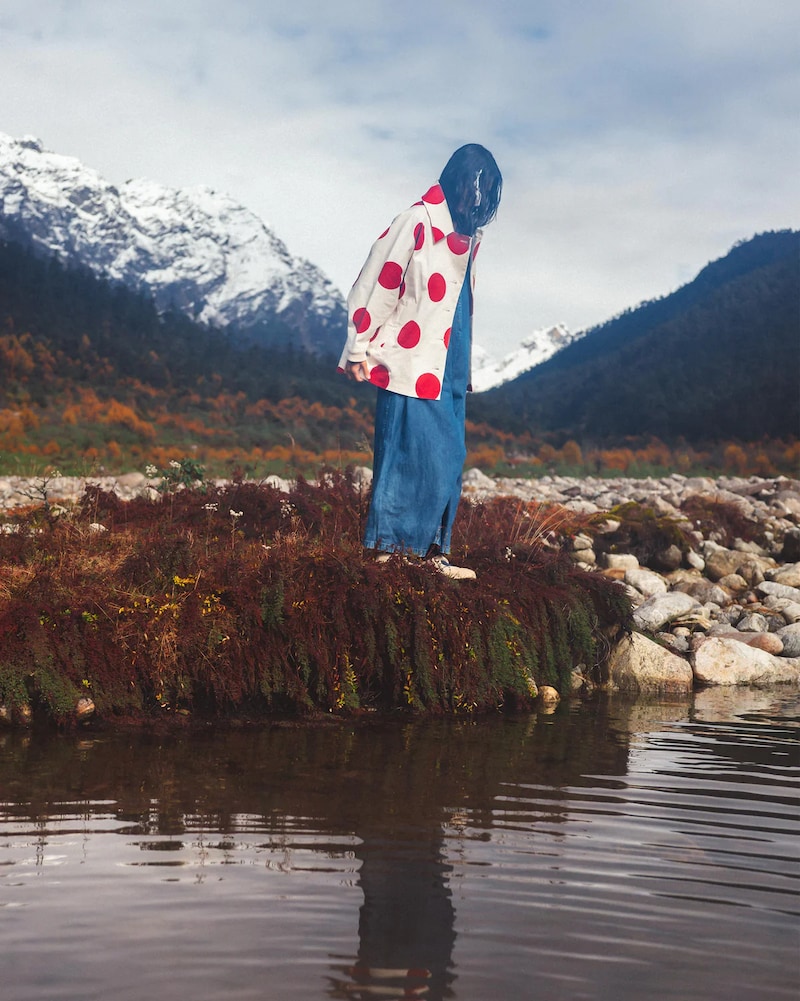
Nicobar polka dot jacket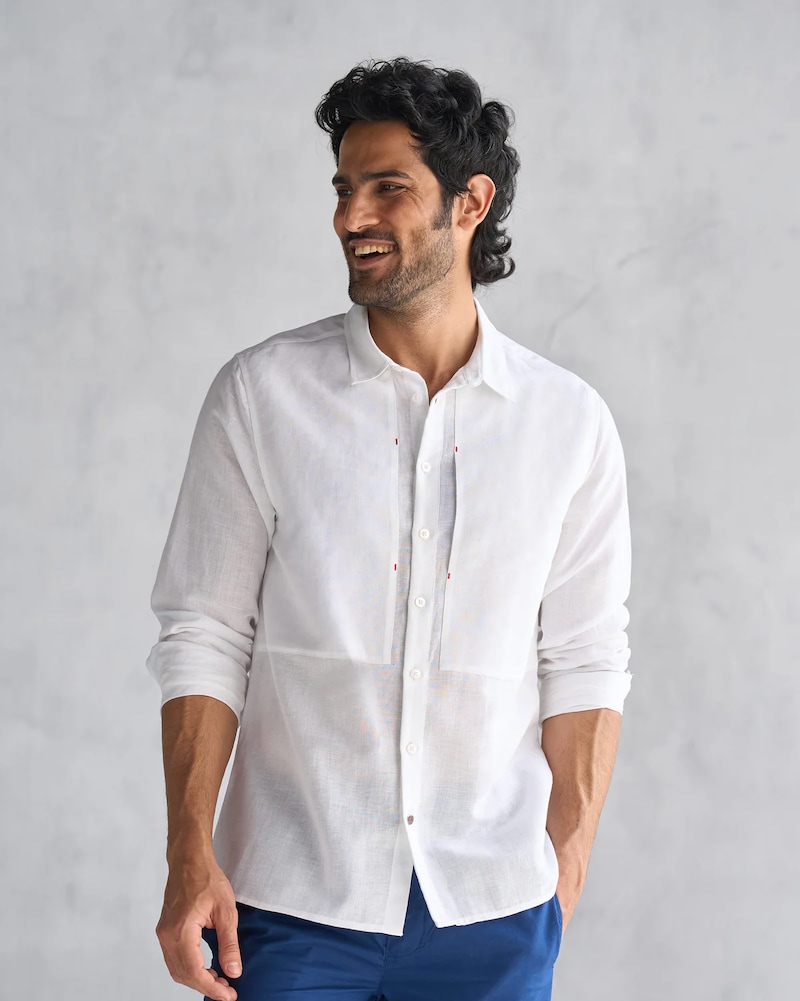
Nicobar cotton shirt
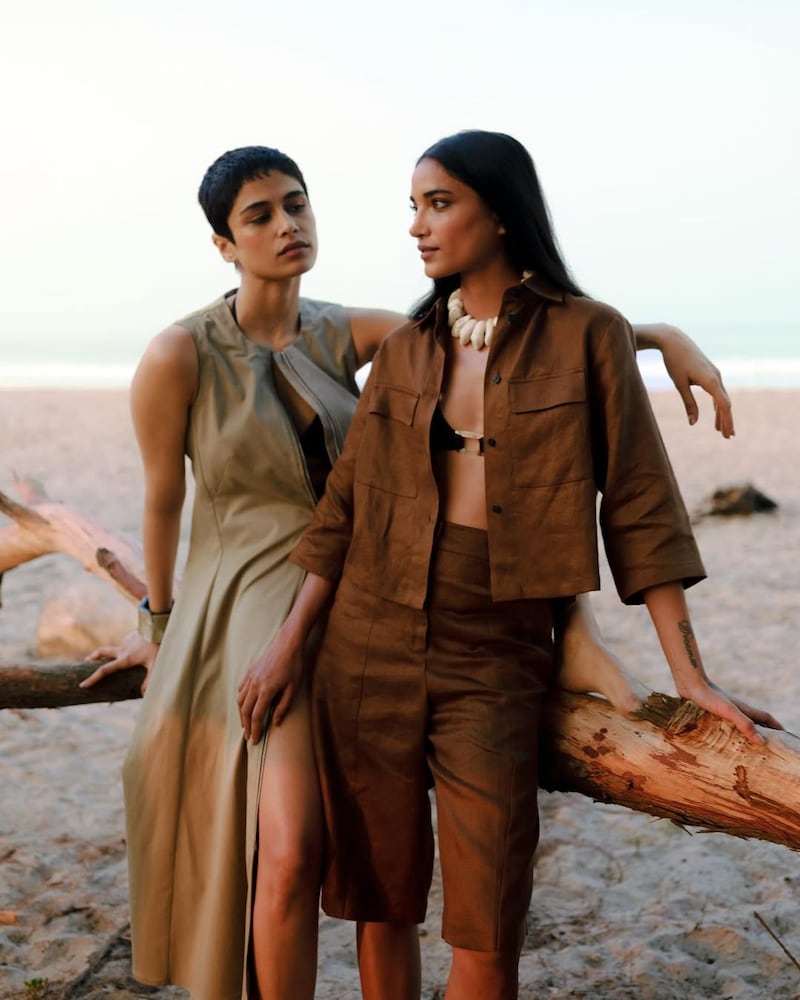
Perona linen sets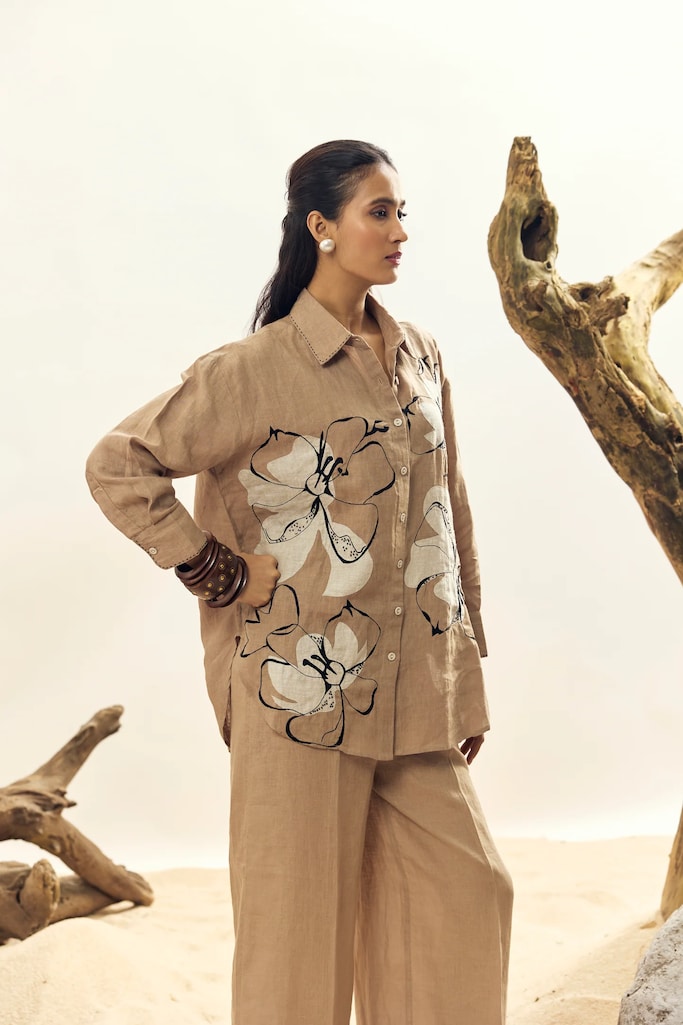
Linen Bloom co-ord set
Poetcore: Dressing With Interior Life
Poetcore may sound whimsical, but its essence is serious. Pinterest data points to a growing interest in clothing that suggests introspection: oversized knits, vintage blazers, capes, satchels, and tactile details that feel authored and introspective, rather than styled.
In India, Poetcore takes on a distinctly cultural dimension. It appears in long jackets layered over kurtas, handloom shawls, angarkhas, and muted palettes that prioritise texture over shine. These are clothes that feel reflective, almost literary.
Designers such as Abraham & Thakore, Péro, and Jaywalking have long explored this quieter, thinking-led approach to fashion. Their work values restraint, narrative, and depth – qualities that align seamlessly with Poetcore’s global rise. This is fashion for those who wish to be understood, not merely seen.
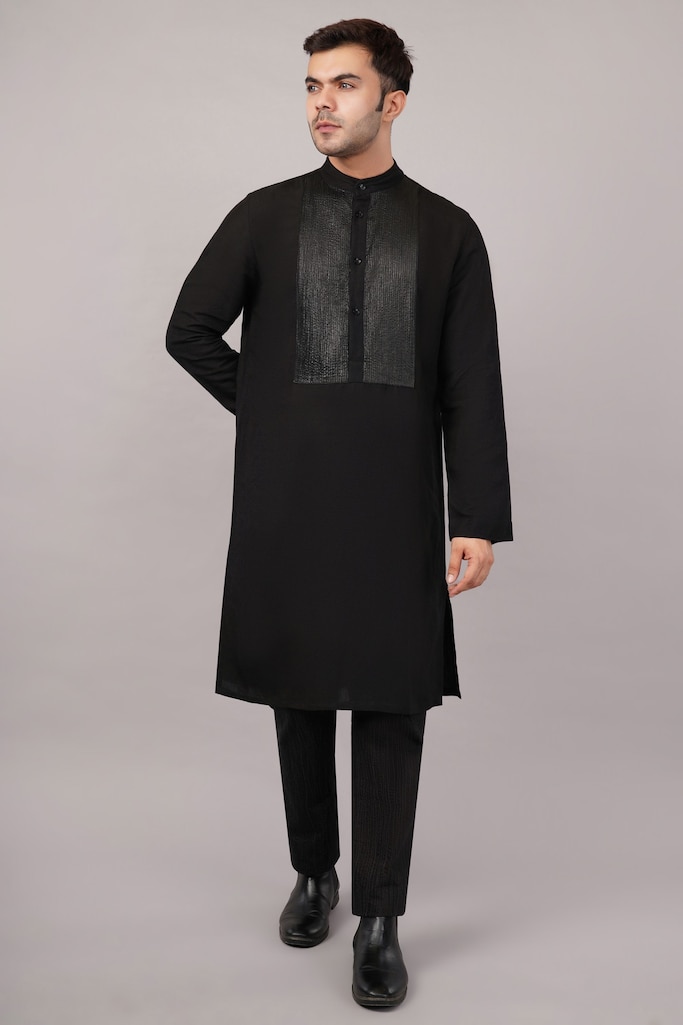
Abraham & Thakore foil pintuck kurta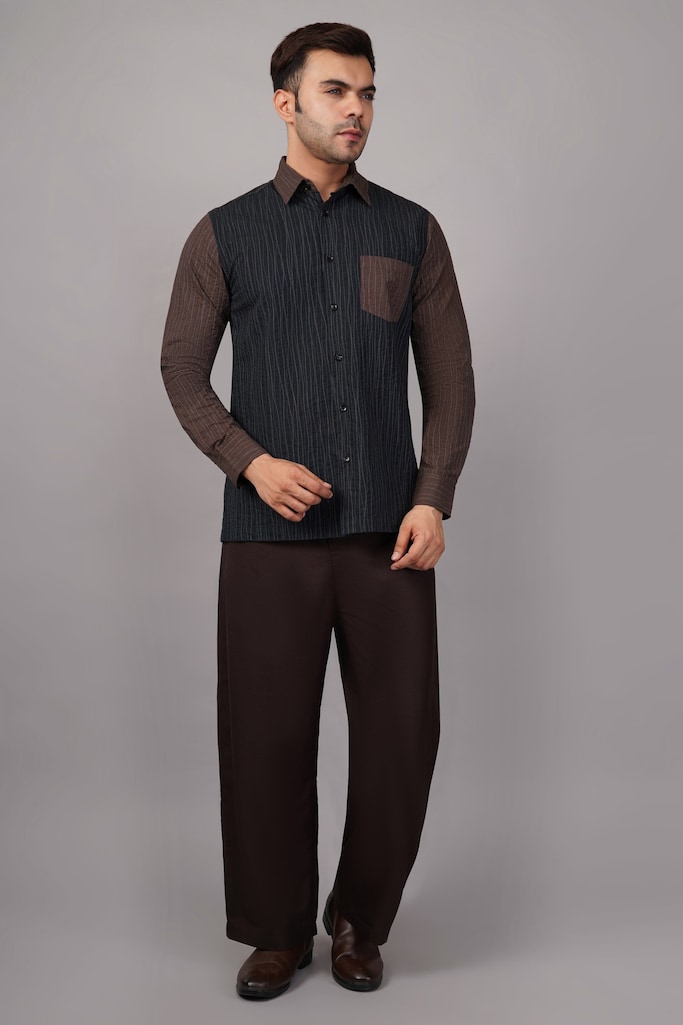
Abraham & Thakore quilt shirt
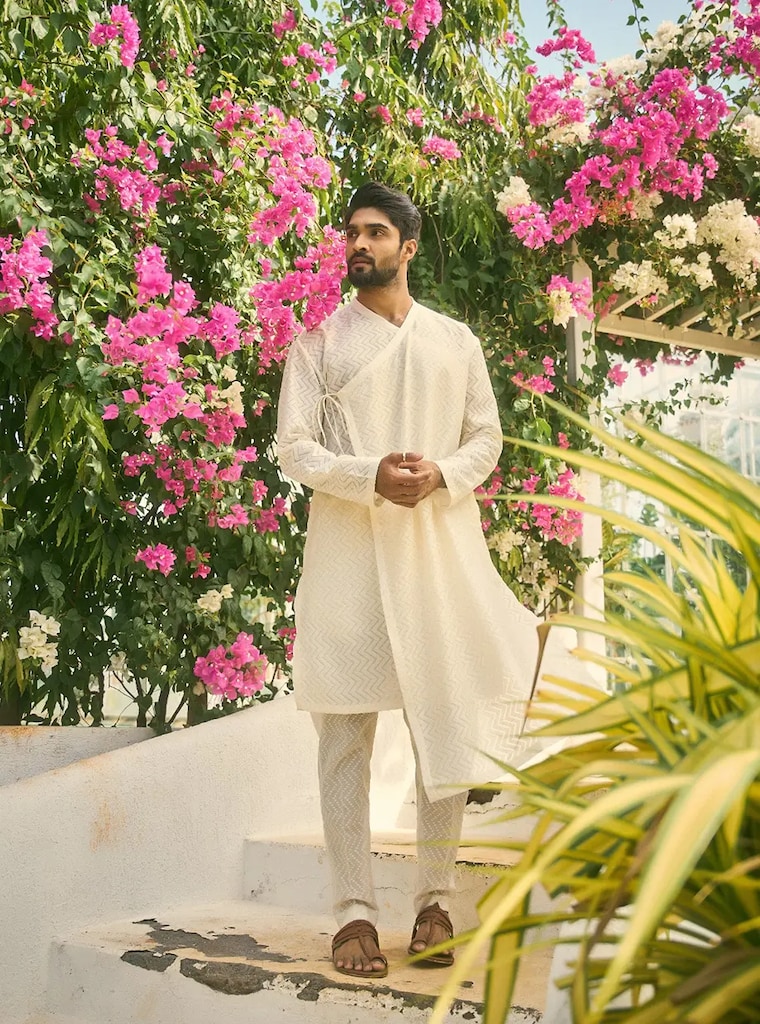
NAFS chanderi angrakha kurta set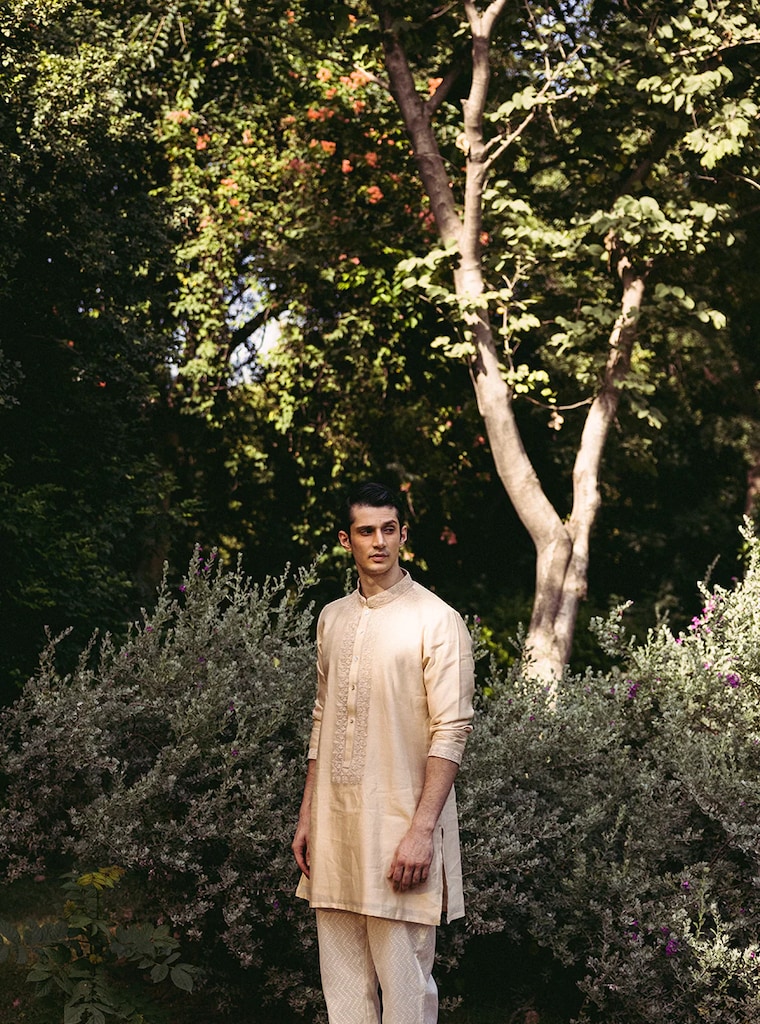
NAFS chanderi kurta
Opera Aesthetic: Celebration, Turned Cinematic
Inspired by vintage theatre and opera, the aesthetic leans towards dramatic drapery, deep reds, candlelit settings, and a sense of deliberate performance.
Indian celebrations already understand grandeur. What changes here is tone. The excess becomes more controlled, more cinematic. Instead of chaos, there is choreography.
Designers like Anamika Khanna, Rahul Mishra, Suneet Varma, and Rimple & Harpreet Narula excel at this kind of storytelling. Their work transforms weddings and festivities into visual narratives – rich, emotive, and carefully staged.
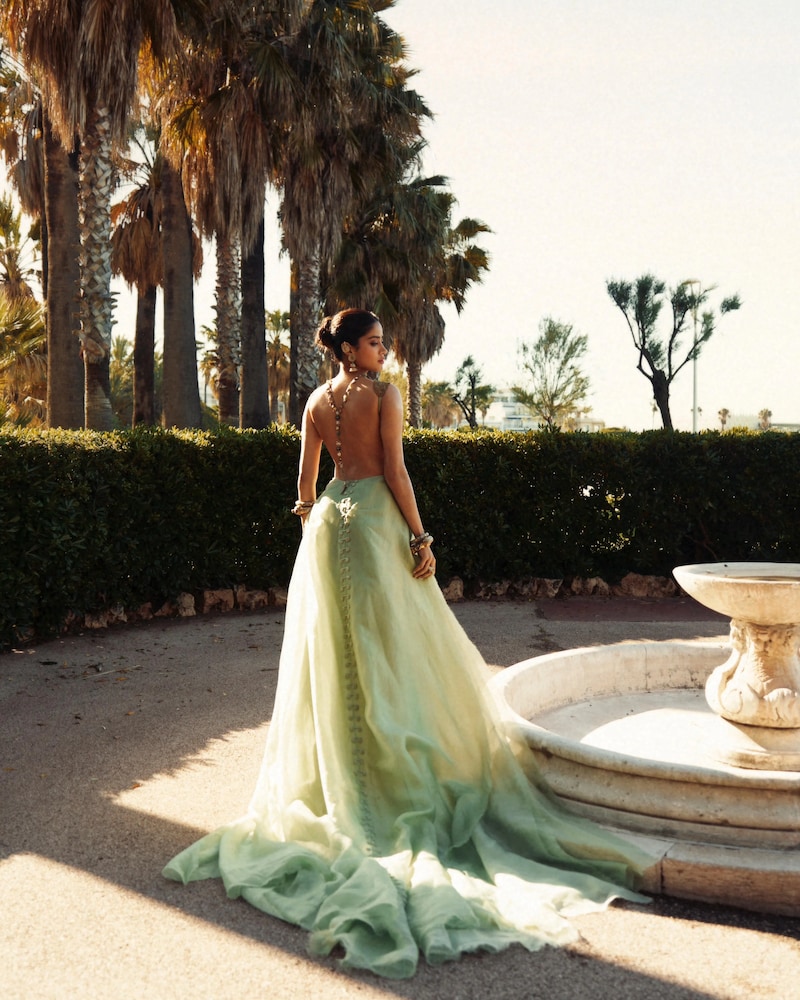
Janhvi Kapoor in Anamika Khanna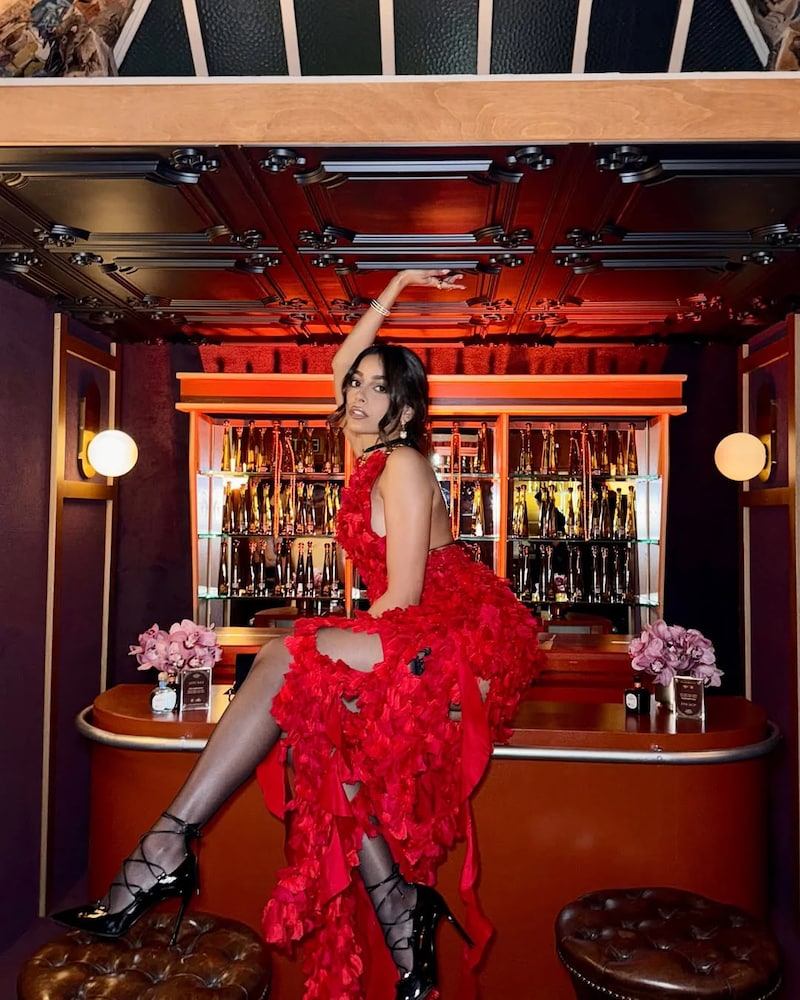
Banita Sandhu in Anamika Khanna
Laced Up: Softness Without Fragility
Lace, according to Pinterest searches, is entering unexpected territory – appearing on jackets, accessories, and everyday objects. This signals a broader shift: softness is no longer synonymous with delicacy.
Indian fashion has always had a nuanced relationship with lace and fine craft, from chikankari to crochet and gota work. In 2026, the evolution lies in how these elements are used – layered with structure, styled across occasions, and freed from purely romantic associations.
Designers like Anju Modi, Torani, Vineet Rahul, and Ritu Kumar have explored this balance beautifully. Their work shows that lace can be strong, modern, and versatile – quietly powerful rather than ornamental.
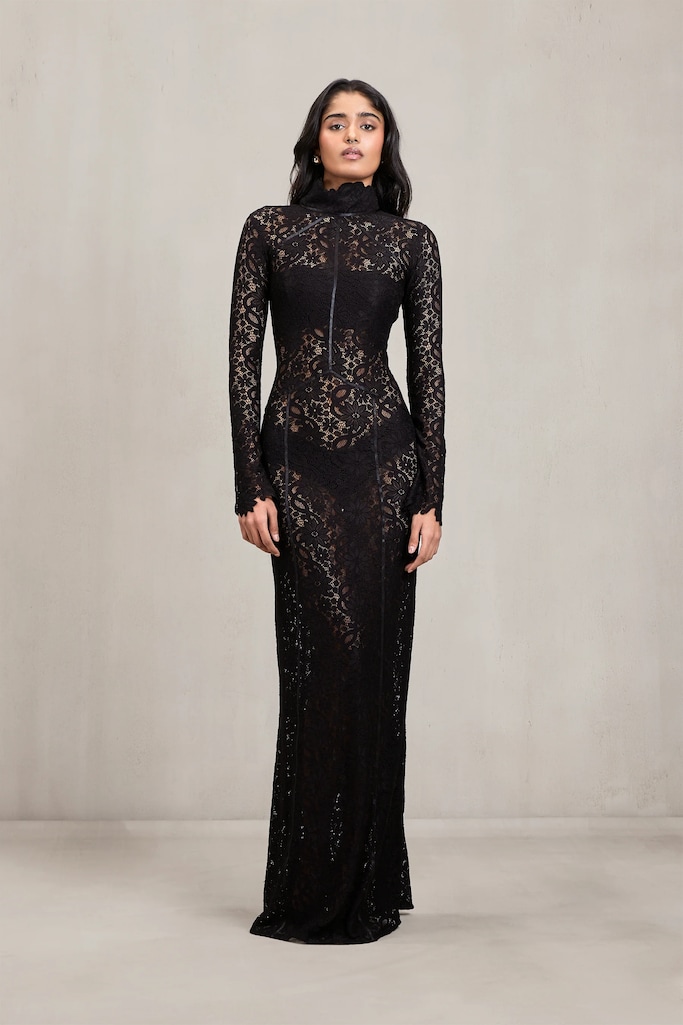
Lace gown from Deme by Gabriella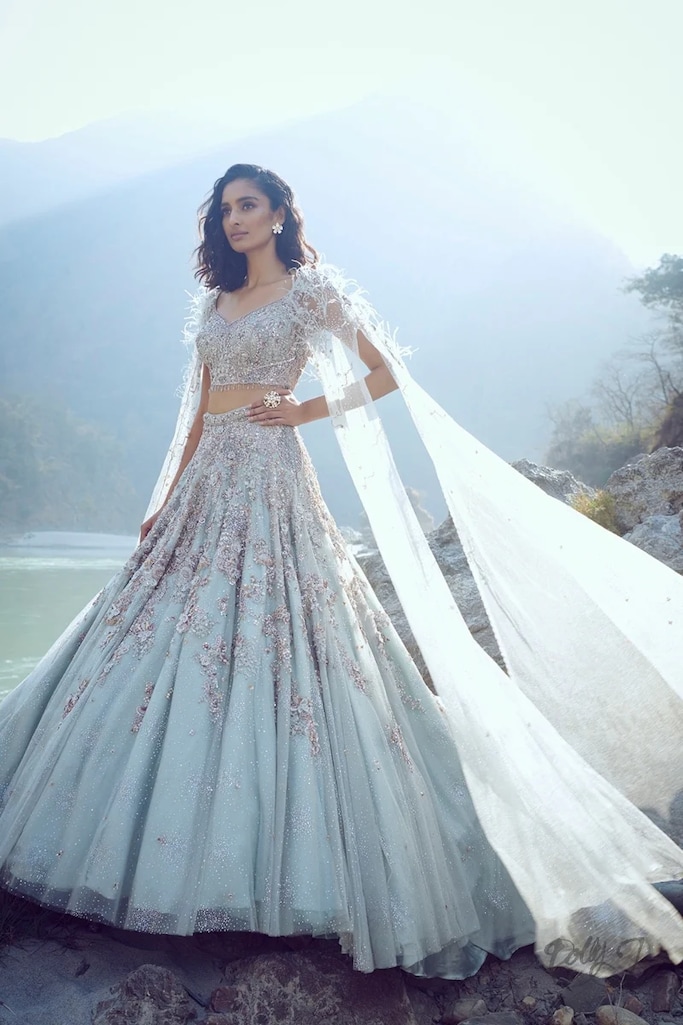
Dolly J turquoise shimmer tulle lehenga set embroidered with 3d lace flowers
Wilderkind: Nature, Interpreted Quietly
Perhaps the most poetic of the Pinterest trends, Wilderkind reflects a move towards nature-inspired aesthetics that whisper rather than shout. Butterflies, deer, insects, and forest imagery appear as subtle motifs – symbolic rather than literal.
In India, nature has always been more than inspiration; it is philosophy. Designers like Rahul Mishra, Péro, Gaurang Shah, and Raw Mango weave flora, fauna, and ecology into their work with reverence and intention. Their designs don’t depict nature – they converse with it.
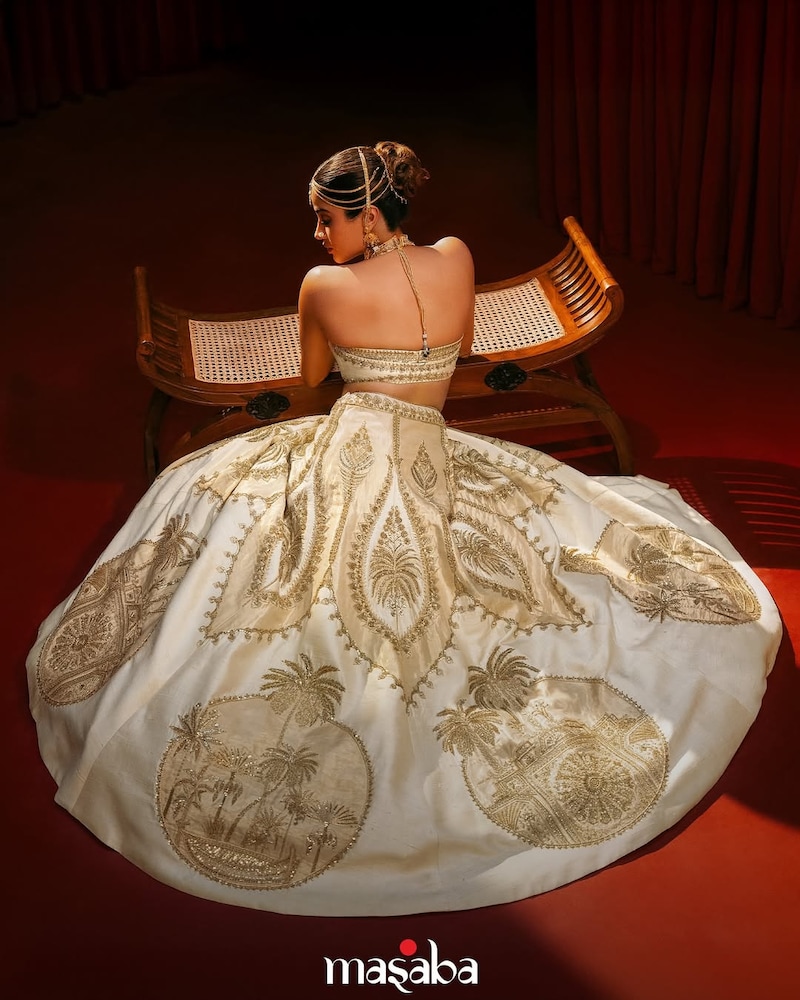
Janhvi Kapoor in Masaba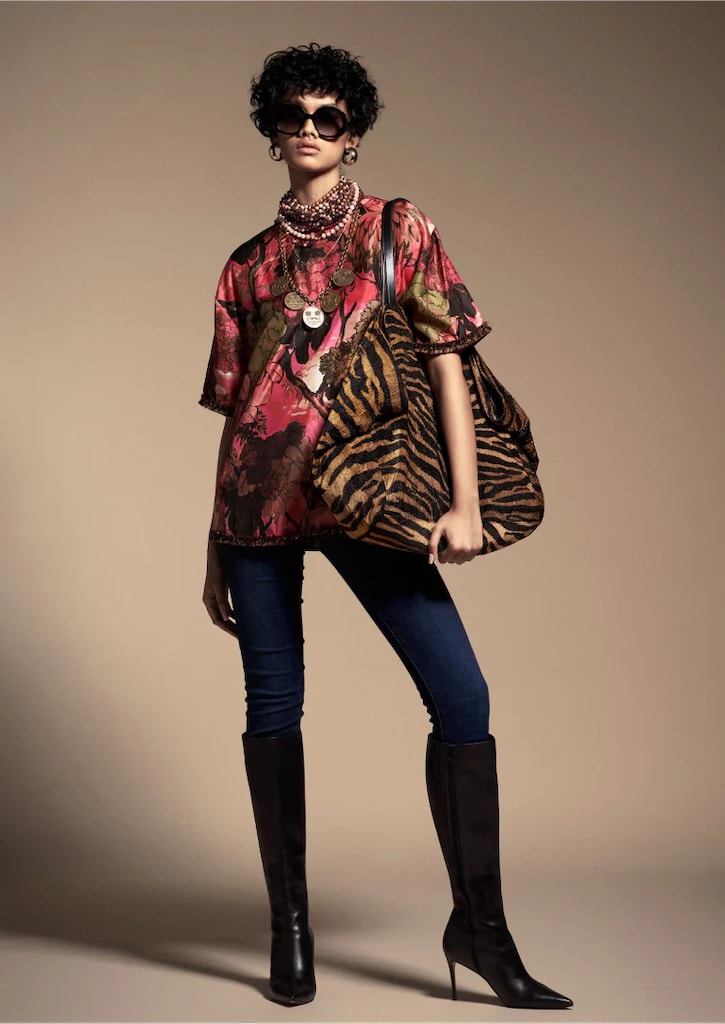
Sabyasachi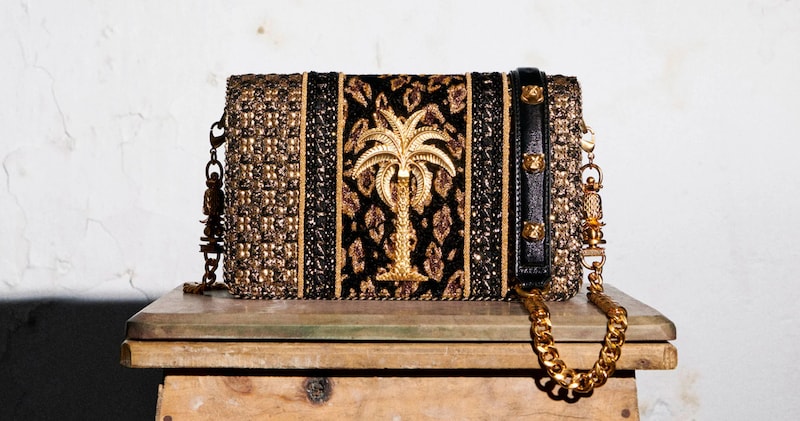
Sabyasachi
What Pinterest Predicts offers, finally, is data-backed affirmation. Across all its signals – brooches, exaggeration, utility, poetry, drama, lace, and nature – the message is consistent: people want clothes that carry meaning, memory, and movement. The future of fashion is not about chasing novelty. It is about depth, individuality, and intention.