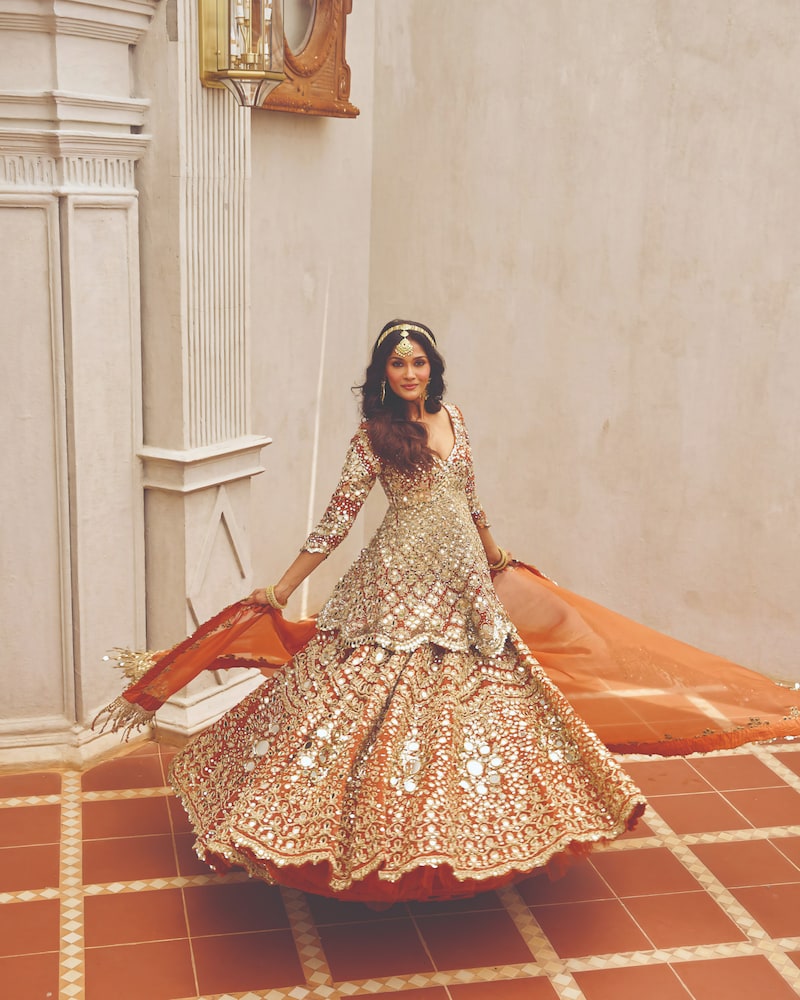
India’s heritage is often cast in gold, yet in the vibrant corners of the country, a more dazzling brilliance catches the eye – the unmistakable gleam of mirror work. Tiny hand-embroidered discs of glass cling to fabric, not merely as decoration but as storytellers, narrating tales of the opulent history of folk traditions. Among India’s many textile marvels, few crafts capture light – and imagination – quite like mirror work.

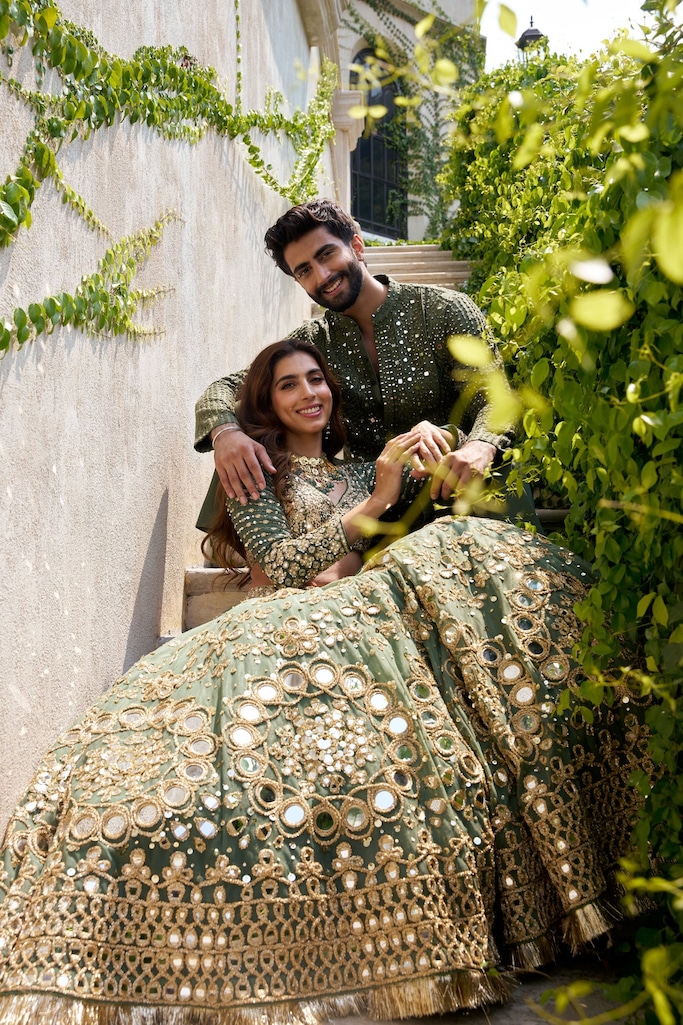
The unmistakable shimmer of mirror work, known as sheesha and Abhala Bharat, has long been the glinting pride of Indian craftsmanship. Introduced during the Mughal era, the art of mirror work was rooted in the belief that mirrors deflect negative energy and ward off the evil eye. The craft soon wove itself into India’s cultural and spiritual fabric.
From the ornate textiles to the welcoming torans that still grace many Indian doorways, mirror work is synonymous with both ritual and adornment. Over time, it flourished into a living heritage, carried forward by artisan communities in Rajasthan, Gujarat, and Haryana, meticulously honed by each generation. Each region developed its own visual language – geometric grids in Kutch, floral swirls in Saurashtra, and nature-inspired motifs by Banni artisans – transforming thread and glass into wearable art.
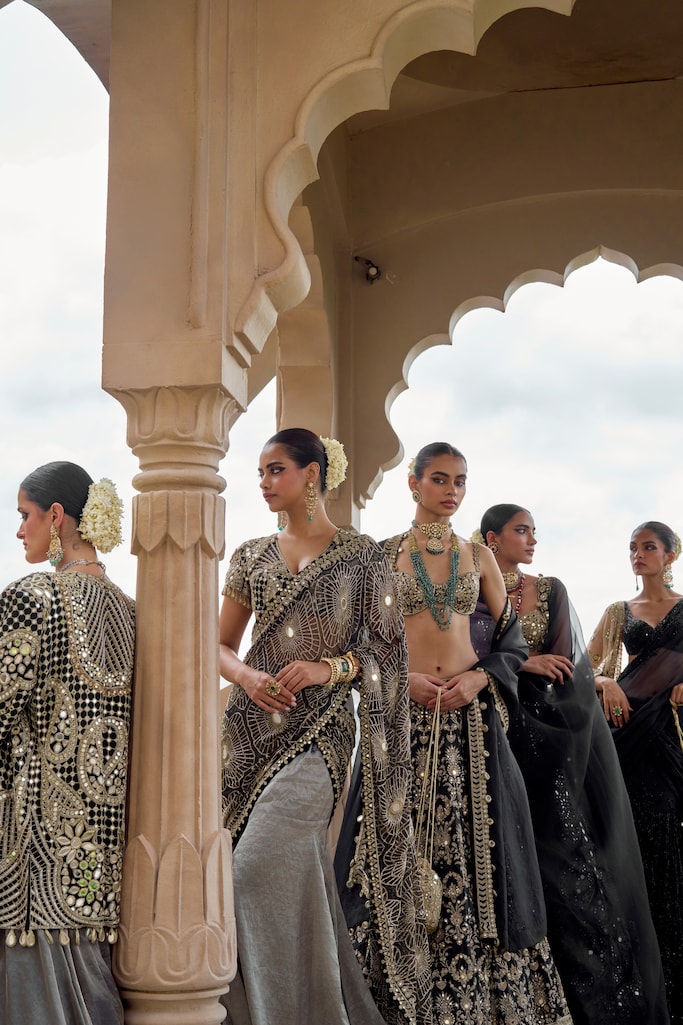

Abhinav Mishra, a designer adored for his incorporation of mirror work, shares, “Mirror work is integral to my design language and, for me, it’s more about storytelling. This age-old craft has deep roots in Indian heritage, and I’ve always been inspired by its ability to reflect both light and legacy.”
As the craft evolved, hand-blown and machine-cut glass mirrors became the standard, with generational artisans securing them to the base fabric with a precision that speaks of both skill and deep cultural reverence. Their meticulous skill lives on through generations, now often in collaboration with contemporary designers. Arpita Mehta, who is also renowned for her take on the craft, adds, “We’ve built a strong team of embroiderers from Kutch and Bareilly. They’re integral to our process; it’s their artistry that allows us to explore mirror work in such detail, and we ensure their artistry is recognised and preserved.”
– Arpita Mehta
“Mirror work is at the heart of everything we do; it is both the embellishment and the foundation. The mirrors define the design language, and everything else flows around them.”
Mishra acknowledges the same bond: “My work wouldn’t exist without the hands of the artisans who bring it to life. The karigars have carried this craft through generations and kept it alive. For me, the focus must always remain on the Indian craftsmen, bringing their work to global recognition while preserving and sustaining this timeless tradition.”

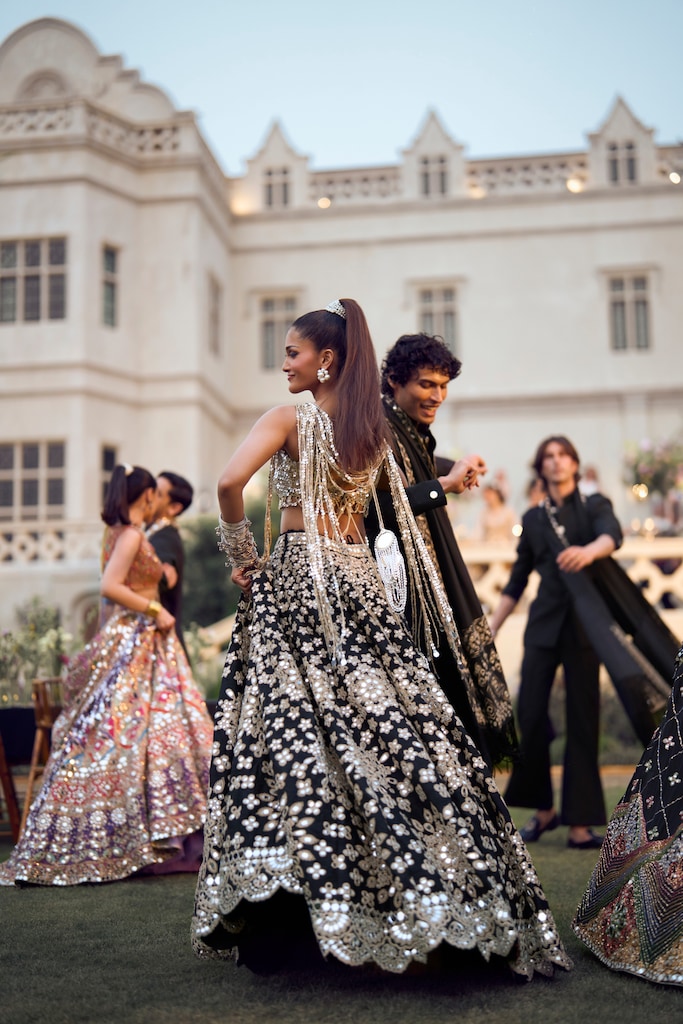
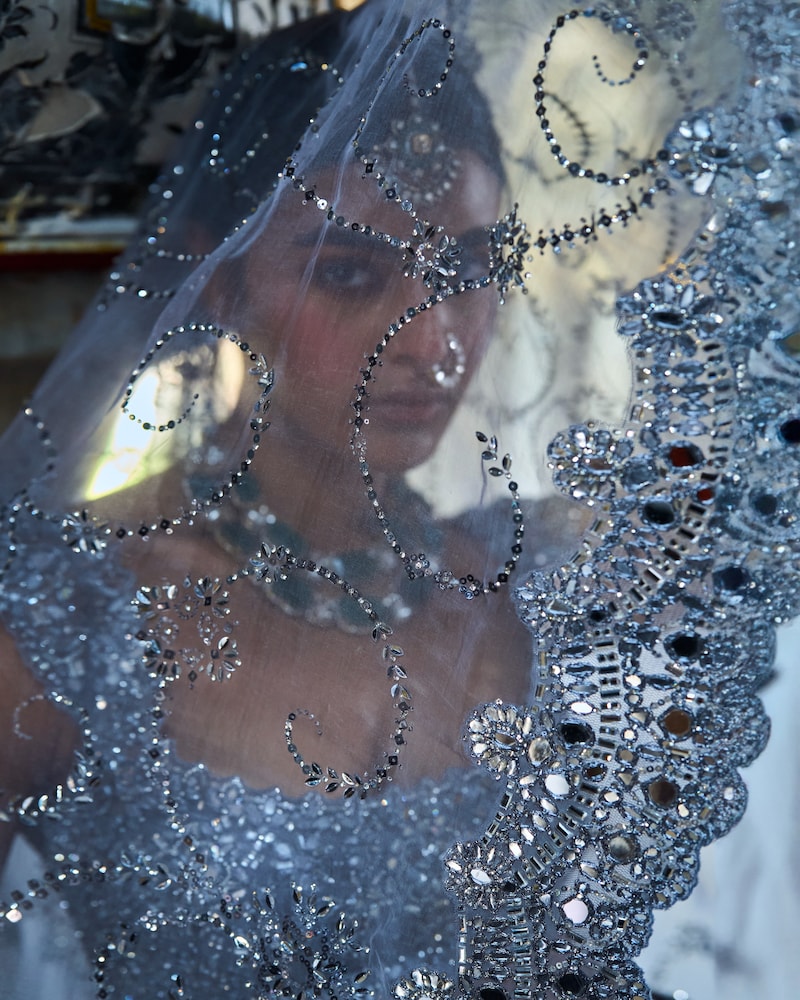

The modern narrative of this craft is one of preservation and innovation. It is a dialogue between the old and the new, where traditional motifs coexist with asymmetrical cuts and avant-garde designs. In the past few years, mirror work has experienced a spectacular shift, expanding beyond lehengas and chaniya-cholis to illuminate a new vocabulary of silhouettes. Contemporary Indian designers are expertly marrying this heritage art with a modern sensibility, incorporating it into elegant sarees, chic backless blouses, edgy jackets, and even modern menswear.
Brides themselves are exploring this duality. Mishra notes, “Many brides still want the traditional grandeur of heavily adorned mirror lehengas, especially for big celebrations. At the same time, there’s a growing number who love the subtler versions with lighter embroidery, tonal palettes, and versatile pieces they can restyle after the wedding.”
Adding to how mirror work allows the new generation of brides to honour heritage while making a contemporary statement, Mehta shares, “Our brides come to us specifically because they love mirror work. What excites them is that our interpretation of it is delicate, intricate, and very modern – which makes it perfect for bridalwear.”


Experimenting with the scale, placement, and motifs of the mirrors, designers today use them not just as dense embellishments but as subtle, scattered accents on experimental fabrics, creating a delicate interplay of light and texture. For Mehta, the true excitement lies in reimagining the familiar – “One of the most exciting and unconventional explorations has been incorporating mirror work into chain mail. It gave a completely new texture and edge to the craft.”
– Abhinav Mishra
“For me, it’s not just about incorporating the craft but honouring heritage while reinventing it for a generation that craves meaning, beauty, and a little sparkle all at once.”
Mirror work has always been about more than ornamentation – it is about reflection, both literal and cultural, of India’s ingenuity in design and craftsmanship. Each shimmering stitch bridges centuries, narrating stories not only of tradition but also of creative reinvention. Today, its luminous gleam graces both couture runways and everyday wardrobes, proving that the play of light stitched centuries ago still illuminates the way forward. In every glint, there is continuity, reinvention, and the unmistakable sparkle of India’s living heritage.