


Couture and fashion have always been the ultimate expressions of art, luxury, and cultural storytelling. In reimagining magnificent debuts through the lens of Indian grandeur, we explore a world where craftsmanship takes centre stage, and silhouettes become canvases of innovation and heritage. For our cover story, as haute couture takes centre stage within the grand walls of the Lalbagh Palace, cascading gowns, sculpted satins, and ethereal tulles are brought to life against a backdrop of regal splendour, transforming tradition into a modern masterpiece. These pages are where history and couture converge, creating a narrative that honours the past while celebrating the future.
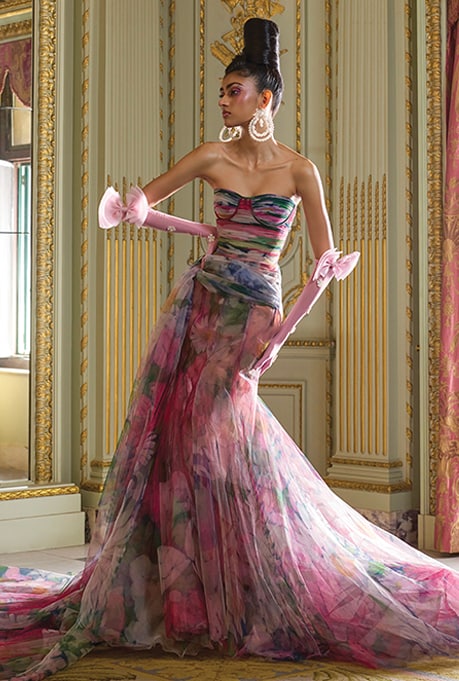
Fashion and royalty have long shared an unbreakable bond, a relationship woven from yarns of luxury, craftsmanship, and the unrelenting pursuit of finesse. For decades, the world’s elite have curated exclusive affairs where gowns, accessorised with fascinators, exaggerated sleeves, delicate gloves and long tails, transform into canvases and each ensemble tells a tale of couture, artisanship, and innovation. From private galas to opulent debuts, these gatherings have celebrated fashion as more than clothing; they are cultural statements, an intersection of power and art that has defined eras and dynasties alike.
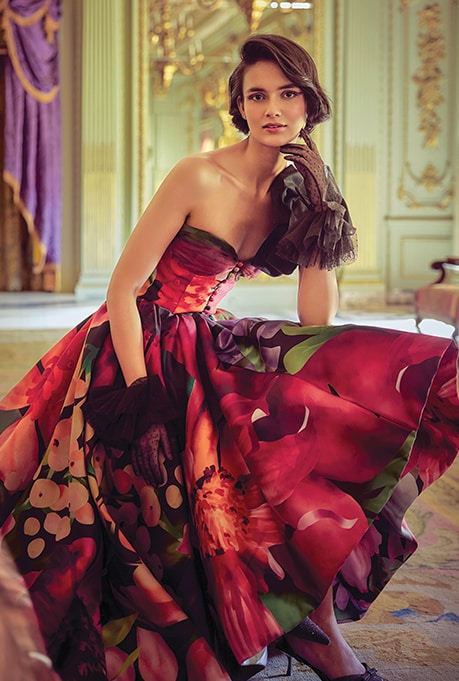
If opulent debuts were to take place in India, they would undoubtedly unfold within the gilded halls of Lalbagh Palace. Nestled along the tranquil banks of the Khan River in Indore, this grand residence of the Holkar dynasty offers more than just architectural beauty – it becomes the perfect muse for couture. Its soaring Corinthian columns, Italian marble facades, and celestial chandeliers set the stage for garments that reflect the same splendour and devotion to craft. This imagined gala of opulence is an amalgamation of modish couture with the grandeur of our history, celebrating silhouettes that blend tradition with innovation.
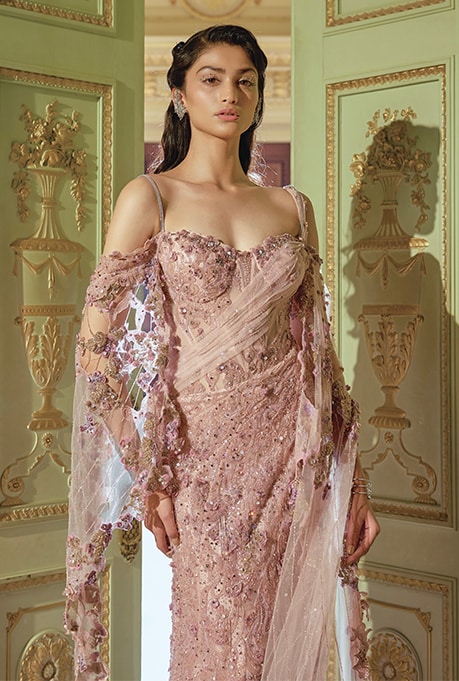
Each garment here tells its own story. A soft purple gown cascades like liquid light, its bead-embroidered details catching the glow of golden sconces. It is fluid, ethereal, and reminiscent of moonlit dances where royalty once revelled. In a striking contrast, a dusty peach organza gown exudes romantic elegance, its soft layers flowing like whispers of regal grace. These gowns are not mere clothing; they are sculpted visions of craftsmanship, marrying Indian artisanal traditions with modern sensibilities.
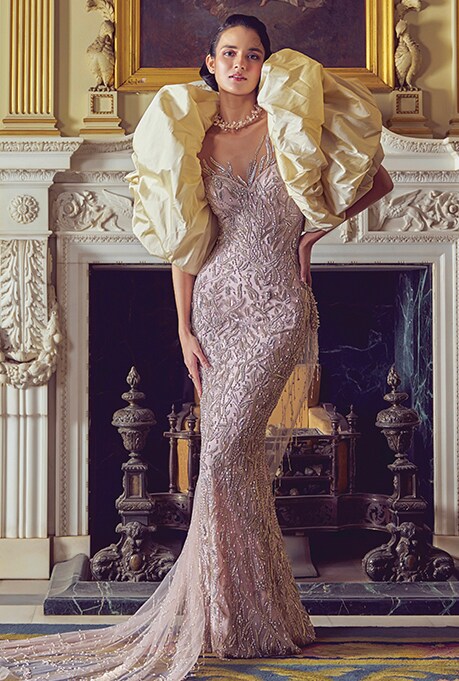
As models glide through Lalbagh Palace’s ornate ballroom, the dialogue between fashion and architecture becomes palpable. A blush-toned gown crafted from handwoven polymer creates a structured yet fluid silhouette, mirroring the palace’s neoclassical grandeur. Meanwhile, a dusty pink tissue gown, hand-embroidered to perfection, shimmers like the gilded embellishments that adorn the palace’s interiors. These creations reflect the ideals of couture – luxurious, painstakingly crafted, and timeless.
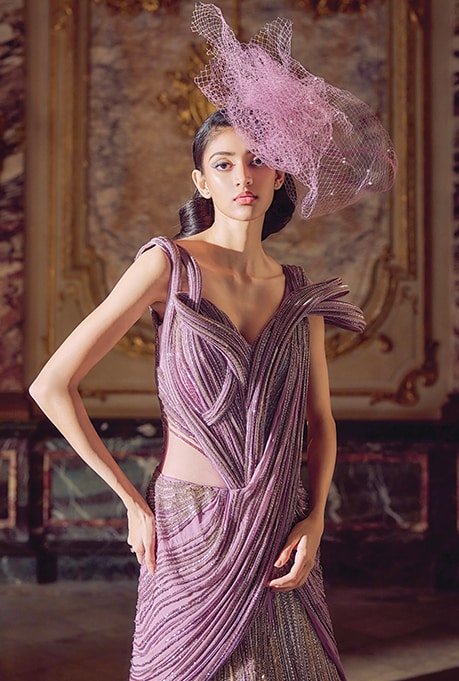
The garments are at once bold and delicate. A high-low blush creation with a balloon hem balances contemporary edge with royal poise, as though designed for a debutante’s first promenade beneath a starlit sky. Equally enchanting is a mermaid gown, its dramatic drapes infused with dahlia-inspired hues that echo Lalbagh’s sprawling gardens. These silhouettes celebrate movement and precision, transforming fabric into living, breathing works of art.
Couture thrives on imagination and meticulous artistry, and it finds its perfect partner in a setting like Lalbagh Palace. A champagne-sequinned gown glows with celestial allure, its cascading form reminiscent of moonlight streaming through crystal chandeliers. Meanwhile, a rose blush gown – its soft, ethereal layers – embodies quiet romance and regal charm, as though made for a moment of whispered vows or a graceful waltz.
The connection between these garments and their setting feels almost predestined. Each silhouette – whether fluid or structured – becomes a canvas for intricate beadwork, delicate appliqués, and innovative drapery, mirroring the painstaking detail seen in Lalbagh’s Venetian mirrors and frescoed ceilings.
Indian couture has long been celebrated on global platforms for its storytelling, craftsmanship, and devotion to artistry. Just as the palace’s grandeur endures, so too does the legacy of Indian fashion – a legacy defined by its ability to weave tradition into the fabric of modernity. These garments stand as heirlooms in the making, much like the Palace itself, offering an eternal homage to the beauty of detail, history, and innovation.
In this imagined debut, Lalbagh Palace becomes more than a backdrop; it becomes a participant in the story. Couture, much like royalty, celebrates legacy – a weaving of artistry, tradition, and modern vision. In these spaces where time stands still, true elegance is born – an elegance that transcends eras, a testament to fashion’s enduring place in the annals of history and beauty.